



![Surprise! Pragmata officially launches early on April 17 [New Release]](https://www.allkeyshop.com/blog/wp-content/uploads/featured-pragmata-action-sci-fi-adventure-capcom-early-release-date-april-17-preorders-bonus-172x90.webp)

![Code Veronica & RE Zero Remakes Get Release Windows [Leak]](https://www.allkeyshop.com/blog/wp-content/uploads/featured-code-veronica-zero-resident-evil-remakes-requiem-dlc-leon-leaks-172x90.webp)
![Forza Horizon 6's 9-minute Tokyo drive is stunning [Preview]](https://www.allkeyshop.com/blog/wp-content/uploads/featured-forza-horizon-6-gameplay-showcase-details-japan-countryside-urban-features-172x90.webp)


Pixel Sundays: Need for Speed – 30 Years of Full Throttle – Classics, Iconic Cars & Upcoming Tracks

Many people love speed and fast cars. Since 1994, Need for Speed has been roaring through racing game history—from the 3DO to the ultimate arcade racer on PlayStation 5 and PC. With over 150 million copies sold, it’s one of the most successful racing games of all time and is the focus of today’s Pixel Sundays article.
Summary
- The Starting Signal – Need for Speed Early Years & Arcade Feeling
- Street Evolution – Underground, Most Wanted & Carbon
- Simulation Meets Arcade – ProStreet to Shift 2
- Modern Era – Hot Pursuit Remastered to Unbound
- Outlook – Is Need for Speed Coming Back?
- Conclusion – Full Throttle Remains a Cult
The Need for Speed franchise has become an essential part of racing culture, with many iconic cars, street races, police chases, and deep tuning dreams. Today, we’ll look at how it all started, how it evolved over the years, and of course, the legendary cars.
The Starting Signal – Need for Speed Early Years & Arcade Feeling
It all began in 1994 with the first Need for Speed. EA Canada developed the game exclusively for the 3DO, a game console from Panasonic. Later, it was ported to PC, PlayStation, and Saturn. The game focused on realistic vehicle handling combined with arcade action. It was so realistic you could even feel the weight of the cars.
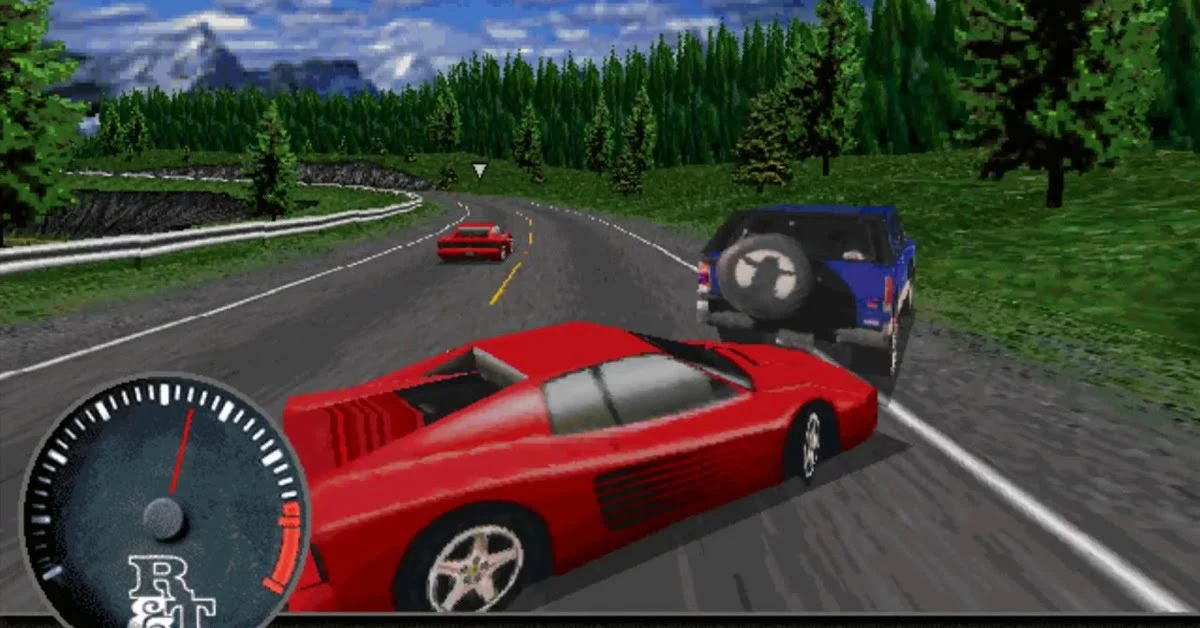
The game featured nine licensed supercars, including the Lamborghini Diablo, Porsche 911 Carrera, Ferrari 512TR, Dodge Viper RT/10, and more. These cars were exceptionally detailed for the time. The game included many video clips, spec sheets, and in-game commentary to create more realism—like an “interactive car catalog.”
The tracks offered varied scenery, from mountain roads to coastal highways with elaborate visuals. Naturally, there was also traffic and police chases.
Three years later, Need for Speed II (1997) was released. This game put a stronger focus on exotic sports cars like the McLaren F1 and Ferrari F50. The tracks had imaginative settings, such as Asian temples or Californian canyons. But many players felt the physics and courses were too arcade-like. EA learned from this and later returned to more realism.

Then in 1998, Need for Speed III: Hot Pursuit revolutionized the series by introducing the police feature. You could play as either a cop or a racer. The game was praised for the police mechanics, complete with radio chatter and barricades. The gameplay was very cat-and-mouse, which players loved. The graphics were also excellent for the time.
In 1999, Need for Speed: High Stakes / Road Challenge was released. This game marked another milestone by introducing a damage model that affected the handling and performance of your car. It also had an economy system: you had to earn money to buy cars, tune them, and repair damage. You could even bet your pink slips in “high stakes” races and lose your car if you weren’t fast enough. The game also offered local multiplayer via split-screen or LAN.
Then in 2000, Need for Speed: Porsche 2000 was launched. As the name suggests, it was all about Porsche. It remains the only NFS game with full licensing from a single car brand. The game featured over 80 Porsche models from 1948–2000. It had multiple modes, including the Evolution Mode, where you experienced Porsche history across eras. There was also the Factory Driver, with precision driving challenges.
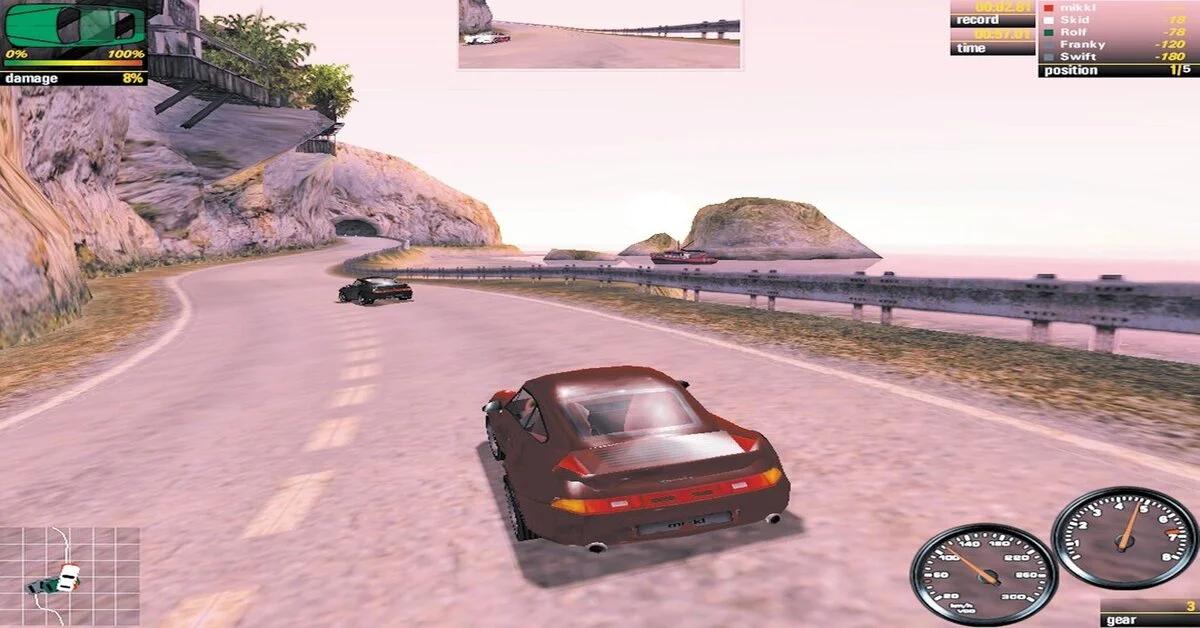
The driving physics were even more realistic than in High Stakes, with an emphasis on authentic handling. The car details were extremely advanced for PCs of that era. The PlayStation version was a simplified adaptation.
Street Evolution – Underground, Most Wanted & Carbon
Let’s move on from the early days to what came next. The franchise had become well established and already had a big fan base. Then in 2003, Need for Speed: Underground was released. This game marked a major turning point. It shifted away from supercars and back toward the tuning culture, inspired by movies like The Fast and the Furious.

The gameplay focused on street racing in a fictional city at night, with drift and drag racing modes as core elements. The police feature was removed, so it was all about illegal racing. But the tuning was more in-depth than ever. You could add performance upgrades (engine, turbo, transmission) and visual customization like spoilers, body kits, and vinyls. The soundtrack mixed rock and hip-hop. The game sold over 7 million copies and became a cult classic.
Just one year later, Need for Speed: Underground 2 arrived. This game introduced an open world: the city of Bayview. You could freely drive around and start races at hotspots. Tuning options were expanded even further, allowing you to change wheels, add neon lighting, and even install sound systems in your car. There were also SUV races for the first time. The missions were a bit repetitive, but the game impressed with its scale and atmosphere.
Need for Speed Most Wanted (2005) is arguably the most iconic Need for Speed game. The goal was to combine the Underground style with Hot Pursuit elements. So the police became an integral part again. There was also a memorable story featuring rivals and a wanted list. The game took place in the large, open city of Rockport City. You climbed the “Blacklist” by defeating opponents and collecting bounties. Police chases had multiple levels of heat, with roadblocks, spike strips, and SUV rams.

Most Wanted also introduced the franchise’s most iconic car: the white-and-blue BMW M3 GTR. The game became a massive success, releasing on PC, PlayStation 2, Xbox, Xbox 360, and GameCube, and selling over 16 million copies. To this day, it remains many fans’ favorite installment.
In 2006, as a direct story continuation of Most Wanted, Need for Speed Carbon was released. The game blended open city racing with touge-inspired canyon duels. For the first time, you could recruit a crew, including blockers, scouts, and drafters. A territory system was introduced, letting you conquer districts from rival crews. Cars were divided into classes: Tuner, Muscle, Exotic, each with unique handling.
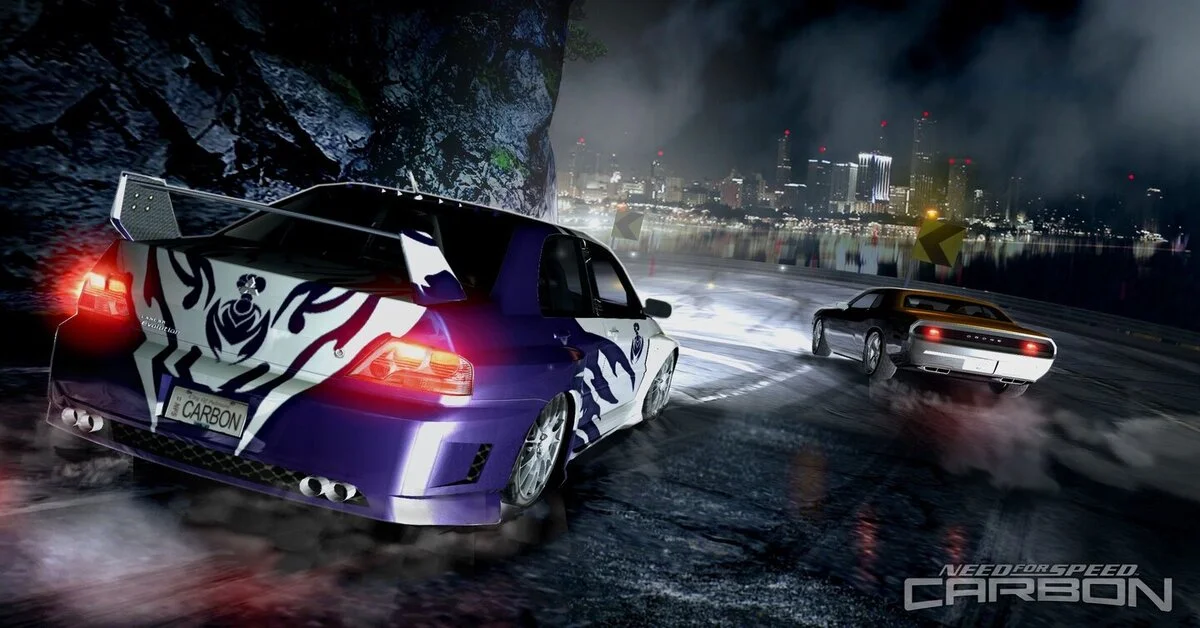
The canyon races were a career highlight. These were inspired by Japanese mountain races, with the risk of falling off the cliffs. Tuning also changed significantly, as the new Autosculpt feature allowed you to freely shape body parts. The game was praised for its atmosphere and customization, even if the open world was less extensive than in Most Wanted. The game sold over 8 million copies.
Simulation Meets Arcade – ProStreet to Shift 2
With Need for Speed ProStreet, released in 2007, there was once again a radical change of direction. There were no more illegal street races – instead, you participated in licensed competitions. This brought a motorsport feel with realistic damage physics. You raced on real and fictional tracks, including Chicago Airfield and Nevada Highway.
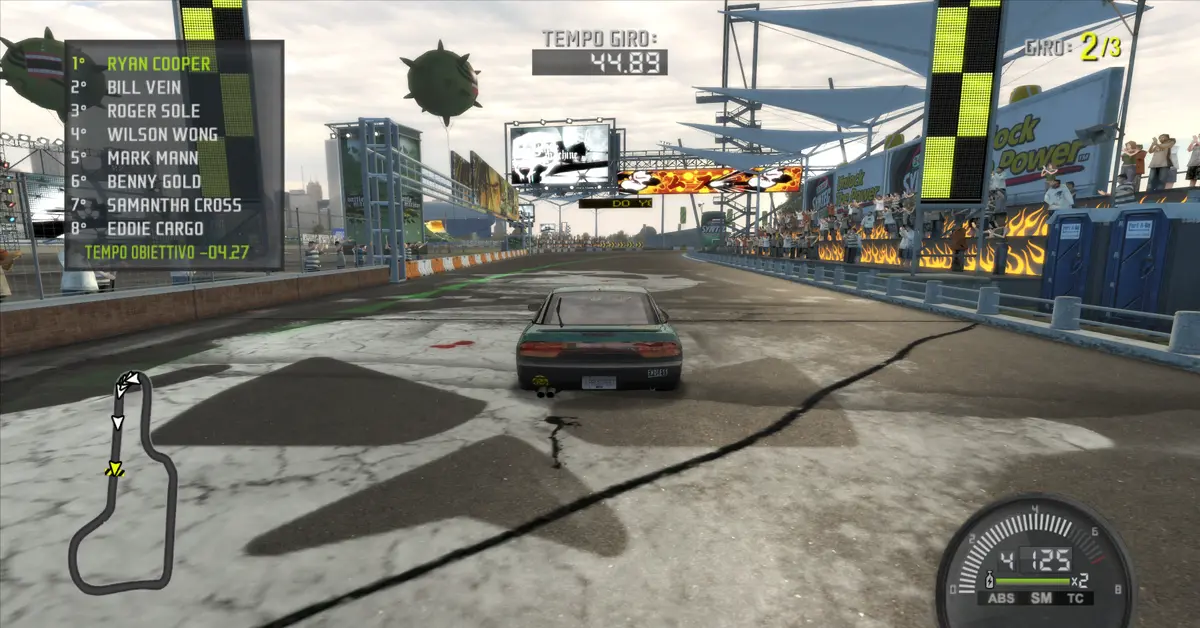
There were different modes such as Grip races, Drift, Drag Racing, and Speed Challenges. If you destroyed your car too much, it could be irreparable. Dents caused by you were visible in the game, and body parts could even fall off. For tuning, there were Blueprints as templates, or you could fine-tune everything yourself. The game also came with a better engine for improved physics calculations. Some criticism arose because the game no longer had that underground feel. Nevertheless, it sold around 5 million copies.
After that came Need for Speed Undercover. This game featured a cinematic story with Hollywood flair. You play an undercover cop infiltrating illegal crews. The game offered a large open world, the “Tri-City Bay Area”. You had classic street races and pursuits. There were also missions like deliveries, escaping the police, and checkpoint races. To make the game more realistic, real film sequences with actors like Maggie Q were used.
The game received quite some criticism, partly for the ambitious story and atmosphere. Additionally, the AI and performance were worse than in previous titles. Sadly, there were many bugs on PC and PS3. One special feature was the Heroic Driving Engine, which enabled cinematic maneuvers like 180° spins or power slides. This game also sold about 5 million copies.
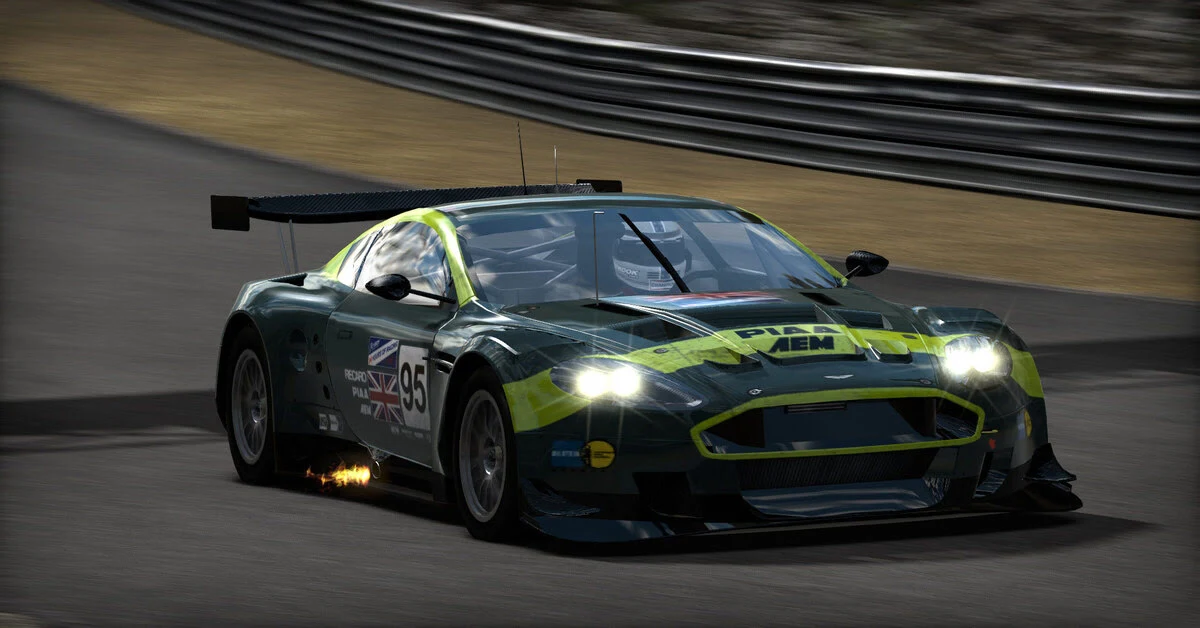
In 2009, Need for Speed: Shift was released as a direct competitor to Gran Turismo and Forza Motorsport. The game offered a realistic driving feel on official circuits (Brands Hatch, Spa, Laguna Seca). The cockpit view was extremely detailed, showing vibrating hands and tunnel vision during collisions. You could progress from amateur to pro, and there were points for precise or aggressive driving. The game was positively received as a “serious racer”.
Then in 2011, Shift 2: Unleashed was released. Although the game did not carry the Need for Speed name officially, it was still part of the series. It offered a dynamic helmet camera view. There were night events with limited visibility and a realistic damage model. The game featured 35 real tracks, including the Nürburgring Nordschleife.
Modern Era – Hot Pursuit Remastered to Unbound
We have now arrived in the modern era starting in 2010. In that year, Need for Speed Hot Pursuit was released, marking a return to the cops vs. racers dynamic with Autolog. You could play as a racer or a cop again. There were high-speed chases with weapons like spike strips, EMPs, or roadblocks. The Autolog system was a revolutionary social feature. You could compare your times and achievements with friends in real time, constantly motivated by leaderboards. Ten years later, Hot Pursuit Remastered was released with improved textures, 4K support, and cross-play.

After that came Need for Speed: The Run, a game with a strong story focus. You play as Jack Rourke, who must pay off debts to the Mafia. Therefore, he participates in an illegal race from San Francisco to New York. The gameplay is level-based instead of having an open world. There are dynamic events like avalanches and helicopter attacks, and even quick-time events outside the car. Even though the setting and presentation were very impressive, the game was unfortunately very short at just about 4 hours.
In 2012, a new Need for Speed: Most Wanted was released. This was a reinterpretation of the 2005 classic. The game featured a fully open city called “Fairhaven City”. Of course, there were again police chases and even a deeply integrated multiplayer. Compared to the original, the game had less story, but there was more to explore and more events. Fans missed the Blacklist and the story focus.

With Need for Speed Rivals (2013), the franchise introduced drop-in multiplayer through the new AllDrive feature. This was available both as a cop and as a racer. The game even had a dynamic weather system. There was an open area with mountains, coasts, and valleys.
In 2015, there was a reboot of Need for Speed. The reboot focused on night races and live-action sequences with real actors. The game had five different play styles (Outlaw, Style, Build, Speed, Crew). Unfortunately, you had to be always online and there was little variety in the events. The game featured a strong tuning system and very nice graphics.
Payback brought in 2017 a story-oriented game that felt like an action movie with a Fast & Furious vibe. There were three playable characters and even heist missions where you earned big money. The game came with a day/night cycle and a loot card upgrade system. The game had microtransactions and the story was not very convincing. Nevertheless, the game offered a large selection of vehicles.

We are almost at the end, only two games are missing. In 2019, Need for Speed Heat was released with a very special concept. During the day you drive legal races, and at night you take part in illegal street races with increasing police presence. The game offers a risk-reward system, meaning the more you earn at night, the higher the risk of losing everything. The game takes place in the open world of Palm City, inspired by Miami. Additionally, the game offered deep tuning and customization of your vehicles.
And now we have arrived at the latest Need for Speed game, namely Need for Speed Unbound from 2022. The game had comic-like effects such as cel-shading and graffiti animations. The focus was on underground street racing. You can freely explore Lakeshore City, inspired by Chicago. In the game, you can drift, jump, and race at high speed. The game was praised for its fresh style, even if the core gameplay did not innovate much.

Outlook – Is Need for Speed Coming Back?
The latest game in the series was the just-mentioned Need for Speed Unbound. But since version Vol.9, which appeared in spring 2024, it has received no further updates. Originally, EA announced there would be a long-term support plan, so fans are understandably disappointed.

But what about new Need for Speed games? There are rumors that EA is putting NFS on ice. Criterion Games, the studio behind Unbound, was partially restructured and is now working on Battlefield. Some insiders claim that early prototypes for a next-gen NFS do exist but are currently on hold. Reasons for this are the mixed sales numbers of Unbound (only 1.8 million) and the focus on core brands like Battlefield and EA Sports.
Many fans hope that the series will return in 2026/27. There is hope that the franchise will perhaps reinvent itself during this time. Fans are also hoping for a reboot in the style of Most Wanted, with a stronger simulation focus like in Shift.
Conclusion – Full Throttle Remains Iconic
Need for Speed has managed to reinvent itself over three decades and has also taken steps back now and then. Sometimes the game was a realistic racer, sometimes an underground tuning fantasy, or a cop-vs.-racer game. Over time, the franchise has created many icons like the BMW M3 GTR and the Porsche Carrera GT.

Even though the franchise has had some weaker chapters and there is currently a pause in NFS, it remains a fixed part of gaming and car culture. Millions of fans are hoping for a successor with fresh ideas that will bring back the familiar passion for speed. One thing is certain: Full throttle remains iconic.
Hey, I’m Kilian, but online you’ll probably know me as “Tux1243.” I've been part of the team for almost two years now, always trying to keep you in the loop with the latest and coolest gaming news. I also have a huge passion for doing deep dives and detailed analyses of entire game series and franchises. I love getting to the bottom of things and exploring the little details and backstories that make game worlds so fascinating.
Download the Allkeyshop Browser Extension Free
For all the latest video game news, trailers, and best deals, make sure to bookmark us.
You can find all the best and cheapest online deals on CD keys, game codes, gift cards, and antivirus software from the verified CD key sellers on our store pages.
To not miss any news on Allkeyshop, subscribe on
Google News
.
MORE RELEVANT ARTICLES




It could be a great boost for the franchise to see one day both Need For Speed 2 movie sequel (with Aaron Paul's return) and a new video game Need For Speed inspired.
I used to love playing the Need for Speed games back in the PS2 era the Underground series and Most Wanted were my favourite, I used to play a lot of racing games back then but in recent times I've kinda fallen off them.
Need for Speed is one of most famous racing games and it's very cool in my opinion. I played Need of Speed Rivals on my Xbox One and NFS Most Wanted and NFS Hot Pursuit on my Xbox 360. I had a great time playing it and it would be great if there were more chapters in development. DS: __038__
Not a big fan of car racing games, but Need For Speed is an exception. A gem in the genre and just hits different..
The original most wanted is definitely my favorite because I spent lots of my childhood in that game, nothing in the franchise could beat that