












Pixel Sundays: Styx – The last true stealth hero in the shadow of giants

Stealth games have become a rarity today. Not stealth directly, but it is constantly combined with action. Today is about a franchise that wants to prove itself purely through stealth. Styx is exactly what the other AAA assassins are not. A game with a pure focus on real sneaking instead of a power fantasy.
Summary
- Styx: Master of Shadows – The Uncompromising Beginning
- Styx: Shards of Darkness – More Budget, More Freedom
- Styx: Blades of Greed – The 2026 Comeback
- Styx as a Character – Why this Goblin Works
- Stealth in 2026 – Is there still room for the genre?
- Conclusion – Styx, a silent hero in the shadow of AAA giants
The games were developed by Cyanide Studio, who otherwise also make sports manager games. The characters of the franchise originate from the universe of Of Orcs and Men and the franchise launched its first game in 2014. Now, after almost a 9-year break, a third installment of Styx has been released. Today we look back at the development of the franchise and why it is still relevant today.
Styx: Master of Shadows – The Uncompromising Beginning
It all started with Styx: Master of Shadows in 2014. The developers at Cyanide Studio didn’t have a classic AAA budget, but a clear creative vision. They decided against the mainstream action trend and developed a stealth game, even though this genre was rather declining. Technically, the game was solid, but the focus was clearly on the gameplay, which is why the graphics had to take a back seat.
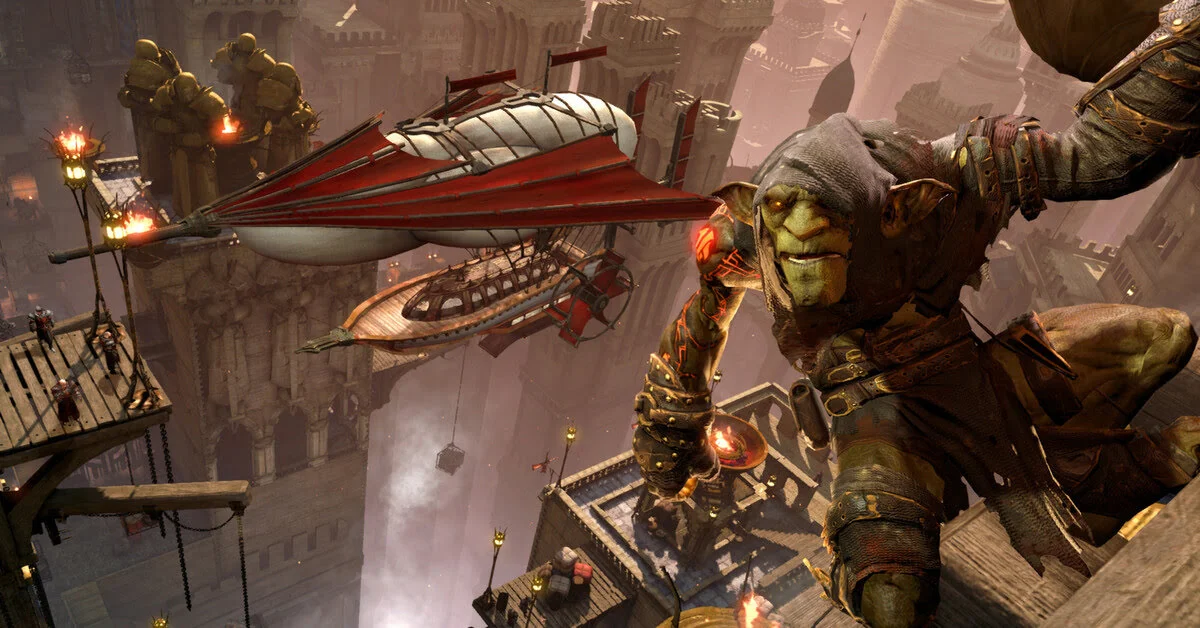
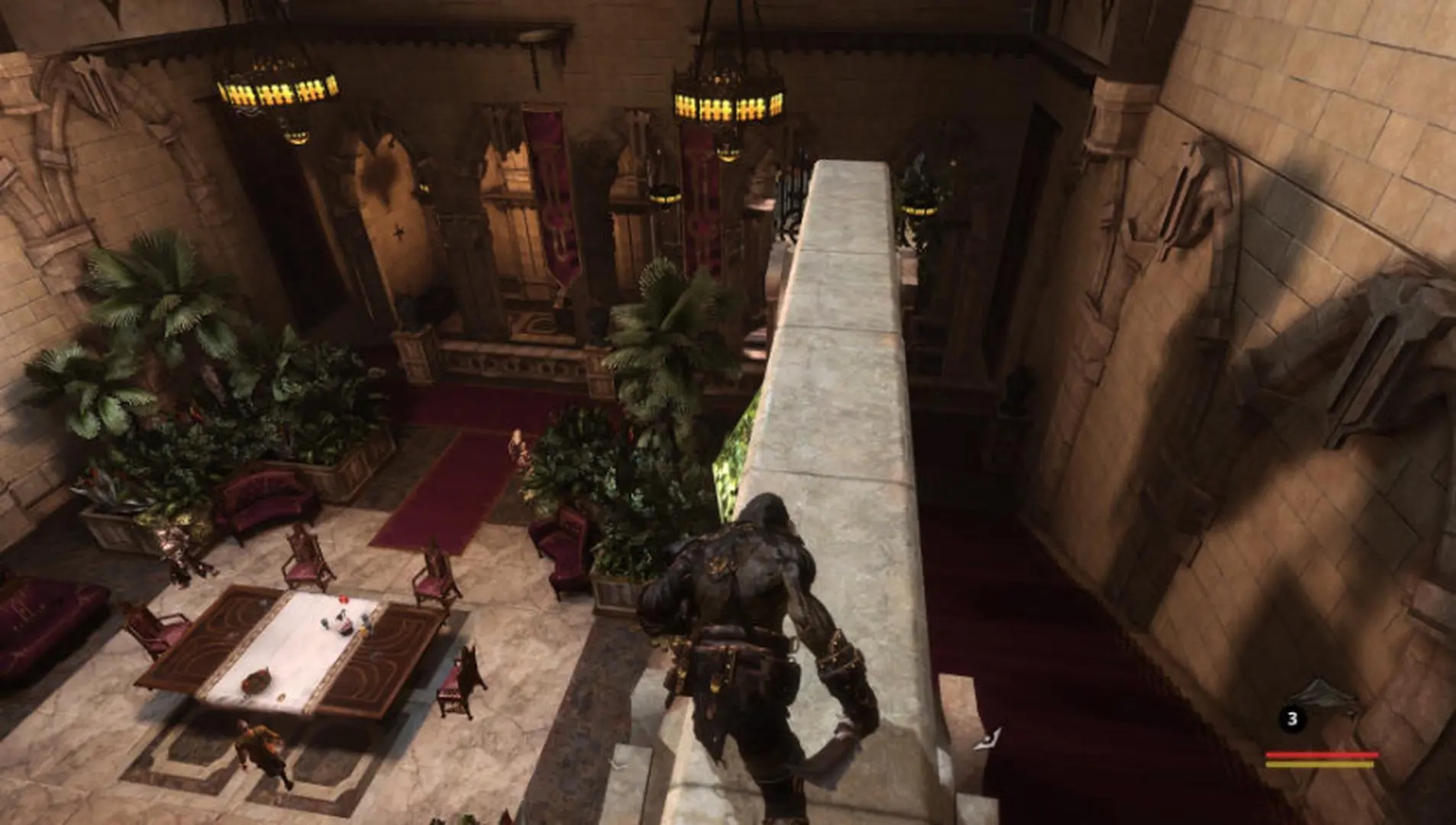
Styx: Master of Shadows features a pure stealth design where fighting is almost never an option. The enemies are extremely dangerous, meaning 1-2 hits usually result in death. If you take an aggressive approach, you are actively punished by the game. The levels are built in such a way that you can always sneak perfectly. The save system increases the tension, as you cannot quick-save at any time. The levels are constructed with multiple floors instead of being purely flat areas. Beams, pipes, ledges, and shadows serve as cover and alternative routes. So you can observe your enemies from above instead of just marching through and hoping for the best.
Styx, the main character, can create clones to activate switches or distract enemies. Later, you also unlock further upgrades that make the ability more versatile. Your clones are vulnerable, so they can be used as a tactical tool without becoming overpowered. The game demands planning, timing, and clever problem-solving. The world tells much of its story through the environment in a dark fantasy setting.
Styx is cynical, selfish, and morally grey. He is no shining savior, but a thief with his own motives. The dialogues are full of dark humor and sarcasm. The game wasn’t a mass success, but quickly gained a strong fanbase. It is especially appreciated by hardcore stealth fans. Styx: Master of Shadows laid the foundation of the franchise, which served as the evolutionary step for its sequel.
Styx: Shards of Darkness – More Budget, More Freedom
Three years after the first game, Styx: Shards of Darkness was released in 2017. With this game, Cyanide Studio stayed true to its design philosophy. The game had a significantly higher budget, which is noticeable. The goal was to create more visibility without losing identity. Shards of Darkness runs on Unreal Engine 4, enabling visibly better lighting and detailed environments. The levels are larger, offering more expansive views and vertical depth.
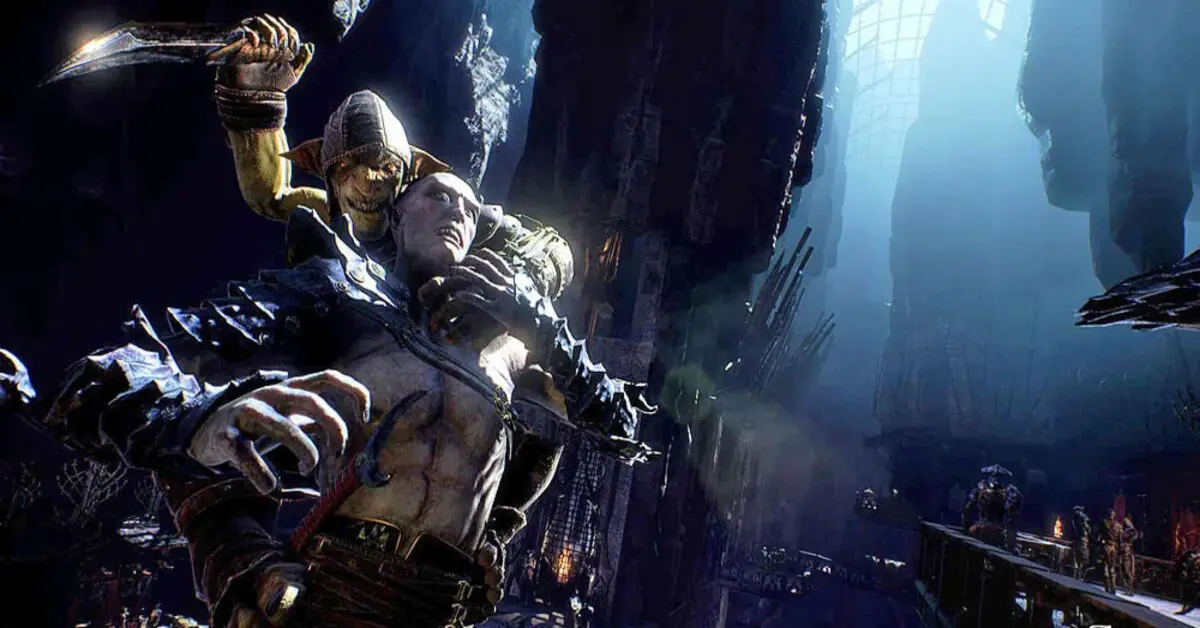
The animations are also more fluid and feature more realistic shadows. Additionally, the game is atmospherically denser than its predecessor. Nevertheless, there are still minor technical issues like AI glitches or performance fluctuations. You can see the studio’s ambition, but it is still not AAA-polished. Styx: Shards of Darkness offers much more expansive maps with multiple solutions in larger areas and open structures. Thanks to the greater freedom with multiple approaches, the mission design feels less linear. You have many alternative routes over roofs, balconies, and underground paths, creating more room for creative experimentation.
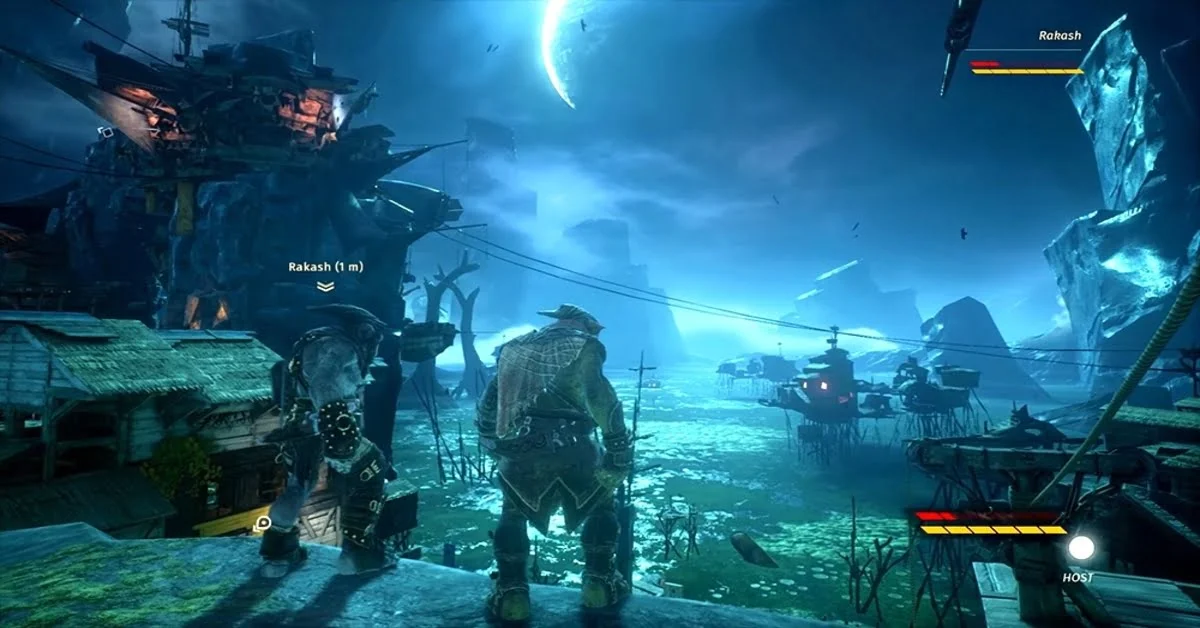
Styx received an expanded clone mechanic in the game. In addition, there were new gadgets like throwing knives or traps. Instead of just waiting in the levels, everything now gives you more tactical options. There is also a skill system, allowing you to choose your individual playstyle. However, stealth clearly remains the core of the game. Shards of Darkness introduced an optional co-op mode as a new feature, where two players tackle the missions together. This opens up many new strategies that require coordination. Co-op completely changes the game dynamic, but it is not a must. The focus remains on the solo experience.
The humor in the game has also changed. Styx seems even more cynical and biting. There are more meta-commentaries and self-references. This is complemented by stronger character development that lightens up the dark fantasy world. The game is still not technically perfect, but designed on a much grander scale. The fanbase liked it, even if it received solid rather than stellar reviews. Shards of Darkness remains a niche game in the stealth genre. It wasn’t a massive blockbuster hit, but it managed to turn a profit.
Styx: Blades of Greed – The 2026 Comeback
On February 19, 2026, after almost 9 years, Styx: Blades of Greed was released for PC, PlayStation 5, and Xbox Series X|S. The game is the first title developed for the current console generation. This created high expectations within the existing fanbase. It is meant to be a true comeback of a long-dormant stealth brand. The era of stealth games is supposedly over, yet Styx dared to make a bold return.
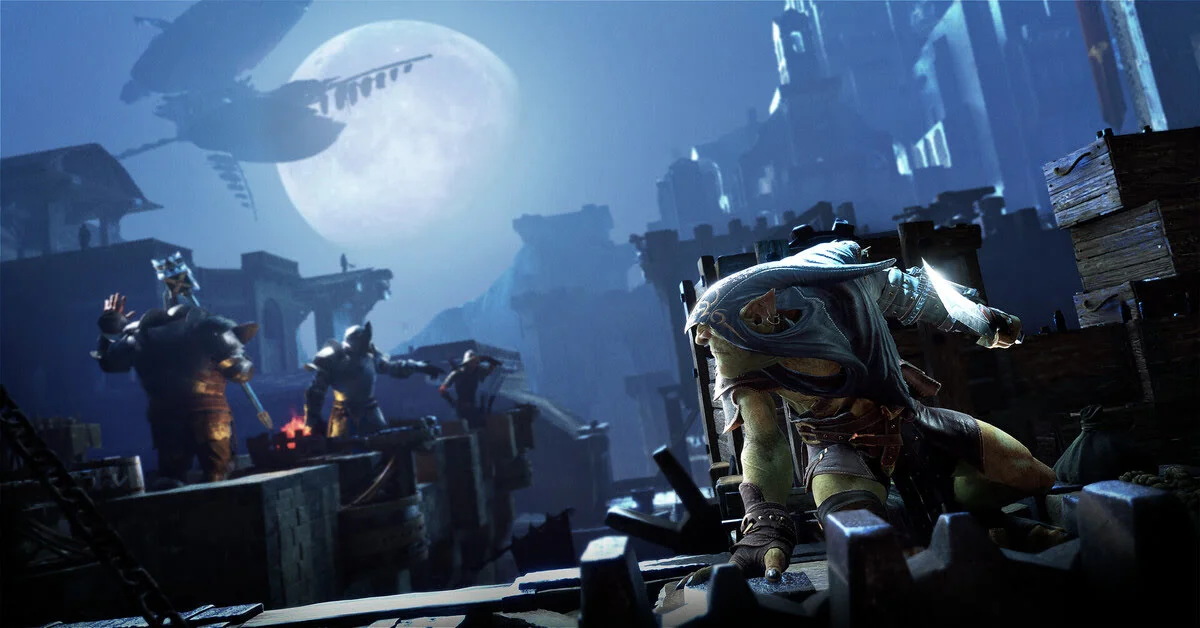
Blades of Greed takes a step back from separated levels towards larger, interconnected areas with multiple objectives. The game features city ruins, fortified facilities, and new regions as playgrounds for Styx. In addition, there are more organic transitions instead of a clear chapter structure. You can decide for yourself which objectives to tackle first in the levels. However, it is not a classic open-world game, but rather large areas containing multiple assignments. Styx was also improved again through an expanded use of clones. Furthermore, he was equipped with new tools for distraction and infiltration, resulting in more gameplay freedom and mission versatility. You can also optionally play more aggressively, but this remains risky.
The world continues the tension between humans, elves, and orcs, which we haven’t talked about yet. Quartz is considered a central resource with political and magical significance. Add to that power struggles and intrigues in the background. Styx remains the morally grey antihero with his personal motives, which are brought more to the forefront.
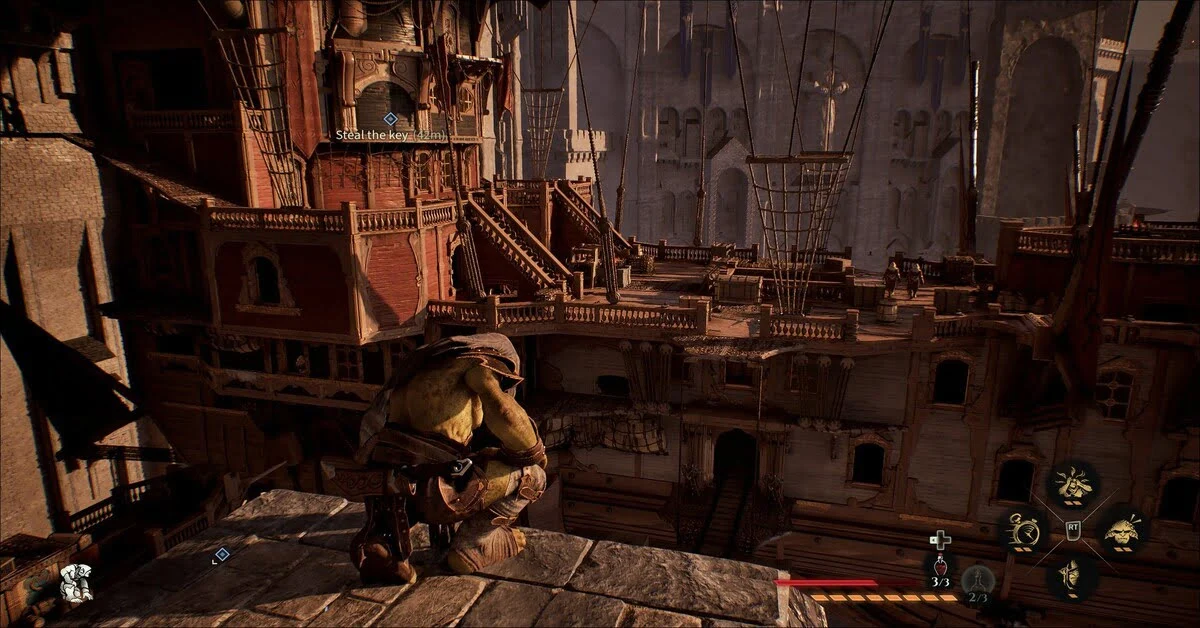
Styx: Blades of Greed was praised particularly for its ambition and massive level size, which allows for vertical freedom. However, there were also technical weaknesses such as AI failures or performance issues. The missions are sometimes repetitive in longer sections of the game. It is still not a AAA blockbuster, but clearly more ambitious than its predecessors. The game is a turning point for the franchise as it tries to blend classic hardcore stealth DNA with a modern open-level structure. The whole thing was a balancing act between tradition and innovation. Player numbers are in the thousands, and the average rating on Steam sits at 71% positive reviews.
Styx as a Character – Why this Goblin Works
The main character in the games is not a classic hero and savior, but a survivor. Styx acts out of pure self-interest and instinct. His motivations are the opposite of heroic; they are profit, freedom, and survival. He doesn’t hold high morals, but rather relies on pragmatic decisions. This makes Styx highly believable in a corrupt fantasy world. He comments on his situations dryly and bitingly while making fun of enemies and genre clichés. The dialogues are also deliberately exaggerated and full of dark humor as a stylistic device. Through this sarcasm, cynicism, and self-irony, Styx lightens the dark stealth atmosphere.

Styx repeatedly breaks the fourth wall and makes direct comments about the gameplay. In doing so, he also constantly uses meta-humor regarding typical video game mechanics. As a result, the player always feels directly addressed, making it easier to identify with him. Through him, you also get a complete change of perspective. Nowadays, one is used to being a noble assassin for stealth, but Styx is different. He is a small, underestimated creature and not an elite warrior. He is weak, and that is part of the gameplay; his vulnerability creates genuine tension. Styx carries the series all on his own. The story is more of a means to an end, but Styx remains constant. Without him, it would just be a good stealth game, but through him, it becomes an experience you remember.
Stealth in 2026 – Is there still room for the genre?
The big AAA brands rely on action-hybrids as accessible mixed forms. Stealth is often integrated as an optional playstyle. The focus today is more on spectacle, cinematics, and pacing. Pure sneaking is considered too slow for a broad audience, which is also reflected in the player numbers; they are good, but not outstanding. As a result, the concept is always a financial risk, and it only works here because Styx is already well-established.
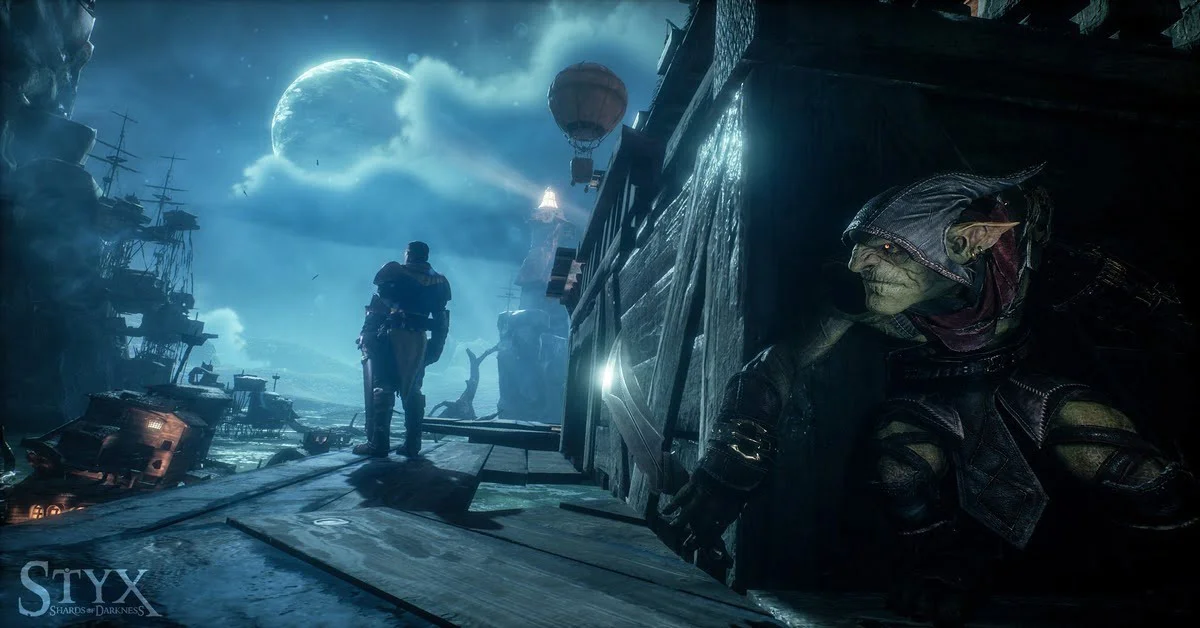
Many new open-world and action games offer “Stealth Light.” That means short sections where you can sneak, but don’t have to. Mistakes are rarely punished harshly, and you can usually seamlessly switch to open combat. As a result, hardly any tension is generated, but there is high accessibility. Still, there is a community for pure stealth games. They want methodical and patient gameplay. Challenges are always in demand, as seen in Soulslikes, but there, the frustration and challenge are more in the foreground. Nowadays, players are once again consciously looking for clearly defined genres.
However, in recent years, AAA games have become more unpopular, and small indie studios are stepping further into the spotlight. These studios are also daring to take on specialized projects far from the mainstream again. There is also more focus on gameplay instead of a gigantic budget and an obligation to earn a lot. Styx is regarded as a prime example of courageous genre loyalty, and Blades of Greed serves as a test case. So far, the reviews are quite positive, but the massive player numbers have unfortunately failed to materialize.
Conclusion – Styx, a silent hero in the shadow of AAA giants
The Styx franchise proves that consistent stealth design still has a right to exist even in 2026. While many big brands only include sneaking as an optional feature, Styx stays true to its uncompromising path. Cyanide Studio never tried to turn the goblin into an action hero, but continues to rely on planning, patience, and genuine vulnerability. That is exactly what makes the series so special.

With Blades of Greed, the franchise takes a modern step forward without losing its identity. While technical weaknesses and moderate player numbers show the limits of a niche genre, the creative vision is clearly recognizable. Styx stands symbolically for games that do not bow to the mainstream. And perhaps this adherence to clear principles is exactly the reason why the little goblin remains relevant today.
Hey, I’m Kilian, but online you’ll probably know me as “Tux1243.” I've been part of the team for almost two years now, always trying to keep you in the loop with the latest and coolest gaming news. I also have a huge passion for doing deep dives and detailed analyses of entire game series and franchises. I love getting to the bottom of things and exploring the little details and backstories that make game worlds so fascinating.
Download the Allkeyshop Browser Extension Free
For all the latest video game news, trailers, and best deals, make sure to bookmark us.
You can find all the best and cheapest online deals on CD keys, game codes, gift cards, and antivirus software from the verified CD key sellers on our store pages.
To not miss any news on Allkeyshop, subscribe on
Google News
.
MORE RELEVANT ARTICLES




These games look like better "Assassin's Creed"s than most of the Assassin's Creed games.
It's honestly so refreshing to see Styx: Blades of Greed stick to its pure sneaking roots instead of just blending into another generic action-hybrid. Cyanide Studio really cooked with those massive, interconnected levels and all that vertical freedom!
Styx is just such a hidden gem . Such a nice gameplay
I love Styx's grumpy goblin style that keeps things tense without dumb action bits.
Always love the Pixel Sunday deep dives! Styx is such an underrated stealth series; it’s great to see it getting some spotlight here. [koncima]