










Pixel Sundays: Battlefield – Rise, Fall, and the Great Comeback

For over 20 years, Battlefield has stood for large-scale battles, destructible environments, and tactical teamplay. But over time, Battlefield has had its ups and downs. After legendary classics came major missteps that almost pushed the entire franchise to ruin.
Overview
- The Rise of a Legend – How Battlefield Made Shooter History
- Evolution & Experimentation – Bad Company, 3 & 4 and the Golden Era
- Setbacks & Controversies – The Road Into Crisis
- Battlefield 6 – Demo Records, Tactical Comeback and a New Beginning
- Conclusion – A Shooter That Reinvents Itself
But now, with Battlefield 6, came the rescue. The game broke beta records and had a strong launch. With this title, EA has reinvented the series and turned it back into what it was meant to be. Today, we look back at two decades of battlefields and take a bold look into the future of the franchise.
The Rise of a Legend – How Battlefield Made Shooter History
It all began with Battlefield 1942 in 2002. Developed by DICE (Digital Illusions CE), the game was released for PC and later Mac. As the name suggests, the game is set during World War II, featuring iconic locations across the Pacific, North Africa, and Europe. It allowed up to 64 players simultaneously on a single map — an incredibly high number for multiplayer shooters at the time. The game featured various classes (e.g., Scout, Assault, Medic, Engineer, Anti-Tank), each with specific weapons and roles. It also introduced tanks, planes, boats, and submarines.
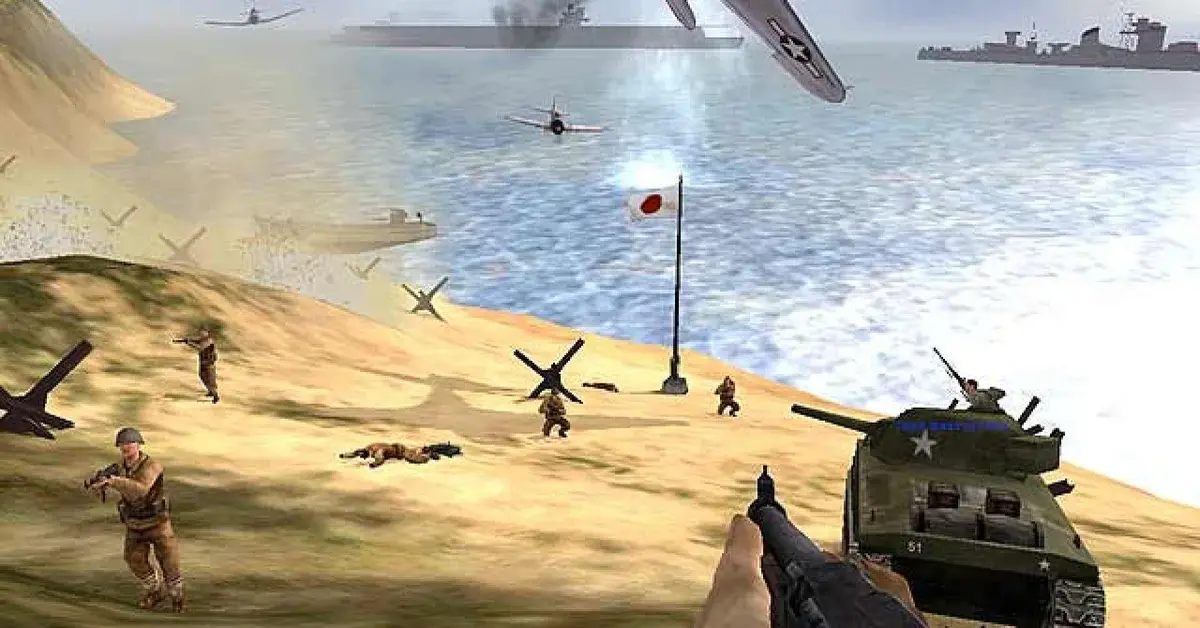
The main objective was to capture and hold control points (flags). These served as spawn points and controlled reinforcements. The game was easy to jump into, even for those with little shooter experience. While there was a single-player mode, it was more of an addition and remained secondary for most players. Numerous mods, such as new maps, expanded the game significantly. Battlefield 1942 became a huge success and sold millions of copies, firmly establishing the franchise.
Following the massive success of the first game, Battlefield Vietnam was released in 2004. This entry focused on the Vietnam War, featuring maps like Ia Drang and Huế. The engine was further improved, delivering technical enhancements and a better gameplay feel. The game introduced asymmetric warfare: U.S. forces had access to heavy vehicles like helicopters, tanks, and bombs, while the Vietnamese relied on infantry tactics and anti-vehicle weapons.
For the first time, players could fire from vehicle passenger seats. Vehicles also featured an in-game radio with 60s music, and players could even add their own music files. A 3D minimap displaying allies and control points was also introduced. Battlefield Vietnam offered four main classes with alternate loadouts. By the end of 2004, the game had sold nearly 1 million copies.

Battlefield 2 launched in 2005 and shifted the setting to modern warfare (early 21st century). It introduced modern weapons, tactical environments, and technological features. One of its key additions was the commander system, allowing a player to act as commander with access to recon drones, UAVs, airstrikes, and supply drops.
In addition to commanders, the game introduced squads, each with a squad leader who could issue orders, improving coordination in battles. The commander could communicate with squad leaders via voice or map to assign objectives. This system was further developed in later titles, including Battlefield 2142 with its Titan mode. Battlefield 2 is still regarded by many players as one of the best Battlefield titles ever made, largely thanks to these strategic layers.
In 2006, Battlefield 2142 was released, set in the distant future of 2142. Earth is facing a new ice age, and the EU is at war with the Pan Asian Coalition over the last habitable land. The game’s key unique feature was the Titan Mode. In this mode, teams must capture anti-Titan missile silos to weaken the enemy Titan. Once weakened, players must board the Titan and destroy its core. Titans acted as massive floating warships / aircraft carriers with defensive systems.

The commander system remained, but now the commander had the ability to move the Titan instead of calling in orbital strikes. The maps were much more futuristic and introduced new technologies. The Titan Mode added tactical depth and introduced a new strategic layer. With this game, DICE proved they could not only deliver historical battles but also excel in futuristic and sci-fi settings.
Let’s briefly discuss why Battlefield quickly became a benchmark in the multiplayer shooter genre. The combination of large-scale maps + vehicles + infantry was almost unique at the time and offered immense gameplay freedom. With a strong focus on teamplay and roles and classes, the series brought new depth to the genre. Moreover, the developers continuously pushed themselves further and overcame every challenge.
Evolution & Experiments – Bad Company, 3 & 4 and the Golden Era
After all those Battlefield successes, the series moved on to the Bad Company games, which are also part of the franchise. In Bad Company, the Frostbite Engine 1.0 was used for the first time. It enabled destructible environments (walls, structures) as a key feature. This was the first Battlefield developed primarily for PS3 and Xbox 360, and it included a full single-player campaign. That campaign was rather lighthearted, with witty dialogue and a touch of comedy, in contrast to the serious war tone of its predecessors.
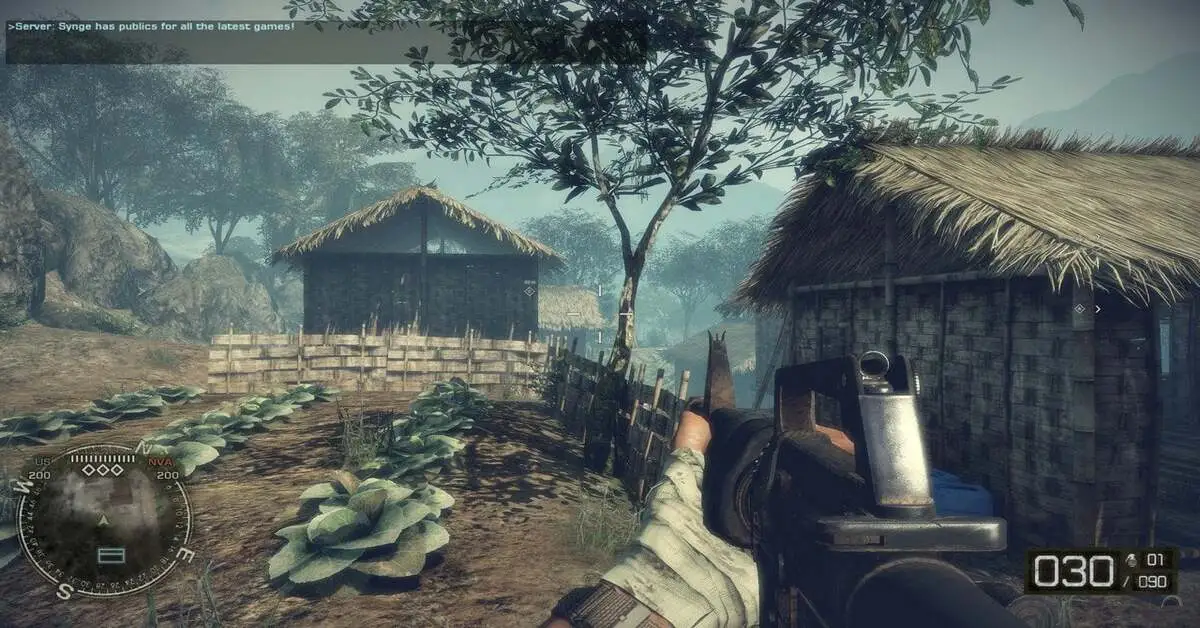
At launch, the game only featured the Gold Rush mode as an attack/defend variant, but the classic Conquest mode with point capturing was missing. It was later added at the players’ request. While not everything on the maps could be destroyed, cover could be demolished, making the gameplay much more dynamic.
Bad Company 2, released in 2010, upgraded to Frostbite 1.5. This allowed for even greater destruction, including complete building collapses and more particle effects. The campaign once again featured likable characters, an ironic tone, and a return to the dynamic energy of the first game. This campaign is considered one of the best in Battlefield history.
The multiplayer was heavily optimized with well-designed maps, balanced classes, and a strong focus on destruction. It also introduced tactical variants such as Rush and Conquest. The game was a huge success, selling over 12 million copies worldwide. It also served as a source of inspiration for the destruction mechanics and overall gameplay feel in Battlefield 6.
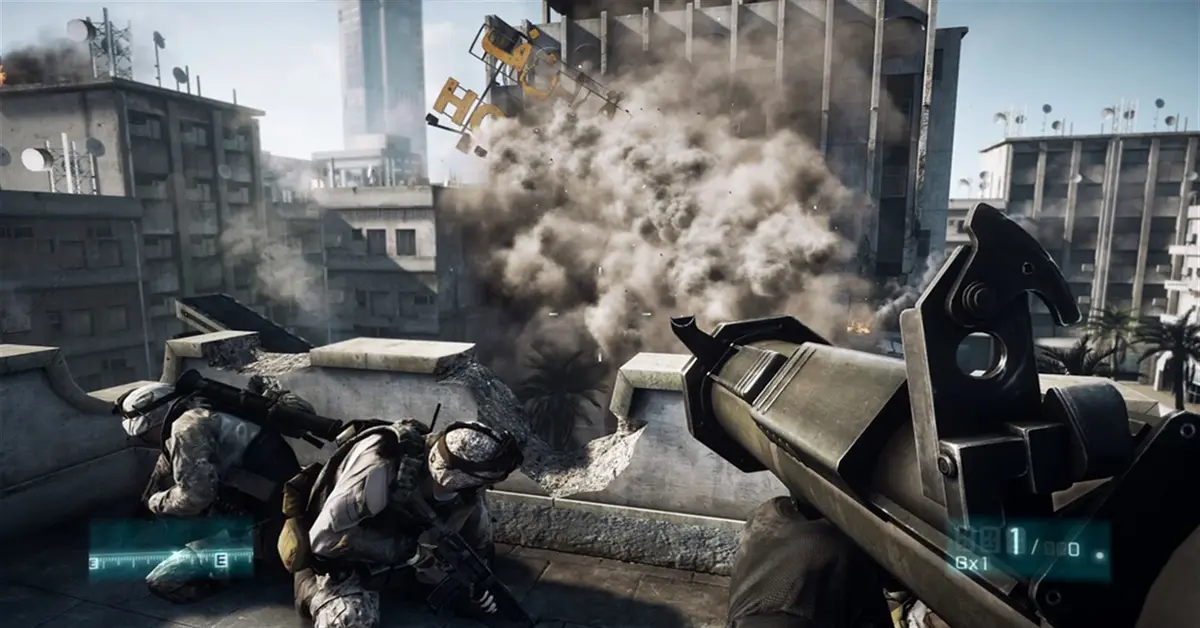
In 2011, Battlefield 3 launched with the Frostbite Engine 2. This improved rendering, lighting, physics, and Destruction 3.0. With Destruction 3.0, falling debris could pose deadly hazards. The game reintroduced 64-player battles with jets, tanks, and helicopters on a massive scale. The multiplayer featured solid class balance, a squad system, a co-op mode, and DLCs with new maps and modes.
The campaign had far more cinematic set pieces and a darker tone compared to Bad Company. The focus shifted fully to war realism instead of humor. Originally, the game was planned as an MMO-style experience, but that idea was later abandoned.
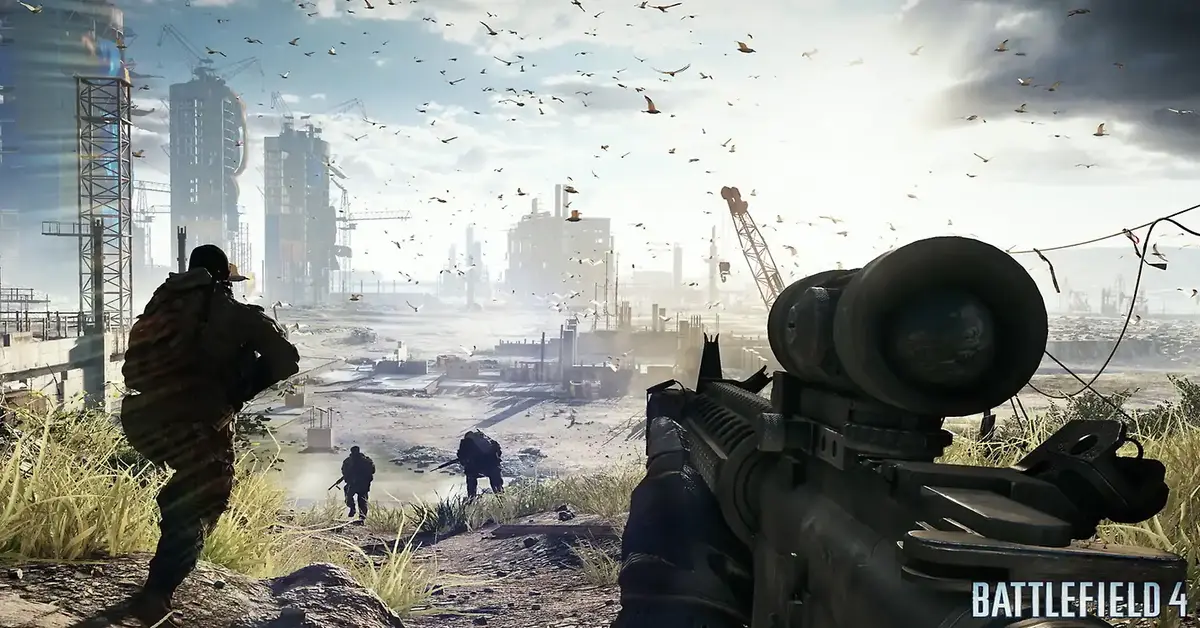
The new Battlefield 4 arrived in 2013 with the next evolution, Frostbite Engine 3. The maps could now be dramatically impacted by events like dam breaks and flooding. Alongside land, air, and sea vehicles, naval units and underwater maps were added. The game refined classic features such as the Commander mode, squad voice chat, and expanded customization. At launch, it suffered from several bugs, netcode issues, and server problems, but these were fixed later. The story campaign is often considered generic.
With Battlefield Hardline, a game with very mixed reactions was released in 2015. Developed by Visceral Games in collaboration with DICE, the game launched for PC and consoles. However, it marked a thematic shift, focusing on police work, heists, and crime instead of war — a completely new setting for the series. The game featured more melee combat and less emphasis on large-scale vehicle battles typical of a war scenario.
The reviews were very mixed. Some players welcome the fresh approach, while others saw it as a departure from the franchise’s identity. The game also ran on the Frostbite 3 engine, but felt less spectacular due to the lack of destruction and large-scale combat scenarios. Still, this was the only game with such a different setting, and the developers quickly took the right step back afterward.
Setbacks & Controversies – The Road to Crisis
Even though Battlefield Hardline wasn’t the most popular title, this is where the downward spiral began. It started with Battlefield 1 in 2016, marking a return to World War I. The game was a commercial success with over 15 million units sold. Its multiplayer offered solid core mechanics, class balance, and modes like Operations, as well as the feeling of large-scale battles.

However, the game faced significant criticism. Vehicles, particularly tanks, were poorly balanced. Anti-vehicle weapons were often too weak, and tanks dominated every battle. While the game was atmospherically strong, it offered less weapon variety and was less spectacular overall. The campaign was relatively short and narratively inconsistent. It featured several short War Stories, some significantly better than others. Many felt the WWI concept was well executed, but others missed the weapon diversity and were frustrated by the technological limitations.
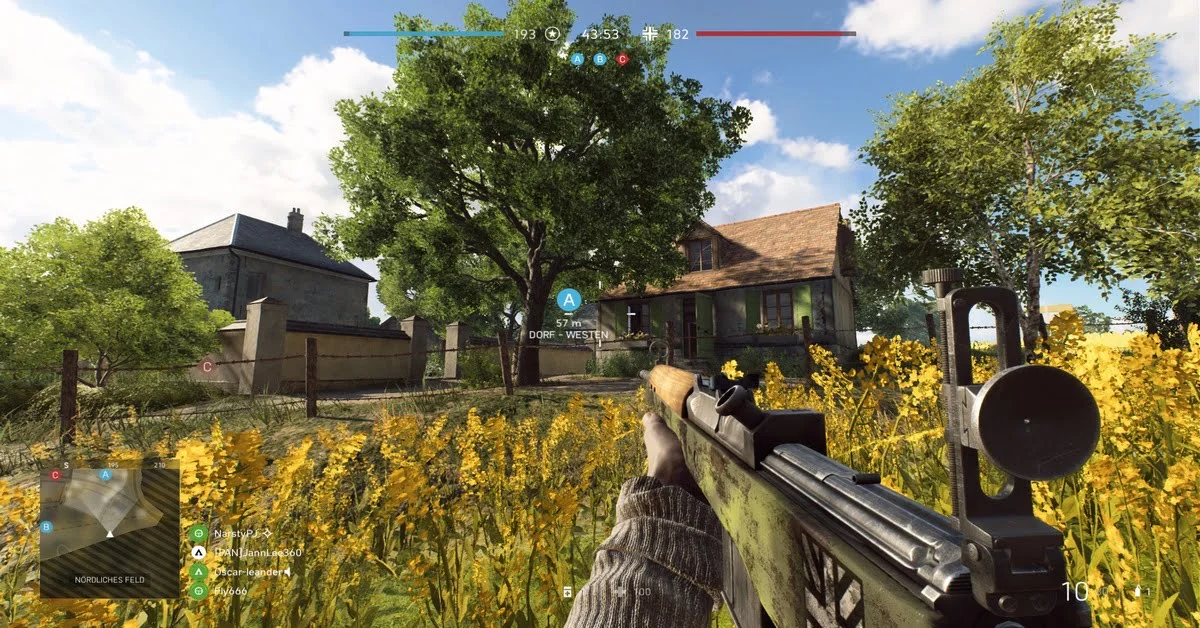
Then came the announcement of Battlefield V, which already faced heavy backlash after its trailer. Critics complained about the historically inaccurate weapon representation and the inclusion of female front-line soldiers in a World War II setting. The game launched in 2018, but at release, it featured little content, few maps, and fewer modes than expected. Sales were also far below expectations, with only 7.3 million copies sold by the end of 2018. The last major content update arrived in summer 2020, and nothing new followed afterward.
The game had no premium DLCs, and all content could be unlocked for free via Tides of War, which was well received. However, the game was less innovative than expected, and the gameplay felt too similar to its predecessor, lacking major new features. It was also historically inaccurate, and the creative liberties taken sparked heated debates within the community. There were also technical issues at launch.
And then came 2021 — the lowest point of the franchise: Battlefield 2042. The launch was plagued by massive bugs, crashes, and performance issues. Many of the classic features, such as classes or the commander mode, were missing or significantly watered down. The game introduced 128-player battles, but this resulted in overcrowded maps with poorly designed distance balance. Player numbers plummeted quickly: at launch, the game peaked at 105,400 concurrent players on Steam, but that number rapidly dropped to 52,000. On Steam, it received thousands of negative reviews, with as few as 21% positive ratings.
The setting was clearly one set in the near future, but it was poorly executed. Because of this, DICE and EA were accused of alienating the franchise. This fallout forced EA and DICE to act, and they tried to improve the game with new patches and features, but the reaction came far too late.
This breach of trust meant EA had to fear that Battlefield would no longer be taken seriously, even for future titles. After all these failures, the entire future of the franchise was at stake. But fortunately, EA managed to escape this downward spiral.

Battlefield 6 – Demo Records, Tactical Comeback, and a New Beginning
Battlefield 6 launched with an open beta on Steam and reached up to 521,079 concurrent players on August 9, 2025. This made the beta attract more players than previous Battlefield games and set a new Steam record for the most successful open beta ever, even surpassing the Call of Duty record. Based on community feedback, the developers announced over 200 changes for launch, including balancing, UI, and map adjustments. During the beta, more than 92 million hours were played according to EA.
On October 10, 2025, Battlefield 6 finally launched and hit an all-time peak of 747,440 concurrent players — setting another new record. This even surpassed titles like Apex Legends. One thing that immediately stood out was the continued presence of large queues at launch, with more than 500,000 players waiting simultaneously. However, the game now offers better performance, an optimized engine focused on stability and compatibility. The classic four classes return with clearer role identities, but players can now freely choose their weapons. That said, you might lose certain bonuses if, for example, you play as an Assault carrying a sniper rifle.

EA plans to continuously roll out updates for the game, and to test these beforehand, they’ve introduced Battlefield Labs. This is a core part of BF6’s strategy, where developers work directly with the community on testing, balancing, and new features. Labs will allow riskier features to be tested before they are fully implemented, giving the option to scrap them if necessary.
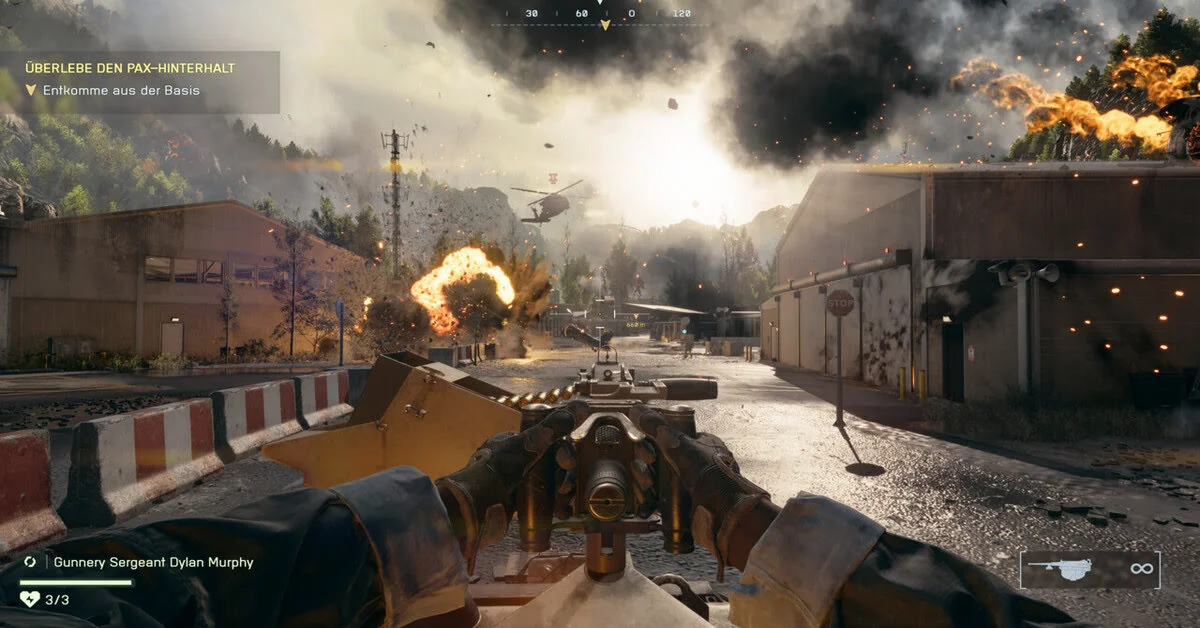
Now, let’s look at all the new features awaiting you in Battlefield 6. Cost structures have been reworked. Compared to the beta, there are more vertical layers, dynamic destruction events, and a stronger emphasis on height advantages. In Battlefield 6, almost everything is destructible — buildings can collapse and cranes can fall, creating a whole new dynamic in every match.
You can customize weapons with various attachments, scopes, bipods, and more to suit your playstyle. The game once again focuses on tactical teamplay and roles, which were missing in BF 2042 and drew heavy criticism. Depending on the server, there are open or closed weapon systems, allowing you to use any weapon with any class. An official roadmap has already been shared: Season 1 begins on October 28, 2025 with new maps, modes, and weapons. A Battle Royale mode is also in development. EA plans to support the game long-term with regular content drops, balance patches, and community events at the core of its live service.
Conclusion – A Shooter Reinventing Itself
After more than two decades of legendary highs and devastating lows, Battlefield proves that even a wounded franchise can return to former glory. With Battlefield 6, DICE hasn’t just launched a game — they’ve created a fresh start that brings back everything fans have been missing for years: clear class identities, tactical teamplay, and epic destruction on a never-before-seen scale. The series not only looks proudly back on its past, but also shows boldness for change — with Battlefield Labs, dynamic maps, and a long-term vision for the future.
Battlefield has reinvented itself many times — but this time, it doesn’t just feel like a reboot, it feels like a return to its roots with an eye to the future. Perhaps it was exactly this storm of criticism and these failures that were needed to rekindle the fire. And in the end, one thing is clear: The battlefield lives again — and it’s only just begun to roar.
Hey, I’m Kilian, but online you’ll probably know me as “Tux1243.” I've been part of the team for almost two years now, always trying to keep you in the loop with the latest and coolest gaming news. I also have a huge passion for doing deep dives and detailed analyses of entire game series and franchises. I love getting to the bottom of things and exploring the little details and backstories that make game worlds so fascinating.
Download the Allkeyshop Browser Extension Free
For all the latest video game news, trailers, and best deals, make sure to bookmark us.
You can find all the best and cheapest online deals on CD keys, game codes, gift cards, and antivirus software from the verified CD key sellers on our store pages.
To not miss any news on Allkeyshop, subscribe on
Google News
.
MORE RELEVANT ARTICLES




Comments (106)
Many thanks for another complete article. I've always wanted to see how Battlefield evolved through time until it reached today's statut of classics.
Haven't really played many games liked this before but it didn't disappoint
I used to be a COD fanatic, but this BF6 is a masterpiece. I’m loving it! The numbers speak for themselves!
Ah, Battlefield. What a legendary series. I think Battlefield 6 is the ultimate era of the series. ds: rosixor
Battlefield and Call of Duty are two of the most spoken of games when it comes to FPS Shooter genre, and with good reason. DC: ezio3133