

The Team Liquid Legacy: From StarCraft Clan to 2026 Global Empire

In 2000, it was a bedroom operation in the Netherlands, a haven for StarCraft enthusiasts. In 2026, Team Liquid (TL) is a multi-billion-dollar institution with Disney-backed funding, state-of-the-art training facilities, and World Titles in virtually every major esports genre.

The “Blue Horse,” known the world over as Team Liquid, isn’t just a team, but the definitive history of esports, a living, breathing encyclopedia of competitive gaming that has outlasted every “esports winter” and hype cycle thrown its way.
From its humble beginnings to its current status as a corporate titan, Team Liquid embodies the evolution of an entire industry, a testament to visionary leadership, unwavering community focus, and a relentless, ruthless pursuit of excellence.
Team Liquid: The Architects of Professionalism (2000–2014)
The story of Team Liquid begins not with prize pools and corporate sponsorships, but with passion and community.
Founded in 2000 by Victor “Nazgul” Goossens, Team Liquid emerged from the vibrant StarCraft: Brood War scene, initially as a small, invite-only clan.

But Nazgul’s vision extended beyond simply playing the game. In 2001, he launched TL.net, a news site that rapidly became the definitive source for StarCraft coverage.
This was followed by the groundbreaking Liquipedia in 2007, a community-driven wiki that meticulously documented player histories, tournament results, and strategic insights across countless esports titles.
These platforms weren’t just resources, but were, and still are, the very infrastructure upon which professional esports would later be built, a testament to Team Liquid’s early understanding that sustained success required more than just winning. It required building a loyal, informed audience.
The early years were defined by grassroots grit and iconic moments. The “Foreigner Miracle” of 2010 saw Jonathan “Jinro” Walsh, a Team Liquid player, embark on a legendary run in the Global StarCraft II League (GSL).
Against overwhelming Korean dominance, Jinro became the first non-Korean player to reach a Code S semifinal. That exceptional feat resonated globally and cemented Team Liquid’s reputation for nurturing world-class talent.
This period proved that Team Liquid’s primary contribution wasn’t just winning, but building the internet’s esports infrastructure and cultivating a community that valued both competition and comprehensive knowledge.
Their early “community-first” approach built a loyalty moat that many later, more commercially driven competitors couldn’t, and still can’t replicate.
The Team Liquid Golden Era: Grand Slams and Double Aegis (2015–2024)
The landscape of esports began to shift dramatically in the mid-2010s, moving from niche communities to mainstream recognition.
Team Liquid, under the astute guidance of Nazgul and Steve Arhancet, was perfectly positioned to capitalize on this boom. The pivotal moment arrived on January 6, 2015, with the merger of Team Liquid and Curse Gaming, which saw Arhancet become co-CEO and co-owner of Team Liquid.
This strategic alliance provided the crucial North American infrastructure, including a foothold in the burgeoning League of Legends Championship Series (LCS), which would transform a European clan into a multi-title global powerhouse.
The years that followed were a testament to this expanded vision, ushering in what many fans refer to as Team Liquid’s “Golden Era.” Dota 2 became a cornerstone of their competitive dominance.
In 2017, the legendary roster featuring KuroKy, Miracle-, GH, MinD_ContRoL, and MATUMBAMAN embarked on an improbable lower-bracket run at The International 7, ultimately claiming the coveted Aegis of Champions and a staggering $10.8 million prize.
This victory cemented their status as Dota 2 legends. Seven years later, in 2024, Team Liquid once again hoisted the Aegis at The International 2024, this time with an entirely new roster built around the prodigious talent of Nisha and the strategic brilliance of 33.
This historic achievement made Team Liquid the first organization ever to win two Internationals with completely different lineups, underscoring their ability to consistently rebuild and adapt at the highest level.
However, Dota 2 was not their only conquest. The 2019 CS: GO Intel Grand Slam remains one of the most astonishing achievements in esports history.
The roster of Twistzz, EliGE, nitr0, NAF, and Stewie2K embarked on a relentless winning streak, claiming four premier titles in just 63 days, the fastest Grand Slam ever recorded.
This feat showcased a level of sustained dominance that few teams in any esport have ever achieved, proving Team Liquid’s tactical prowess and mental fortitude across different competitive ecosystems.

The 2026 Scouting Report: Team Liquid Alienware
As we stand in 2026, Team Liquid continues to evolve, entering a new era defined by strategic partnerships and a calculated mix of veteran leadership and explosive new talent.
The most visible sign of this evolution is the Team Liquid Alienware branding in the LCS, a groundbreaking partnership for naming rights that highlights the strong technological integration and shared commitment to excellence.
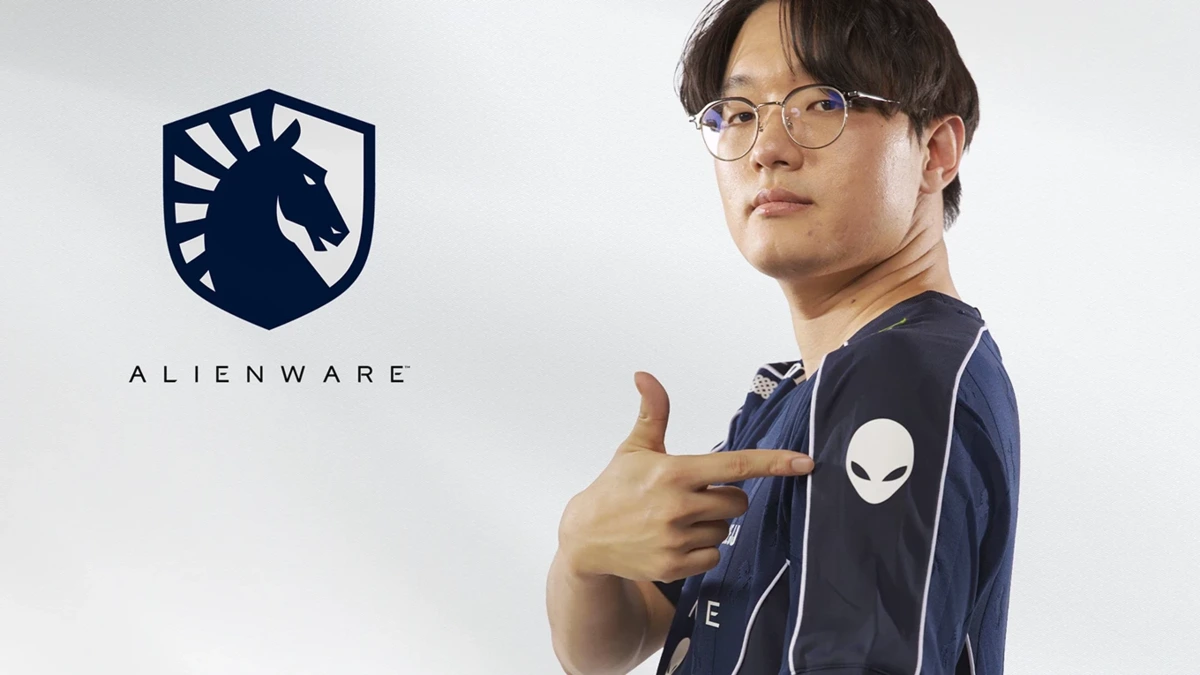
League of Legends: The “Lord Morgan” Era
In the LCS, Team Liquid Alienware has embraced a “Personality + Performance” pivot, creating a roster that blends rock-solid fundamentals with high-ceiling playmaking.
The veteran bot lane duo of CoreJJ and Yeon, now entering their fourth year together, remains the unshakeable bedrock of the team. CoreJJ, the strategic mastermind and vocal in-game leader, guides Yeon, who has matured into one of North America’s most consistent and reliable ADCs.
However, the major storyline for 2026 revolves around the top lane: Morgan. Known as “Lord Morgan” for his often-chaotic yet undeniably impactful LCK performances, the former Hanjin Brion top laner brings a high-resource, high-reward playstyle. His ability to either dominate a lane or act as a flexible engage tool makes him the primary wildcard.
In the jungle, Josedeodo (the “Tuki” king) returns to the LCS, tasked with providing the proactive pathing and early game aggression needed to unlock Morgan’s potential.
Rounding out the lineup is Quid in the mid-lane, a 2025 All-Pro who serves as the team’s primary carry threat.
- Top: Morgan “Lord Morgan” – the draft-flexible charisma engine and carry threat.
- Jungle: Josedeodo – The return of the “Tuki” king, providing proactive early game pathing.
- Mid: Quid – 2025 All-Pro, a high-resource carry tasked with game dominance.
- Bot: Yeon – The region’s steadiest ADC, high first-blood participation, consistent.
- Support: CoreJJ – The IGL and architect of Team Liquid’s modern culture and macro play.
Valorant: The VCT EMEA Reconstruction
Team Liquid’s Valorant division in EMEA has undergone a significant reconstruction for 2026, aiming to rectify the pacing issues that plagued them in 2025.
The core spine remains the tactical genius of nAts (Sentinel/IGL), widely considered a top-3 global Sentinel, whose lurk and clutch factor are unparalleled. Alongside him is kamo (Duelist), retained for his explosive entry-fragging and consistent firepower.
The strategic pivot, however, lies in the additions: MiniBoo (ex-Heretics) and wayne (Pacific talent). MiniBoo brings a hyper-aggressive, fearless entry-fragger playstyle, renowned for his world-class Neon mechanics.
Wayne, a breakout prospect from the Pacific region, represents a strategic investment in untapped talent, providing flexible utility and clutch potential.
Under coach LohaN, this lineup signals a clear shift towards a more high-tempo, “proactive play” style, aiming to surprise opponents with both tactical depth and raw aggression.
- Sentinel/IGL: nAts The “Rat King” – Still widely considered a top-3 global Sentinel.
- Duelist: kamo – Retained for his explosive entry-fragging and 2025 consistency.
- Entry/Flex: MiniBoo – Fearless entry-fragger known for world-class Neon mechanics.
- Flex/Initiator: purp0 – Long-monitored EMEA prospect finally getting his Tier-1 shot.
- Flex/Sentinel: wayne – A breakout Pacific profile brought in for tactical depth.
The 2026 Rivalry Map: The War of the Icons
In 2026, Team Liquid isn’t just competing against opponents, but battling icons, vying for supremacy against organizations with equally rich histories and formidable rosters.
- Cloud9 (LoL), the “Eternal NA Rivalry” continues: C9’s mid-lane dominance (Fudge/jojopyun) often clashes with TL’s superior macro control and bot-lane stability. Every fixture is a battle for regional pride and regular-season supremacy.”
- Team Vitality (Valorant), the “”EMEA Superteam” represents a significant hurdle for TL’s Valorant squad: Vitality’s aggressive, coordinated pushes and star duelist trio (trexx, Sayf, mizuN) narrowly edged out TL 2-1 in the VCT EMEA Kickoff Finals, setting the stage for a season-long fight for regional dominance.”
- G2 Esports (CS2), the “Kings of Europe” in CS2: G2 consistently acts as the IEM Kraków 2026 gatekeepers. Their individual brilliance (m0NESY, NiKo) against TL’s structured teamplay makes for a constant tactical chess match, often deciding crucial tournament runs.”
- Team Falcons (Multiple games), the burgeoning “Club Championship” war: Falcons, with their aggressive investment strategy, have emerged as a dominant force across multiple titles. TL finished a close 2nd to Falcons at the Esports World Cup 2025, highlighting an organizational-level rivalry for overall esports supremacy.”
The Business of the Horse: Diversified Revenue, Strategic Partnerships
Team Liquid’s longevity and competitive success are inextricably linked to its sophisticated and diversified business model. In 2026, the organization’s estimated valuation of nearly $500 million isn’t just a testament to prize money but a reflection of strategic partnerships, diversified revenue streams, and a shrewd understanding of the esports ecosystem as a legitimate media and entertainment venture.
At the core of Team Liquid’s financial engine is its ability to move beyond traditional esports revenue (prize pools, merchandise) into high-value naming rights and deep technological integrations. The Alienware partnership exemplifies this.
Beyond simply branding, Alienware plays a crucial role in funding and equipping Team Liquid’s world-class Alienware Training Facilities (AWTF) in Los Angeles, Utrecht, and São Paulo.
These facilities aren’t just offices, but cutting-edge performance centers that provide players with optimal training environments, sports psychologists, and physical trainers, all of which directly contribute to player longevity and peak performance.
The estimated value of this naming rights deal and ongoing tech support is well into the multi-millions, providing a stable, foundational income.
Team Liquid has also been at the forefront of the Web3 integration. Their partnership with Coinbase (and previously Sui Blockchain) is more than just a sponsorship, but an infrastructural component.
The “Liquid Vault” and MyBlue loyalty platform leverage blockchain technology to create verifiable fan rewards, exclusive digital collectibles, and enhanced community engagement.
This innovative approach allows TL to directly monetize fan loyalty, providing unique digital experiences and fostering deeper connections with its audience.
Traditional sponsorships also remain a vital pillar. Long-standing partners like Monster Energy and Visa continue to drive significant revenue through high-visibility jersey placements, integrated content activations, and event sponsorships across Team Liquid’s diverse roster of 19+ competitive titles.
In 2026, Team Liquid has also made a calculated pivot into the betting space with Duelbits, focusing on responsible gaming content and activations primarily within their CS2 and Chess divisions.
This diversification mitigates reliance on any single revenue stream, making Team Liquid remarkably resilient to market fluctuations.
- Naming Rights (Alienware): Funding the world-class Training Facilities (AWTF) in LA, Utrecht, and São Paulo, ensuring peak player performance and brand integration.
- Blockchain/Web3 (Sui/Coinbase): The “”Liquid Vault”” & MyBlue loyalty platform for verifiable fan rewards, exclusive digital collectibles, and enhanced community engagement.
- Sponsorship (Monster Energy/Visa): High-visibility jersey and content activations across all 19+ titles, leveraging brand equity.
- Betting (Duelbits): A 2026 pivot into responsible gaming content and CS2/Chess activations, tapping into new revenue streams ethically.
- Media Rights (Riot Games/Valve): Proportional revenue from League of Legends LCS & Valorant VCT franchise leagues.
- Merchandise (Liquid Store): High-demand apparel, accessories, and team gear, fostering fan identity.
Appendix: The Championship Hall of Fame (2017–2026)
Team Liquid’s trophy cabinet is a testament to two decades of sustained excellence. The following table highlights some of their most significant championship victories in the modern era, underscoring their remarkable consistency across diverse titles.
- 2017, Dota 2, The International 7 Champions: KuroKy (Captain) / Miracle- (Mid) – Historic lower bracket run.
- 2018, LoL, LCS Spring & Summer Champions: Doublelift (ADC) – Beginning of the LCS dynasty.
- 2019, LoL, LCS Spring & Summer Champions: Impact (Top) – Continued domestic dominance, 2nd at MSI.
- 2019, CS:GO, Intel Grand Slam Season 2: nitr0 (IGL) / Twistzz (Rifler) – Fastest Grand Slam in history (63 days).
- 2024, LoL, LCS Spring Playoffs Champions: CoreJJ (Support) / APA (Mid) – A resurgent domestic performance.
- 2024, Dota 2, The International 2024 Champions: Nisha (Mid) / 33 (Offlane) – Second Aegis with an entirely new roster.
- 2024, SC2, Esports World Cup Champion: Clem (Terran) – A dominant performance solidifying TL’s SC2 legacy.
- 2025, Chess, Esports World Cup Champions: Magnus Carlsen / Team Liquid Chess – Strategic expansion into traditional gaming.
- 2025, MLBB, MLBB Mid-Season Cup Champions: Team Liquid PH – Proving global reach in mobile esports.
- 2026, Valorant, VCT EMEA Kickoff Finals: nAts (Sentinel) / MiniBoo (Duelist) – A strong start to the EMEA season.
Is Team Liquid the “Forever Org”?
In an industry often characterized by fleeting trends and “esports winters,” Team Liquid stands as an anomaly, a monument to sustained success and adaptable vision.
Their longevity is not accidental, but the result of the “Liquid Way,” which combines traditional sports professionalism with cutting-edge technological integration and an unwavering commitment to their grassroots, community-first heritage.
From the meticulous archives of Liquipedia to the high-performance labs of the Alienware Training Facilities, Team Liquid has consistently invested in infrastructure, player welfare, and diversified revenue streams.
They have proven that an esports organization can be both a beloved community hub and a shrewd business entity.
As they navigate the competitive battlegrounds and complex financial landscapes of 2026, Team Liquid isn’t just chasing trophies, but solidifying their status as the “Forever Org,” the definitive blueprint for organizational immortality in the dynamic world of esports.
If you value stability, legacy, and a consistent pursuit of excellence over fleeting hype, then supporting the Blue Horse remains the smartest choice in esports.
Fueled by a passion for gaming and the ever-evolving world of gaming news, Daniel loves connecting with seasoned and new players to bring games to life on the page, exploring their narratives and gaming trends. A self-published fiction and fantasy author, Daniel has nearly 20 years of experience writing gaming news and a love for storytelling that drives his enthusiasm to deliver breaking news, in-depth analysis, and industry innovations. You will find him in-game as "Windfell."
Download the Allkeyshop Browser Extension Free
For all the latest video game news, trailers, and best deals, make sure to bookmark us.
You can find all the best and cheapest online deals on CD keys, game codes, gift cards, and antivirus software from the verified CD key sellers on our store pages.
To not miss any news on Allkeyshop, subscribe on
Google News
.
MORE RELEVANT ARTICLES