





The Rise and Fall of Evil Geniuses: A 2026 Autopsy

The collapse of Evil Geniuses (EG) is not merely a corporate failure, but a structural warning for the entire esports industry.

Key Takeaways: The Quick Answer
- EG transitioned from a player-led powerhouse to a venture capital-driven entity that prioritized financial speculation over competitive integrity.
- Strategic failures, including the neglect of player mental health and the “contract jail” of world champions, have alienated the global fanbase.
- The 2026 iteration of the team exists solely to maintain franchise slots with minimum-viable investment, offering no path back to its former glory.
Founded in 1999, the Evil Geniuses once stood as the premier bastion of North American competitive excellence.
By 2026, it has been reduced to a skeletal remains of its former self, hollowed out by venture capital hubris, administrative mismanagement, and a fundamental misunderstanding of the culture that built it.
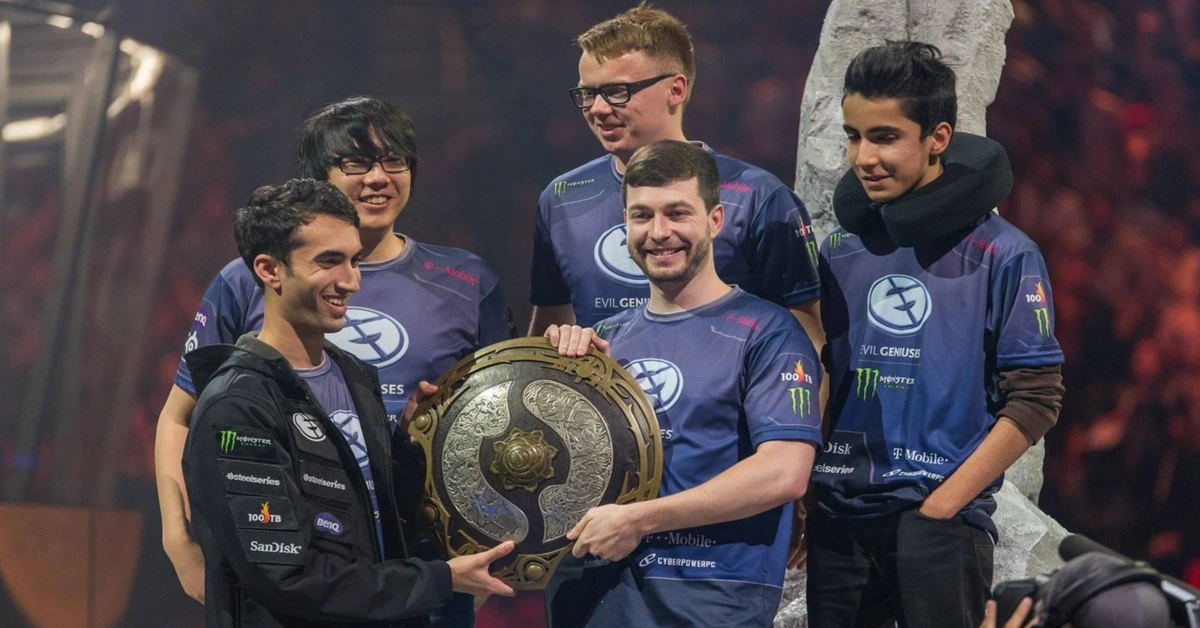
The journey from The International 5 champions, becoming the first North American team to win the Aegis of Champions in doing so, to a “zombie organization” serves as a grim case study in how to dismantle a multi-million dollar legacy.
Evil Geniuses: The Garfield Era and The Golden Age (1999–2018)
Under the leadership of founder Alexander Garfield, Evil Geniuses defined the “villain” archetype in professional gaming.
They were the organization that fans loved to hate, fueled by an authentic grassroots swagger and a roster of legendary talent across StarCraft II, Halo, and Dota 2.
During this era, EG wasn’t just a team; it was a curated collection of the most dominant and often most polarizing personalities in the world.
The “Bleed Blue” mantra was not a marketing slogan, but a culture built on winning at any cost while maintaining a fierce, independent identity.
The Kings of the RTS: IdrA, HuK, and the Korean Invasion
In the early 2010s, EG dominated StarCraft II through a combination of high-profile signings and sheer psychological warfare.
The legendary Greg “IdrA” Fields, a StarCraft II Zerg player who quickly established himself on the pro circuit following his iconic win at the Razer King of the Beta, hosted by Sean “Day9” Plott, became the face of the “Evil” brand, known for his mechanical brilliance and legendary “rage-quits.”
Alongside him, Protoss player Chris “HuK” Loranger and the signing of South Korean legends like Jaedong established EG as the only Western organization capable of rivaling the Korean dominance.
The FPS Juggernauts: From CS 1.6 to Halo Dominance
Before modern franchised leagues standardized the competitive calendar, first-person shooter esports operated in a raw, highly volatile open-circuit era.
Within this unforgiving environment, Evil Geniuses established themselves as the undisputed kings of North American tactical and arena shooters. This dominance was the result of aggressive talent acquisition and a ruthless winning culture.
The Counter-Strike 1.6 Foundation
EG’s PC shooter legacy was forged in the trenches of Counter-Strike 1.6. The organization assembled a roster that stood as the final credible North American threat against the legendary European dynasties of the late 2000s.
The squad was anchored by Danny “fRoD” Montaner, universally recognized at the time as the premier sniper in North American history. His unmatched precision was paired with the explosive, unpredictable entry-fragging of a young Jordan “n0thing” Gilbert.
Gilbert, signed as a teenage prodigy, revolutionized the game with his unparalleled movement and legendary wall-bang knowledge. Together, they secured monumental victories, including the **IEM IV American Championship**, proving that North American aim could compete on the global stage.
The Halo “God Squad” Era
As the organization expanded into console esports, they applied the exact same formula to the Halo franchise. The result was the creation of what the community simply referred to as the “God Squad.”
Operating primarily across Halo 2: Anniversary and early Halo 5, this roster achieved a level of absolute, suffocating dominance rarely seen in professional gaming.
The team’s foundation rested on the legendary twin-brother duo of Justin “Roy” Brown and Jason “Lunchbox” Brown. They provided flawless communication and objective control, allowing Eric “Snip3down” Wrona to operate as the ultimate slayer.
The final piece of the dynasty was Tony “Lethul” Campbell Jr., whose relentless aggression perfectly rounded out the roster. Operating under the meticulous tactical guidance of veteran coach Ryan “Towey” Towey, the team became statistically untouchable.
X-Games Gold and HCS Supremacy
This roster’s absolute apex occurred at the 2015 Winter X-Games in Aspen, Colorado. Competing on international television, Evil Geniuses systematically dismantled the competition to secure the gold medal.
They followed this mainstream triumph by winning the Halo Championship Series (HCS) Season 1 and Season 2 finals back-to-back. During this era, entering a tournament against EG was not a competition, but a battle for second place.
The Siege Heartbreak: Continuum and the Six Invitational
Evil Geniuses officially entered Rainbow Six Siege in late 2017 by acquiring the legendary Continuum roster. Led by Troy “Canadian” Jaroslawski, this squad was already a proven championship core capable of dominating the tactical shooter landscape.
The team provided one of the most agonizing, unforgettable moments in competitive history at the 2018 Six Invitational. Facing off against PENTA Sports, EG suffered a devastating reverse-sweep in the Grand Finals, a tragic choke that permanently scarred the North American fanbase.
Instead of reinforcing the roster through the subsequent competitive slumps, management ultimately pulled the plug.
By April 2020, EG completely exited the game, abandoning yet another passionate community just as the ecosystem began to solidify.
The 2015 Apex: TI5 and the Aegis of Champions
The 2015 victory at The International 5 (TI5) remains the undisputed crown jewel of North American Dota 2.
Prior to this championship, the North American region was largely dismissed by the global community as a secondary competitive tier, permanently overshadowed by European and Chinese powerhouses.
Facing a massive Western reshuffle after losing star players Artour “Arteezy” Babaev and Ludwig “Zai” Wåhlberg to rival Team Secret, former EG captain and CEO Peter “ppd” Dager was forced to completely rebuild the roster. He made two of the most consequential gambles in esports history.
Dager signed veteran support Kurtis “Aui_2000” Ling and a largely unknown 15-year-old pubstar named Syed Sumail “SumaiL” Hassan.
This drastically untested roster immediately validated the gamble by winning the inaugural Dota 2 Asia Championships (DAC), setting the stage for their historic summer campaign in Seattle.
The Roster of Immortals
The resulting championship squad featured a perfect, highly volatile blend of “Old Guard” tactical wisdom and raw “New Blood” aggression:
- Fear (Clinton Loomis): The “Old Man” of Dota. His career-long struggle through severe arm injuries to reach the pinnacle of the sport was famously immortalized in Valve’s Free to Play documentary.
- SumaiL: The Pakistani phenom who single-handedly revolutionized the mid-lane meta. At just 16 years old, his hyper-aggressive Storm Spirit play made him the youngest player to ever win a million-dollar tournament.
- UNiVeRsE (Saahil Arora): The silent anchor in the offlane. Known for his flawless positioning and high-impact ultimate usage, he was the most consistent player in the world at his peak.
- ppd: The tactical mastermind and self-proclaimed “Salt King.” His meticulous drafting famously neutralized the absolute best Chinese strategies.
- Aui_2000: The sacrificial support. His mastery of niche heroes like Techies and Naga Siren famously forced opponents into wasting mandatory bans against him every single game.
The $6 Million Echo Slam
The Grand Finals saw EG face off against the formidable Chinese “cinderella story” squad, CDEC Gaming. The North American team systematically dismantled their opponents, securing a 3-1 series victory by reading CDEC’s aggression flawlessly.
The climax of the tournament occurred in the decisive Game 4. CDEC attempted a desperate, smoked rotation into the Roshan pit to secure the Aegis and force a Game 5. Evil Geniuses anticipated the maneuver perfectly. What followed was a “DIS-A-A-A-A-STER!”
Dager, playing Ancient Apparition, launched his Ice Blast ultimate directly into the pit to provide vision and halt enemy healing. Milliseconds later, UNiVeRsE blinked in with Earthshaker, executing a flawless Echo Slam that instantly wiped four CDEC players.
This singular outplay secured the Aegis of Champions and the historic $6.6 million grand prize, forever cementing the moment in esports history.
The “Savage” Aftermath: Business Over Brotherhood
However, the championship celebration was remarkably short-lived. In a move that foreshadowed the cold, corporate logic of the organization’s later years, management kicked Aui_2000 just days after lifting the trophy.
i have been kicked from eg after winning ti. i actually hate people
— Aui 2000 (@Aui_2000) August 15, 2015
Evil Geniuses chose to capitalize on the victory by immediately re-signing Arteezy, prioritizing a specific vision of absolute superstar dominance over any sentimental loyalty to a newly crowned world champion.
This ruthless roster maneuver shocked the global community. Yet, it perfectly cemented the organization’s organic status as the ultimate villains of professional gaming, a team that valued winning above all else, regardless of the public relations cost.
EG vs Corporate Sanitization: “Live Evil” and FGC Abandonment
The 2019 acquisition by Chicago-based quantitative trading firm PEAK6 Investments marked the definitive end of the organization’s endemic era.
The brand traded its grassroots leadership for a boardroom of executives who viewed the industry strictly through the lens of algorithmic financial models.
This transition initiated a ruthless period of corporate sanitization that methodically stripped the team of its historical identity.
The “Live Evil” Identity Crisis
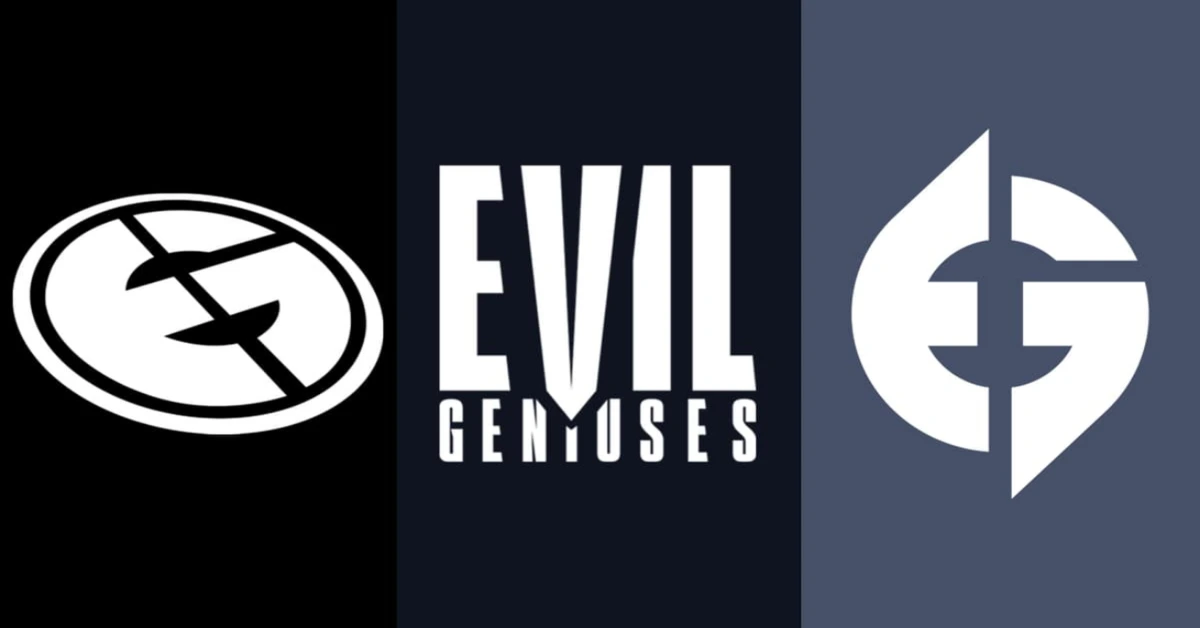
The most immediate symptom of this corporate takeover was the disastrous “Live Evil” rebranding campaign. Management discarded the iconic, aggressively styled circular shield logo, a crest that had represented North American esports dominance for nearly two decades.
In its place, they introduced a sterile, minimalist wordmark that was widely mocked by the industry. The rebrand alienated the core fanbase, attempting to replace the authentic “Bleed Blue” culture with focus-tested corporate messaging.
It felt entirely disconnected from the raw, competitive spirit that originally built the organization.
The FGC: The Heartbeat of the Villain Era
Nowhere was this cultural disconnect more glaring than in the organization’s treatment of the Fighting Game Community (FGC).
For years, Evil Geniuses was the undisputed king of the fighting game scene, fielding legendary talent across Street Fighter, Marvel vs. Capcom, and Mortal Kombat.
Players like Justin Wong, Ricki Ortiz, Eduardo “PR Balrog” Perez, and the multi-title champion SonicFox were the lifeblood of the brand.
These competitors embodied the gritty, arcade-hustle ethos that originally made EG the “villains” of the space.
They operated in a raw, highly personal competitive environment that predated the sanitized realm of developer-controlled leagues.
The Corporate Purge of Cultural Equity
However, venture capital spreadsheets do not account for cultural equity. Because the FGC operates primarily on grassroots open-bracket tournaments rather than multi-million dollar franchised circuits, the PEAK6 administration viewed the entire division as financially inefficient.
The leadership unceremoniously dismantled the fighting game roster, releasing legacy players who had carried the banner for over a decade. This move demonstrated a fundamental misunderstanding of the gaming ecosystem.
By dumping their fighting game legends to chase high-growth, venture-backed franchise slots in PC shooters and MOBAs, the organization severed its last remaining tie to the authentic gaming community.
Many believed the company traded the loyalty of the grassroots scene for a corporate boardroom strategy that would eventually engineer their complete financial collapse.
The PEAK6 Philosophy: Quantitative Trading Meets Human Talent
To understand the collapse of Evil Geniuses, one must examine the corporate DNA of its parent company. PEAK6 Investments is a Chicago-based financial firm specializing in quantitative trading and risk management.
When they acquired the Evil Geniuses esports legacy brand, they imported a Wall Street methodology that was fundamentally incompatible with the psychological realities of professional gaming.
Algorithmic Management in a Human Industry
Quantitative trading relies on eliminating emotion to exploit market inefficiencies. PEAK6 attempted to apply this exact algorithmic rigor to roster management.
Executives viewed professional athletes not as human competitors requiring mental support and team chemistry, but as highly liquid assets on a corporate balance sheet.
This “trading floor” mentality prioritized short-term financial hedges over long-term athlete development. If a player’s salary outweighed their immediate statistical output, they were treated as a depreciating asset rather than a human being experiencing a temporary slump.
This cold calculus destroyed the foundational trust necessary to compete in Tier-1 esports.
The “Moneyball” Illusion
Management frequently championed a data-driven approach to talent acquisition. However, their execution lacked the nuance required for team-based competition. Instead of finding undervalued talent to build cohesive units, the organization treated rosters like mutual funds.
They believed they could mitigate the inherent volatility of esports by stockpiling players. This strategy completely ignored the fragile human elements, communication, morale, and in-game synergy that actually dictate championship runs.
When the spreadsheets failed to predict human burnout, the entire system collapsed.
The CS:GO “Blueprint” Failure
The ultimate manifestation of this philosophy was the disastrous “Blueprint” project in Counter-Strike: Global Offensive (CS:GO).
Rather than committing to a dedicated five-man core, Evil Geniuses aggressively signed 15 different players across three separate rosters, including the Carpe Diem and Party Astronauts teams.
The strategy was a classic financial hedge: cast a massive net to minimize the risk of a single roster failing. Instead, the initiative created absolute chaos.
It bred internal resentment, prevented any single lineup from developing necessary synergy, and burned through millions in venture capital without yielding a single significant trophy.
The project was quietly abandoned shortly after its launch. Today, it stands as a monument to the arrogance of applying Wall Street logic to the server, proving that championship cultures cannot be mass-produced in a boardroom.
EG vs Venture Capital: The Human Cost and Financial Ruin
The aggressive scaling strategies enforced by venture capital did not merely drain the organization’s bank accounts, they broke the people inside it.
When corporate spreadsheets collide with the volatile reality of esports, the human cost is always the first metric to be ignored. The PEAK6 era was defined by a ruthless prioritization of output over athlete welfare, leading to a cascade of public relations disasters and catastrophic financial losses.
The Tragedy of Kyle “Danny” Sakamaki
The most damning indictment of the organization’s leadership was the mishandling of League of Legends prodigy Kyle “Danny” Sakamaki. Danny was a generational talent who essentially carried Evil Geniuses to an LCS Championship in 2022.
DANNY DIES BUT IT DOESN’T MATTER #LCS pic.twitter.com/VVFOYKiUxz
— LCS (@LCSOfficial) September 5, 2022
However, the immense pressure of Tier-1 competition rapidly deteriorated his mental and physical health. Rather than prioritizing his well-being, the organization reportedly pressured the young star to continue competing through severe burnout and malnutrition.
The resulting fallout triggered a formal, highly public investigation by Riot Games. This scandal permanently shattered the organization’s reputation, cementing EG as a brand that viewed its most vulnerable players as disposable assets rather than human beings.
Danny ultimately stepped down as an esports pro and became a creator. You can read a great article on the timeline, context, and fallout here.
The SumaiL Lawsuit and Corporate Exploitation
While the brand’s public image burned, its financial foundation crumbled under the weight of high-profile litigation. In 2023, former franchise cornerstone SumaiL filed a massive lawsuit against the organization.
The litigation exposed the labyrinthine, exploitative nature of EG’s corporate restructuring. SumaiL alleged breach of contract and fraud regarding his ownership stakes, claiming the organization maliciously diluted his stock options to consolidate corporate control.
Evil Geniuses denied all the accusations and, in 2025, won a jury trial after it was concluded that SumaiL was offered “generous financial terms and flexibility.”
Mass Layoffs and Institutional Collapse
To offset the millions burned on failed competitive initiatives and mounting legal fees, management initiated a brutal series of mass layoffs through 2023 and 2024.
The organization gutted its operational staff, content creators, and marketing teams in multiple, unceremonious waves.
These cuts completely wiped out the institutional knowledge of the brand. The passionate employees who actually understood the historical “Bleed Blue” culture were cast out.
They were replaced by a skeleton crew of executives tasked with managing the decline of an empire they did not build.
The Content Creator Exodus: Silencing the Brand
A thriving esports organization relies heavily on its content creators and streamers to maintain cultural relevance between tournament cycles.
Historically, Evil Geniuses boasted a diverse, highly engaged roster of endemic personalities who kept the historic “Bleed Blue” spirit alive on a daily basis.
However, as the venture capital funding dried up, management systematically purged the organization’s content division.
The beloved Super Smash Bros. competitors, casual streamers, and veteran community pillars were unceremoniously dropped to trim the balance sheet.
This aggressive cost-cutting severed the brand’s final emotional connection to the gaming public. A zombie organization cannot survive without a dedicated community, and by eliminating their cultural ambassadors, PEAK6 ensured there was no one left to rally the fans during the organization’s darkest hours.
The LCS Exit: Asset Liquidation Over Competition
The final proof of the organization’s shift from competition to asset liquidation arrived at the end of 2023. In a historic move, Riot Games announced the reduction of the LCS from 10 franchised teams down to eight to stabilize the ecosystem.
Rather than fighting to maintain their presence in the world’s most viewed esports title, Evil Geniuses eagerly took the financial buyout. They exited the league entirely, effectively surrendering their position in North American League of Legends just one year after winning the domestic championship.
This was not a strategic competitive pivot, but a complete capitulation. By cashing out their franchise slot, PEAK6 explicitly signaled that they were no longer interested in building championship rosters.
The organization had officially transitioned into a holding company looking to liquidate its most valuable assets.
The Failed South American Pivot
In a final, desperate attempt to salvage their Dota 2 presence on a slashed budget, EG abandoned their North American roots entirely.
The organization executed a “geo-arbitrage” strategy, dropping their entire NA roster to sign a cheaper South American superteam to save on labor costs.
This purely financial maneuver failed spectacularly. Disconnected from their fan base and unable to replicate their historical dominance, the South American experiment collapsed.
It’s never easy to say goodbye, especially with a history as long as ours. Thank you @abedyusop, @Arteezy, @BuLbaDotA_, @Cr1tdota, @talflyaizik, and @Nightfall_dota for everything you’ve accomplished, from all of us at Evil Geniuses. pic.twitter.com/glgXVItHRn
— Evil Geniuses (@EvilGeniuses) November 15, 2022
EG dissolved the roster after a single underwhelming season, quietly exiting the game that originally made them global icons without so much as a proper farewell.
The Esports Winter: A Macro-Economic Collapse
Evil Geniuses did not collapse in a vacuum. Their aggressive financial dismantling coincided perfectly with an industry-wide market correction universally known as the Esports Winter.
Between 2023 and 2024, the limitless venture capital that previously subsidized massive player salaries and bloated corporate structures suddenly dried up. Global investors stopped chasing theoretical growth and began demanding actual profitability.
As interest rates rose, holding companies like PEAK6 Investments aggressively audited their portfolios. High-risk, low-margin esports operations, which historically relied on external funding rather than sustainable revenue, became immediate targets for liquidation.
While many heritage organizations tightened their belts and leaned heavily on their dedicated fanbases to survive the freeze, EG’s prior alienation of its community left the brand dangerously exposed.
Without grassroots support or organic merchandise revenue to fall back on, the corporate entity had no safety net. When the venture capital evaporated, management had no choice but to initiate a ruthless fire sale of its remaining premier assets.
The Geniuses vs “Contract Jail”: The 2023 Valorant Miracle
The most bitter irony of the organization’s history is that its greatest modern achievement was a financial accident.
Winning the 2023 VALORANT Champions tournament was not the result of a calculated masterclass in corporate spending. It was an anomaly that the parent company ultimately punished its players for achieving.
The Budget Roster Experiment
The 2023 season began with a bizarre, cost-saving experiment. Management authorized a bloated 10-man roster intended to rotate cheap Tier-2 talent rather than paying the premium for an established Tier-1 core. It was a strategy designed for the bottom line, not the podium.
Coach Christine “Potter” Chi took this assembly of overlooked veterans and unproven rookies and achieved the impossible.
She integrated Max “Demon1” Mazanov, an untested ranked phenom, into a core featuring Kelden “Boostio” Pupello, Ethan “Ethan” Arnold, Alexander “jawgemo” Mor, and Corbin “C0M” Lee.
Against all statistical probability, this budget-conscious squad dominated the global circuit. They captured the World Championship in front of a home crowd in Los Angeles, securing a historic 3-1 victory over Paper Rex and etching their names into tactical shooter history.
The Financial Ruin of Winning
However, by winning the world title, the roster inadvertently ruined PEAK6’s financial model. The players transformed overnight from low-cost assets into global superstars who commanded premium, market-rate salaries.
Unwilling to pay for the success they had stumbled into, the organization weaponized the legal system against their own champions.
Management refused to offer the roster competitive Tier-1 contracts, treating the world champions as a sudden financial liability rather than a foundational asset.
The Ultimatum and the Death of a Dynasty
Rather than selling the players to organizations willing to pay them fairly, management placed the world champions in what the industry dubbed “contract jail.”
Evil Geniuses attached exorbitant buyout clauses to the players’ contracts, completely pricing them out of the free-agency market.
The organization then issued a draconian ultimatum. The players were reportedly forced to accept a mandatory pay cut, reportedly up to 50% of their original salaries, or remain indefinitely benched.
This effectively held the careers of the best players in the world hostage to mitigate the financial fallout of the parent company’s broader administrative failures.
The championship core ultimately fractured under the pressure. For many fans, the organization deliberately assassinated a potential VALORANT dynasty to correct a balance sheet.
It was a brutal legal maneuver that permanently destroyed trust among professional players, cementing their transition from a legendary esports team into a hostile corporate entity.
The 2026 Game Changers Brazilian Pivot
Nowhere is the death of the organization’s developmental legacy more apparent than in their 2026 return to VALORANT Game Changers. Historically, this was a brand built on forging raw North American talent into global superstars. Today, the domestic pipeline has been completely abandoned.
For their 2026 women’s roster, the organization executed a full region pivot, importing the former Brazilian MIBR GC core.
The squad—featuring srN, lissa, sayuri, allie, and vii—is undeniably talented, but the underlying corporate strategy is deeply cynical.
This signing is not a genuine investment in regional community growth. It is a calculated, highly efficient acquisition designed to maintain a competitive pulse in a mandatory ecosystem without the financial overhead of nurturing local North American players.
The 2026 Scouting Report: VCT Americas Franchise Skeleton Crew
Despite the overarching corporate decay, the actual human beings on the 2026 Evil Geniuses roster offer a fascinating glimmer of genuine competitive hope.
Operating in the VCT Americas league, this leaner iteration of the squad strips away superstar egos in favor of raw, moldable potential and proven leadership.
The definitive headline for the season is the homecoming of Corbin “C0M” Lee. Re-signing the 2023 World Champion instantly injects the server with elite tactical pedigree and a massive clutch factor.
He anchors a roster that feels explicitly designed for high-ceiling growth rather than immediate expectations.
- C0M: The returning World Champion and primary Initiator, serving as the undisputed veteran anchor.
- dgzin: An explosive Brazilian Duelist, bringing a relentless, highly unpredictable mechanical edge to the entry role.
- supamen: A disciplined Controller, offering steady regional experience to lock down the map pacing.
- bao & Okeanos: Sentinel and Flex players representing the next generation of raw talent ready for Tier-1 refinement.
The true catalyst for this roster’s potential remains Coach Christine “Potter” Chi. She is the undisputed master of the underdog narrative, possessing a unique tactical alchemy that consistently transforms overlooked pieces into cohesive, dangerous units.
If recent esports history has proven anything, it is that opposing teams underestimate a Potter-led roster at their own peril.
While the parent organization has dramatically shifted its operational strategy, the players logging into the server possess the exact hunger required to execute shocking upsets on the international stage.
Verdict: Is Evil Geniuses Worth Supporting?
There is no longer a compelling reason for fans to maintain loyalty to the Evil Geniuses brand. The current entity is a hollowed-out corporate vessel that has exhausted its goodwill and prioritized venture capital survival over competitive integrity.
Supporting the organization today is an endorsement of the very mismanagement that nearly bankrupted the North American ecosystem. Evil Geniuses is no longer just a team, it is a permanent warning sign for the dangers of unchecked corporate greed in gaming.
Fueled by a passion for gaming and the ever-evolving world of gaming news, Daniel loves connecting with seasoned and new players to bring games to life on the page, exploring their narratives and gaming trends. A self-published fiction and fantasy author, Daniel has nearly 20 years of experience writing gaming news and a love for storytelling that drives his enthusiasm to deliver breaking news, in-depth analysis, and industry innovations. You will find him in-game as "Windfell."
Download the Allkeyshop Browser Extension Free
For all the latest video game news, trailers, and best deals, make sure to bookmark us.
You can find all the best and cheapest online deals on CD keys, game codes, gift cards, and antivirus software from the verified CD key sellers on our store pages.
To not miss any news on Allkeyshop, subscribe on
Google News
.
MORE RELEVANT ARTICLES