





From LANs to Gucci: The 20-Year Fnatic Empire and the 2026 Defeat Forcing a Total Rebuild

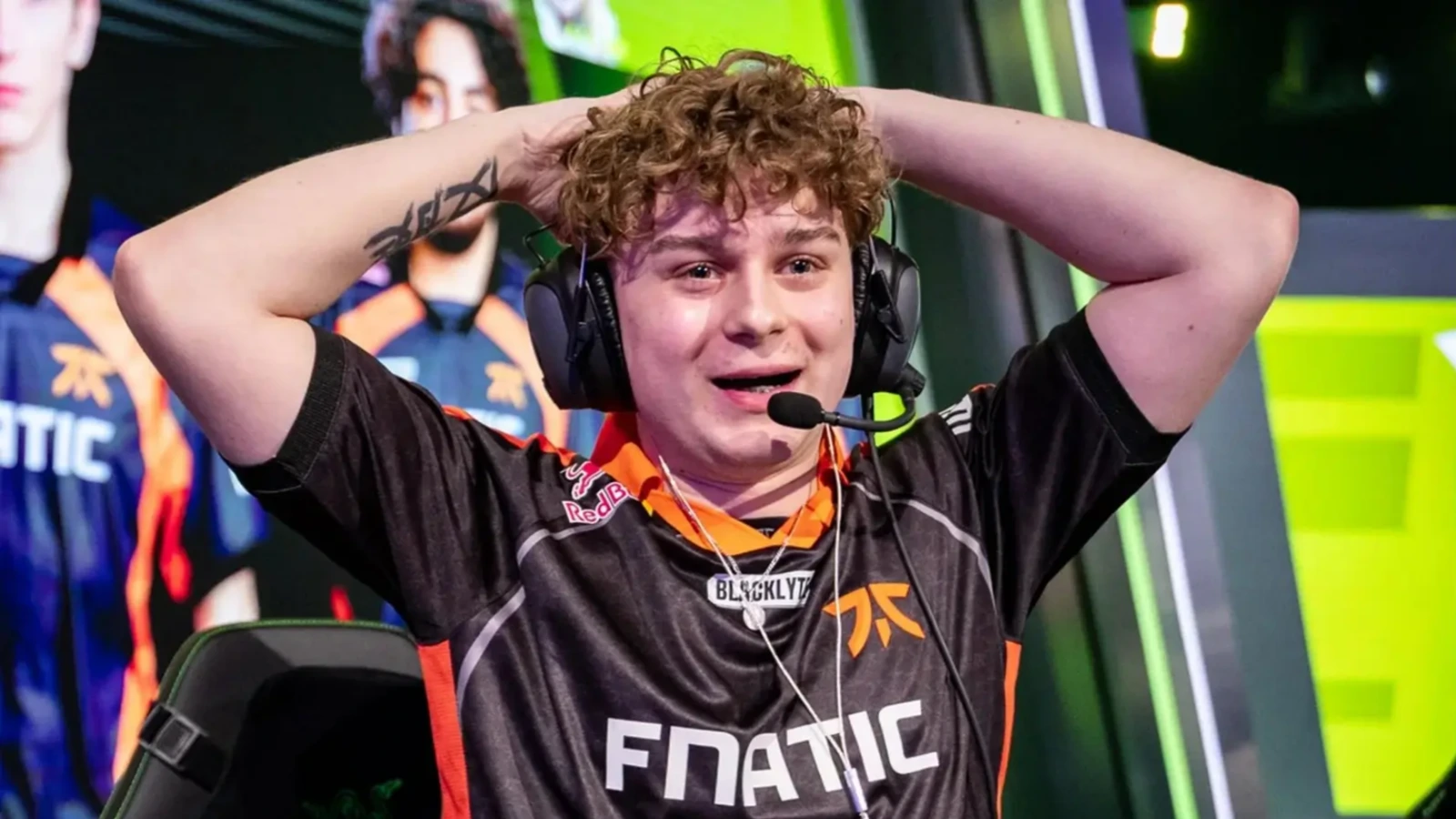
For the first time in 10 years (since 2016), Fnatic’s League of Legends roster has failed to qualify for the 2026 World Championship, placing heavy scrutiny on their upcoming 2027 rebuilding phase.
Key Takeaways
- Fnatic failed to qualify for the League of Legends World Championship in 2026 for the first time in ten years, ending a decade-long competitive streak.
- Founded in 2004, the organization built long-term commercial independence via Fnatic Gear peripherals, athlete health units, and lifestyle apparel partnerships.
- A failure to promote European Regional League academy talent combined with persistent draft inflexibility triggered an organizational reset ahead of the 2027 season.
For the first time since 2016, the Fnatic League of Legends roster failed to qualify for the 2026 World Championship.
This historic absence places heavy scrutiny on the team’s upcoming 2027 rebuilding phase. The Fnatic executive board now navigates a highly scrutinized structural transition.
How Did Fnatic Build a Two-Decade Esports Empire?
Sam and Anne Mathews built the Fnatic empire by identifying early professional gaming trends in 2004.
The founders established absolute dominance in early titles like Painkiller and Counter-Strike 1.6, before claiming the inaugural League of Legends Season 1 World Championship to cement the brand’s global legacy.
Fnatic expanded rapidly by securing international talent. The executive team pioneered the transition from grassroots LAN tournaments into the modern era of franchised competition.
Leadership prioritized strong infrastructure and player support systems. According to the official Fnatic archive, Fnatic opened dedicated facilities in London and Berlin to ensure consistent championship runs.
How Did Fnatic Finance a Two-Decade Operation?
Fnatic financed its two-decade operation by diversifying revenue streams away from volatile publisher stipends.
Executive leadership utilized direct-to-consumer hardware manufacturing and significant retail crowdfunding initiatives. This financial architecture protected the organization during recent venture capital retrenchments.
The acquisition of Func in 2015 catalyzed the launch of Fnatic Gear. Producing independent peripherals established a highly reliable commercial pipeline that minimized the organization’s reliance on external sponsorships.
Furthermore, the 2020 Crowdcube campaign raised millions directly from retail investors. This financial independence allowed Fnatic to sustain high-tier rosters when rival organizations faced severe budget cuts.
How Did Fnatic Bridge the Gap Between Esports and High Fashion?
Fnatic bridged the gap between esports and high fashion by executing exclusive lifestyle collaborations with mainstream apparel brands like Gucci and Champion.
These strategic partnerships transformed the competitive gaming team into a globally recognized streetwear entity.
The 2020 Gucci collaboration produced a highly limited dive watch that sold out immediately. Fashion analysts noted the successful integration of gaming culture into luxury retail spaces.
Subsequent partnerships with Hello Kitty and Champion diversified the Fnatic merchandising catalog. Expanding beyond traditional player jerseys generated a broader consumer base across multiple demographics.
How Did Fnatic Pioneer Esports Player Welfare?
Fnatic pioneered esports player welfare by establishing a dedicated High Performance Unit in 2019, integrating sports psychology, physical therapy, and sleep tracking into daily training routines.
This infrastructure replaced traditional gaming houses with professional athletic facilities to combat burnout and extend professional competitive careers.
Fnatic leadership transitioned competitive rosters away from domestic gaming houses into commercial performance centers in London and Berlin. Management introduced structured physical regimens alongside cognitive training programs.
According to research highlighted by sites such as Esports Insider and Hollywood Reporter, professional gaming careers historically ended by age twenty-four due to chronic wrist injuries and mental fatigue.
The Fnatic performance staff mitigated these risks through ergonomic monitoring and mandatory physical conditioning.
The High Performance Unit sustained veteran players across multiple competitive titles. This scientific approach established an operational blueprint that European franchised leagues adopted across the regional ecosystem.
What Are the Defining Eras of Fnatic’s Competitive History?
Fnatic defined its history across three distinct competitive eras: the formidable Counter-Strike dynasty peaking around 2015, the sustained European League of Legends supremacy throughout the late 2010s, and the international Valorant conquests dominating the 2023 season. These periods established the standard for tier-one competition.
Fnatic consistently adapted to the evolving landscape of global esports. Historical records from Riot Games Esports document the team’s seven European League of Legends titles.
The transition into modern tactical shooters proved highly successful. The Fnatic Valorant division secured back-to-back international trophies at VCT LOCK//IN São Paulo and VCT Masters Tokyo.
| Game Title | Peak Roster Era | Major Trophies Won |
|---|---|---|
| League of Legends | 2015 – 2018 | Season 1 Worlds, 7x EU LCS/LEC Championships |
| Counter-Strike (GO/CS2) | 2014 – 2018 | 3x CS:GO Majors, Multiple IEM Katowice Titles |
| Valorant | 2023 | VCT LOCK//IN São Paulo, VCT Masters Tokyo |
Surviving Controversy: The 2014 DreamHack Winter Incident
Competitive integrity defines institutional longevity, and Fnatic encountered its most severe public relations test during the DreamHack Winter 2014 Counter-Strike major tournament.
During the quarterfinal match against Team LDLC on the map Overpass, Fnatic executed an undocumented pixel-walking boost utilizing player Olof “olofmeister” Kajbjer.
The tactical vantage point allowed Fnatic to view critical map choke points while remaining shielded behind invisible texture boundaries.
Tournament administrators initially ordered a replay of the second half following formal rule protests. Archival match reports from HLTV record that the Fnatic executive team ultimately forfeited the match following intense international community backlash.
The incident permanently reshaped professional Counter-Strike map design and rulebook clarity. Valve subsequently updated texture clipping guidelines across the competitive map pool to eliminate map exploits.
The Defining Rivalry: How the Fnatic vs. G2 Dynamic Reshaped European Esports
European League of Legends history pivots entirely on the tension between Fnatic and G2 Esports. The two organizations established a fierce domestic duopoly that defined the European League of Legends Championship Series (EU LCS) and the modern LEC.
The rivalry escalated significantly through high-profile roster defections. The off-season transfers of Rasmus “Caps” Winther and Martin “Rekkles” Larsson directly altered the balance of power in the region.
From 2013 through 2020, Fnatic and G2 claimed almost every domestic split title. Esports historians consistently highlight this head-to-head dynamic as the primary catalyst elevating European teams to international competitiveness.
How Did Fnatic Leverage Influencers to Survive the Esports Winter?
Fnatic leveraged influencers to survive the esports winter by signing lifestyle streamers, independent creators, and specialized digital athletes to maintain continuous commercial impressions.
This strategy decoupled brand revenue from tournament match schedules, securing reliable partnership visibility for sponsors during competitive off-seasons.
Esports tournament broadcasts generate high viewership during finals, but competitive schedules leave significant gaps between competitive splits.
The Fnatic Network recruited popular digital creators to maintain consistent daily streaming engagement across Twitch and YouTube.
The signing of EA Sports FC athlete Donovan “Tekkz” Hunt illustrated this strategic integration.
Commercial data verified by Streams Charts demonstrates how high-tier content creators deliver millions of brand impressions for key sponsors like Red Bull and Sony INZONE regardless of domestic tournament results.
This decentralized media apparatus insulated the organization against audience dips caused by match losses. Commercial partners maintained advertising value throughout the entire calendar year.
Beyond Europe: Fnatic’s Expansion into APAC and Mobile Frontiers
Fnatic operates as a multi-regional enterprise rather than an exclusively European brand. Executive leadership aggressively expanded the brand’s footprint into the Asia-Pacific (APAC) region and the rapidly growing mobile esports sector.
Fnatic cultivated a massive localized fanbase in Tokyo. Management heavily reinforced this demographic during the 2023 VCT Masters Tokyo championship run, cementing the brand’s international appeal.
Entering Southeast Asian mobile ecosystems through titles like Mobile Legends: Bang Bang (MLBB) diversified audience demographics. Signing dedicated APAC rosters reduced total reliance on Western PC gaming markets.
What Caused Fnatic’s Historic 2026 Worlds Qualification Drought?
Fnatic’s historic 2026 Worlds qualification drought resulted from a severe disconnect in the developmental pipeline, heavy reliance on veteran stagnation, and critical macro-speed inflexibility during regional decider matches. These structural failures combined to end the decade-long qualification streak.
The coaching staff struggled to integrate European Regional League (ERL) talent into the main roster. While rival organizations seamlessly promoted academy prospects, Fnatic frequently recycled established veterans.
Data from Oracle’s Elixir highlights a persistent meta-stagnation during the 2026 season.
Shifts toward flexible draft priorities left the core roster exposed. This inflexibility forced mid-season staff changes that destabilized the team’s tactical foundation.
Will the 2027 Rebuild Restore the Crown?
The 2027 rebuild grants Fnatic the exact structural reset necessary to shed legacy expectations and construct a championship-caliber foundation.
The current absence forces Fnatic management to prioritize hungry, emerging talent over immediate international results, positioning the brand for a strong comeback.
Missing the premier international tournament provides the executive board with crucial time to reevaluate the entire developmental pipeline.
This restructuring phase removes the immediate pressure of international performance from incoming rookies and the coaching staff.
Fnatic continues to operate top-tier rosters across high-profile platforms like the PC and the Nintendo Switch 2, ensuring the brand remains visible globally.
The organization possesses the capital, the facilities, and the historical resilience required to execute this comprehensive reset.
Fueled by a passion for gaming and the ever-evolving world of gaming news, Daniel loves connecting with seasoned and new players to bring games to life on the page, exploring their narratives and gaming trends. A self-published fiction and fantasy author, Daniel has nearly 20 years of experience writing gaming news and a love for storytelling that drives his enthusiasm to deliver breaking news, in-depth analysis, and industry innovations. You will find him in-game as "Windfell."
Download the Allkeyshop Browser Extension Free
For all the latest video game news, trailers, and best deals, make sure to bookmark us.
You can find all the best and cheapest online deals on CD keys, game codes, gift cards, and antivirus software from the verified CD key sellers on our store pages.
To not miss any news on Allkeyshop, subscribe on
Google News
.
MORE RELEVANT ARTICLES





Comments (0)