











End of Physical PlayStation Games: Sony’s Ultimate Betrayal

Sony announces the end of physical games on PlayStation starting in January 2028. Let us examine how Sony admits here that they view their players merely as wallets, and not as the sentient human beings we are, whose hearts have just been broken by this betrayal.
Key Takeaways
- Sony plans to permanently halt the production of physical games for PlayStation consoles starting in January 2028.
- This transition to an all-digital format marks the end of the second-hand market and the loss of actual game ownership for users.
- Sony’s claims regarding the dominance of digital sales are contradicted by internal leaks showing the continued success of the physical format.
The Beginning of the End for Physical Games?
Starting in 2028, Sony will cease producing physical games. This means you will have no other choice but to purchase your PlayStation games via Sony’s online store. And this carries multiple implications:
- It becomes impossible to lend or resell a game (effectively killing the parallel second-hand market).
- Sony dictates the prices. If a game is priced at €100, you will have no other option than to buy it at €100 if you want it.
- Your games do not belong to you. If your account is deactivated (banned), you will lose all your games and your trophies regardless of the amount you have invested or the reason for the ban. As a bonus, if your account is inactive for 3 years, it will be permanently closed.
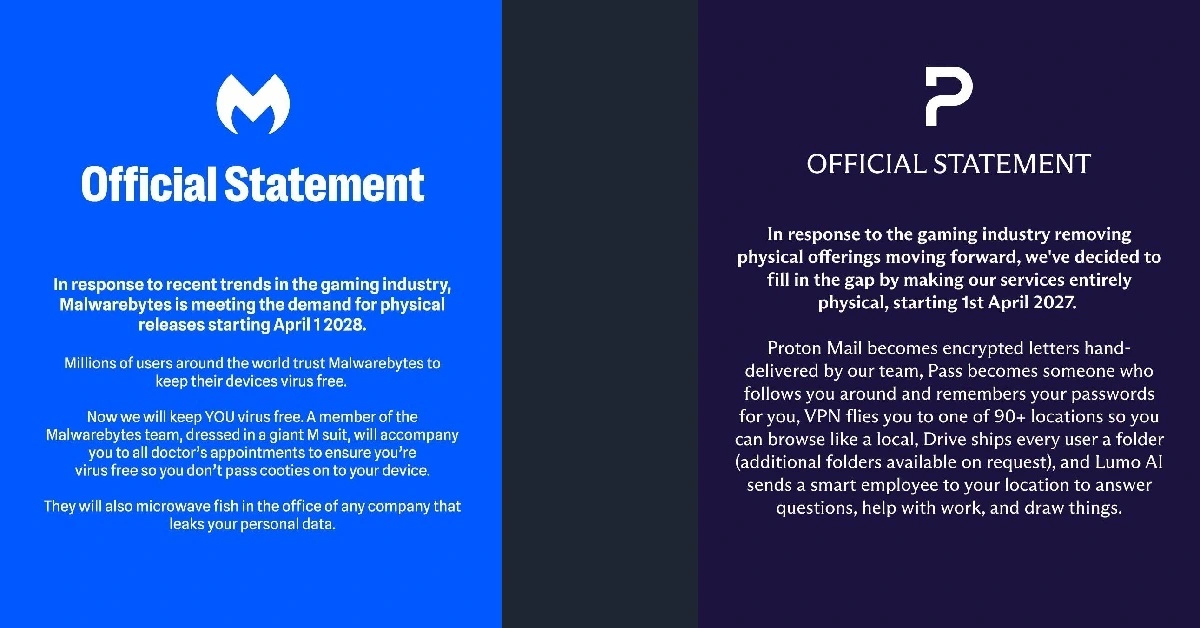
Even fast-food chains are getting involved, openly mocking Sony’s decision by proposing their own absurd take on an all-digital format.
The digitization of games is not inherently a bad thing; it allows smaller developers, among others, to create and release a game without having to go through the sometimes tedious process of a physical release. However, it must remain an option, a choice, rather than an inevitability. Especially since Sony would hold a monopoly over its ecosystem, as mentioned earlier, even allowing them to go as far as charging different prices based on player interest.
Having a third-party platform available via PlayStation would be healthier for the ecosystem and, above all, for the players. GOG, for instance, additionally offers a video game preservation option, working to protect our gaming heritage by allowing users to download DRM-free games directly to a USB drive, for example, enabling independent storage and thus, the preservation of games.
PlayStation removed 551 films from PSN user accounts. What is to stop them from doing the same with their users’ games? Furthermore, shouldn’t there be a clear line drawn between purchasing and renting? Are we truly buying our games, or are we merely renting them? And if that is the case, pricing and terms of use will need to be revised because, in principle, we are still buyers.
And despite Sony’s claims regarding digital formats, many developers are turning to Nintendo, for example, for physical cartridges and collector’s editions, as seen with Bethesda and Oblivion.
Sony and Statistics Serving the Player?
Sony claims its decision follows player trends. According to them, players buy significantly more in digital formats than in physical ones. Let us analyze Sony’s allegations together and see what information we can uncover on this subject.
Sony cites technical difficulties in maintaining payment systems that have become obsolete. Meaning what, exactly? Is contactless card payment (potentially digitized and on a phone) obsolete? Or is Sony referring to the second-hand market? If so, it is an admission by Sony that the second-hand market is a hindrance because they have no control over it; it would make no sense to say these are obsolete systems that are difficult to maintain since they simply do not have access to them.
According to Sony, during the 2025 fiscal year, 78% of its sales were digital, compared to 22% for physical. And this is only true due to statistical manipulation and a disastrous method of accounting for games.
Indeed, these figures include DLCs, FREE games, games GIVEN AWAY on PS Plus, games that were never released physically, live-service games, etc. Not to mention that this does not factor in the second-hand market. In short, the inclusion of games or software that are simply unavailable physically, and sometimes even free, proves Sony’s desire to artificially inflate their numbers.
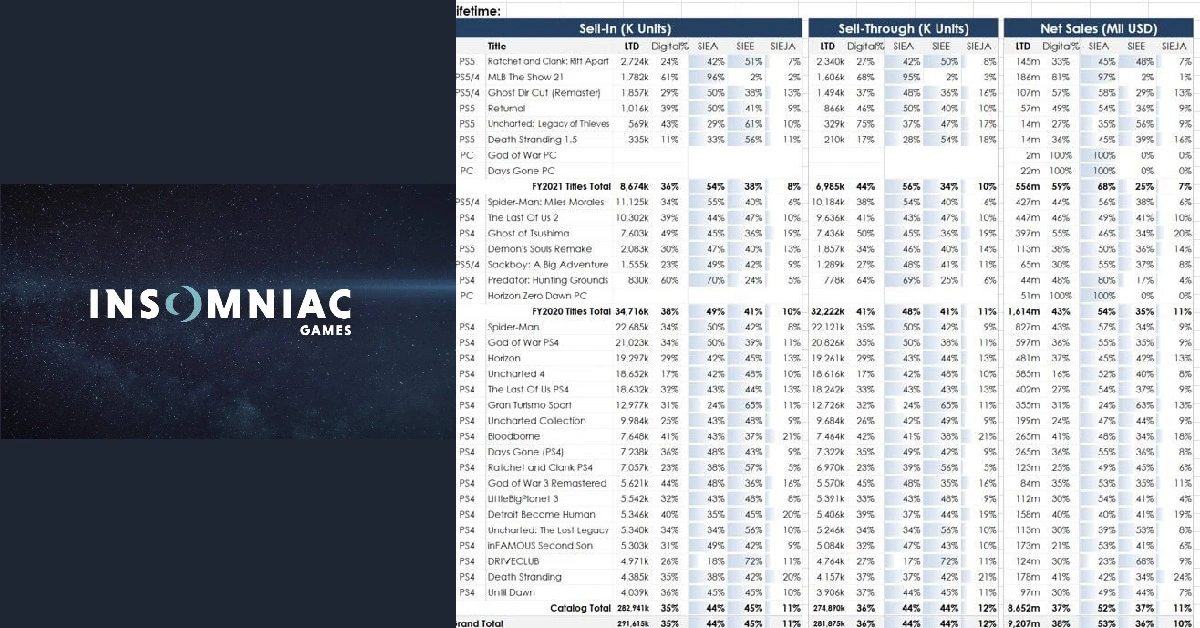
An Insomniac Games leak contradicts the figures presented by Sony. Insomniac’s official numbers are thus indicative of Sony’s intention to manipulate us. Uncharted 3 sold 87% in physical format, Sackboy 77% in physical, Ratchet and Clank: Rift Apart 76% in physical, etc.
In total, within the leaked official spreadsheet, 31 out of 33 Sony games sold better physically than digitally. Astro Bot, a more recent game, still saw 55% of its sales in physical format in the UK and 60% in Europe.
Finally, the last piece of incriminating evidence against Sony: PS5s with disc drives sell much better than those without, accounting for a solid 82% of sales. This clearly proves that physical games were still highly popular, as the majority of players were willing to pay a premium for a console with an integrated disc drive.
The icing on the cake is that Sony makes a 15% margin on physical games and 30% on digital games. This likely explains Sony’s latest pivot. However, it would have been decent of them to follow their logic through to the end and thus offer cheaper digital games, but it seems the money only flows in one direction.
As Players, What Can We Do?
The best way for players to express their dissatisfaction is to refrain from buying a PlayStation 6 or any games for it, and perhaps even cancel your PlayStation Plus subscriptions. Keep in mind that since the PS6 has no planned disc drive, it will no longer be able to read your physical games. Those who bought a disc drive in anticipation of future releases made a purchase for nothing.
Do not hesitate to sign the petition addressed to Sony to save physical games.
Furthermore, while we are on the subject of physical media, what about storage capacity? Because if games are no longer stored on Blu-Rays (which possess massive storage capacity), that means you will need space on your console! Especially with the file sizes of recent games continuing to climb.
This is especially pertinent given that over 94% of games are playable offline. Out of 775 physical games tested, more than 85% do not require a mandatory internet connection and are complete on the disc. While we may lack updates, meaning it could potentially be less stable, the games are still playable.
We must hope that the PS6 offers a minimum of 2TB of available space to store our games, otherwise players will quickly find themselves with saturated storage after purchasing just 10 large titles.
A sympathetic thought also goes out to those who intended to resell their PS5 to offset the cost of their PS6, who will now either have to resell their physical PS5 games as well since they can no longer be played, or keep everything without being able to recoup the PS6’s price. In short, Sony is pulling a fast one on us; therefore, it might be time to abandon ship.
The height of irony in this situation is that 13 years ago, Sony mocked Xbox and its transition to digital formats by boasting about keeping physical games and thus remaining close to the players. At this point, one could call it a betrayal on Sony’s part.
Ultimately, if you buy your games in a digital format, consider alternative retailers where healthy competition still exists and where players are not treated like fools. And you can start right now by comparing prices via our tracker on Allkeyshop.
Game Designer raised on metal music and RPGs. I approach gaming news with a cool head. I dissect the technical and narrative aspects without ever forcing it. A relaxed writing style that analyses everything from FPS to RPG.
Download the Allkeyshop Browser Extension Free
For all the latest video game news, trailers, and best deals, make sure to bookmark us.
You can find all the best and cheapest online deals on CD keys, game codes, gift cards, and antivirus software from the verified CD key sellers on our store pages.
To not miss any news on Allkeyshop, subscribe on
Google News
.
MORE RELEVANT ARTICLES





Comments (0)