






Pixel Sundays: The Guild – From Medieval Merchant to Powerful Dynasty

This week saw the release of The Guild 1 Remake: Europa 1410. This marks the return of a German strategy game series with origins dating back more than 20 years. The franchise features a highly distinct core concept: you build your own enterprise during the Middle Ages, attempting to amass great wealth and prestige.
Summary
- Europa 1400: The Guild – Where It All Began in 2002
- The Guild 2 Turned the Economic Simulation Into a Life Simulation
- Pirates, Venice, and Renaissance – The Guild 2 Kept Growing
- The Guild 3 – A Successor With an Extremely Difficult Start
- The Guild 1 Remake: Europa 1410 Deliberately Returns to Its Roots
- Conclusion: Why The Guild Remains Unique Even After 20 Years
However, The Guild takes its mechanics even further. You must start a family and produce heirs to continue your dynasty. Over time, you can climb the social ladder, assume political offices, and even eliminate competitors through intrigue, bribery, or other methods. This special blend of economic simulation, life simulation, role-playing, and politics is what makes The Guild exceptional. Now, we discuss how the game has evolved over the past 20 years.
Europa 1400: The Guild – Where It All Began in 2002
The first game in the series was released in 2002 by 4HEAD Studios under the name Die Gilde (internationally: Europa 1400: The Guild). The title is the spiritual successor to The Fugger II. The setting is Germany in the 15th and 16th centuries, featuring playable cities such as Augsburg, Berlin, Dresden, Hanover, and Cologne. Even then, the game offered a multiplayer mode for up to 8 players.
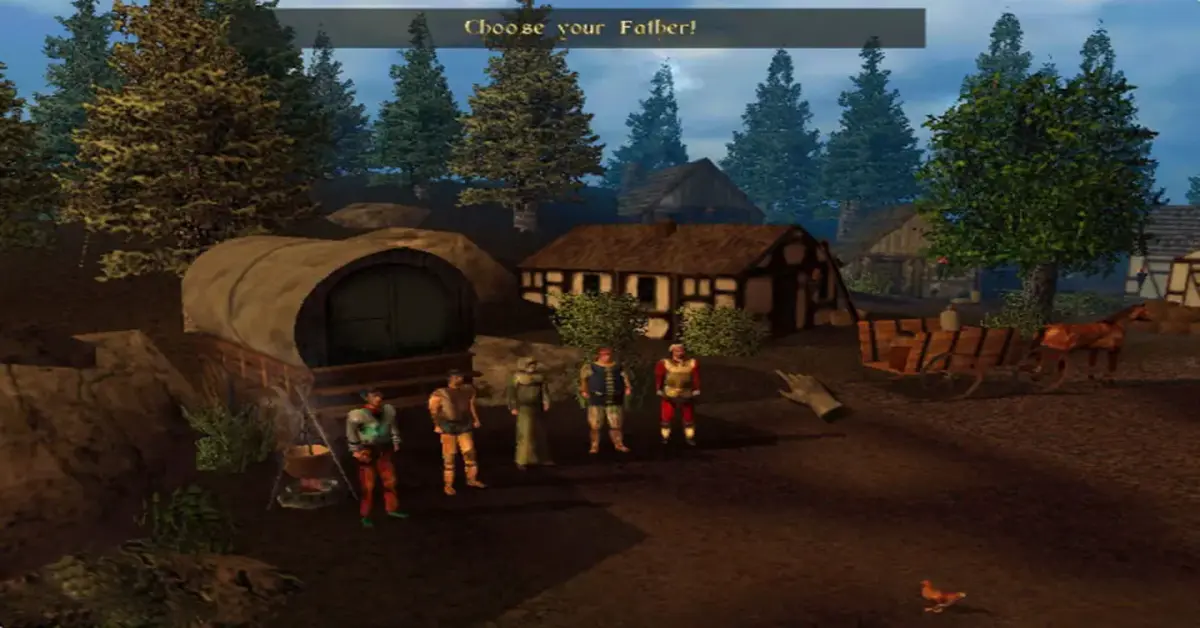
As a player, you start with a single character and build an entire family dynasty. To establish your life, there are a total of twelve career paths or professions you can pursue. These include classic trades like blacksmith, stonemason, and carpenter, but also unusual options such as alchemist, preacher, or thief. At the beginning, you select your family background. The professions of your parents then influence the starting attributes of your own character.
You must manage your business with strict economic efficiency, meaning you have to hire workers, purchase raw materials, and determine which goods are produced. The finished products must then be taken to the market, constantly keeping an eye on prices and sales. Later, you can hire a manager to automate parts of your enterprise. However, money alone is not enough; you must also build social standing, take on political offices, sue rivals, write threatening letters, and even sabotage or scheme against your competitors.
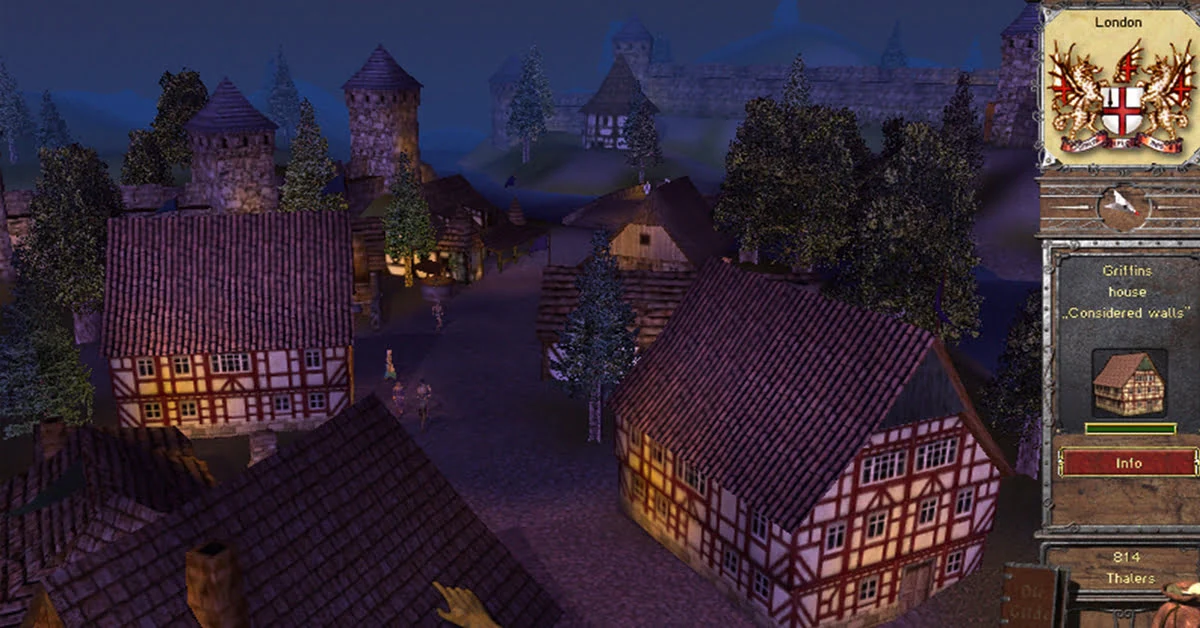
As a result, The Guild is significantly more than a classic economic simulation. The real-time 3D world was also highly unusual for such a concept at the time. Within the city, you could purchase businesses and residential homes. However, the number of building slots was limited, sometimes requiring you to replace old structures. Even with a real-time world, the game progresses in years or turns, meaning you had to carefully decide how to allocate your time and actions within a single year.
The family aspect was already crucial in the first installment; you had to find a partner and start a family. This required giving gifts and courting someone. You can then have children and finance their education. Following your death, you can continue playing with the next generation. This allows you to develop your dynasty over many years. For the international version, marketing even highlighted family dynasties spanning 200 years.
In 2003, the expansion Gaukler, Gruften & Geschütze (Jugglers, Crypts & Cannons) followed. This added Nuremberg as an additional city to the game. It also introduced the professions of tailor, juggler, and cemetery keeper. Alongside these new career paths, an additional political layer was introduced.
The Guild 2 Turned the Economic Simulation Into a Life Simulation
The Guild 2 was released in 2006 and was once again developed by 4HEAD Studios. The core premise of its predecessor remains: you build your business, earn money, climb the social ladder, start a family, and gain political power. However, there is one crucial difference. The individual members of the dynasty take center stage far more prominently. As a result, the game was explicitly marketed as a mix of RPG and life simulation.
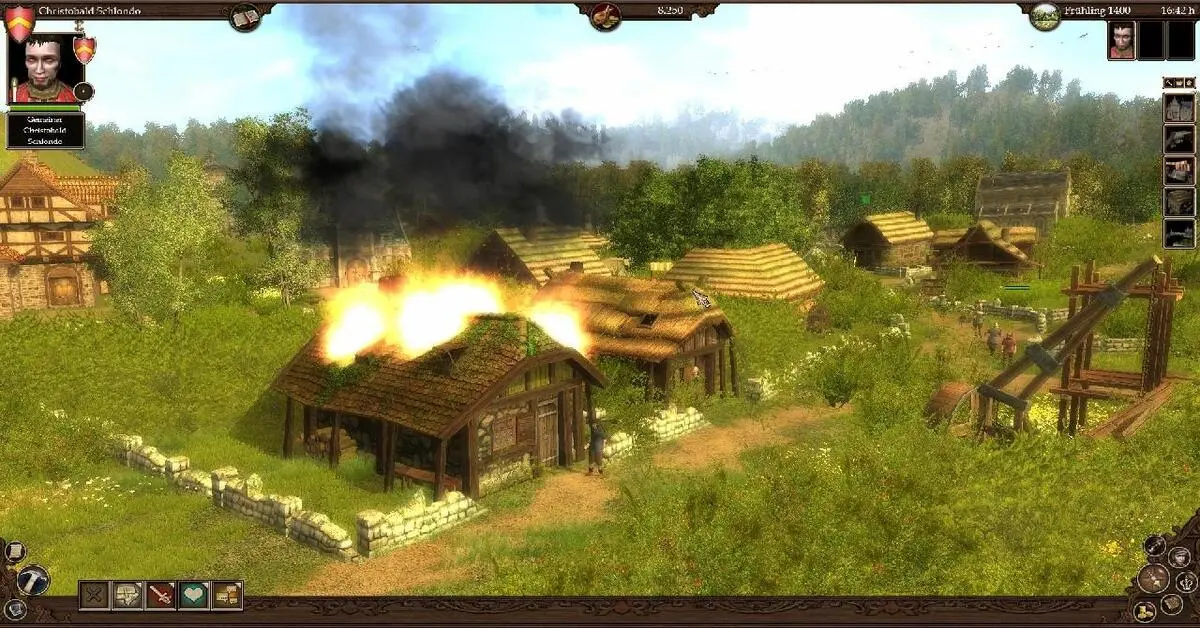
During character creation, you can choose one of four classes. There is the Patron, Craftsman, Scholar, or Rogue. Each class unlocks different businesses and career paths:
- Patron → Agriculture, gastronomy, and supply
- Craftsman → Blacksmith, tailor, or carpenter
- Scholar → For instance, an alchemist or a clerical career
- Rogue → Theft and other criminal paths
This also means that not every character can simply take over any business. The diverse talents and skills of the characters influence their chances of success in specific actions. Through experience, you can further develop your characters.
In The Guild 2, you no longer control your family in an abstract manner, but can directly control up to three members of your own dynasty simultaneously. This allows you, for example, to have one character manage the business, while another cultivates political contacts, and a third does something completely different.
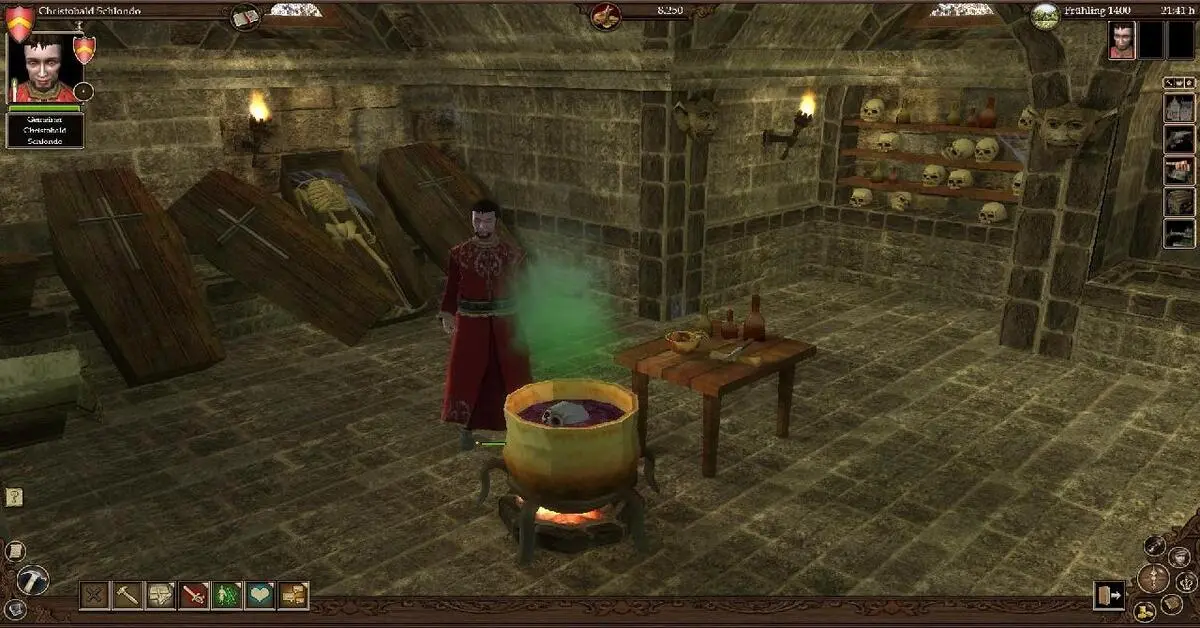
Family planning hasn’t changed much; you still court a new partner, have children, and can educate them. However, you can better assign the children to various professions for the future. For example, the first son takes over the family business, another child enters politics, and a third can establish relations with a competing dynasty.
In addition to the character level, a dedicated title and society system exists. With a higher title, you can acquire more businesses, better homes, additional actions, and access to political offices. However, you must earn these titles first, which can sometimes take generations. The advancement sometimes costs enormous sums of money. Yet, this is the only way to work your way up from a simple citizen to higher social classes.
For political offices, you need a sufficiently high social title and you must win over the respective voters. To achieve this, you must improve relations, give gifts, bribe people, or discredit your competitors. The offices then provide gameplay advantages. Furthermore, the justice system is still present; other families can commit crimes, and if you have evidence against them, they can end up in court. This directly intertwines economics, family, and politics.
Pirates, Venice, and Renaissance – The Guild 2 Kept Growing
The Guild 2 received several major DLCs, the first of which was Pirates of the European Seas in 2007. The focus partially shifted to maritime trade. This introduced new mechanics such as sea trade, naval battles, and ships that you can equip. In total, there are five ship types and 4 new maps. In the city, there are new buildings like the harbor, fishing huts, and even pirate bases.
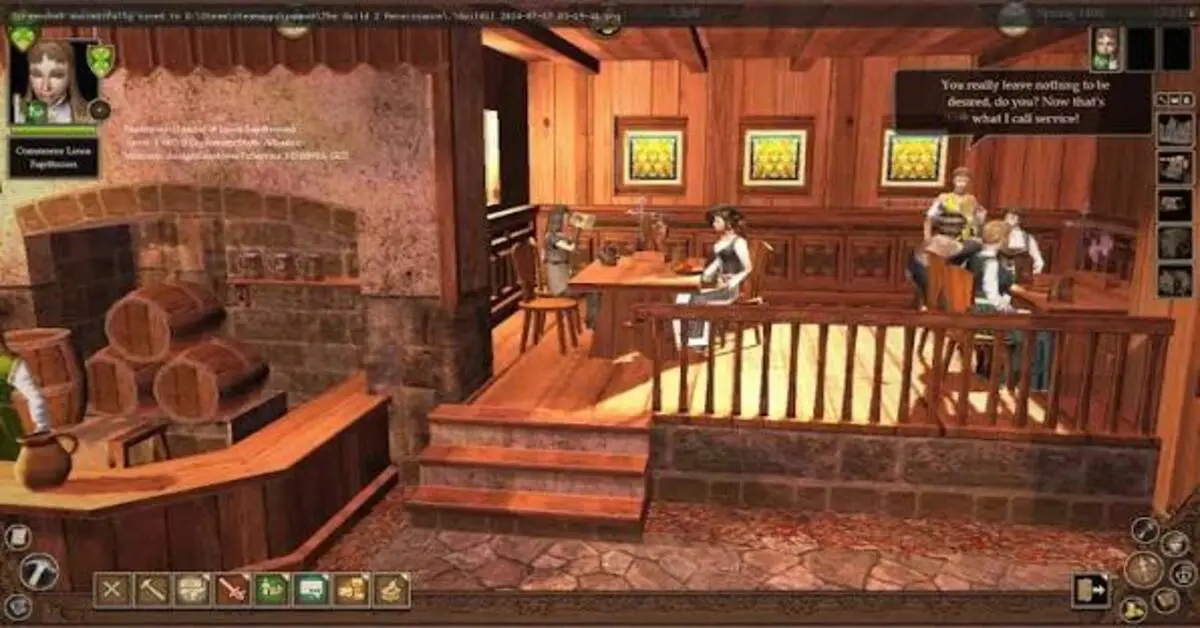
Fittingly, there are two new professions: Pirate and Medicus. Additionally, the expansion offers three new offices or noble titles with their own privileges. Through sea trade, you no longer had to trade only within a region, opening up new trade routes with different demands. Piracy simultaneously serves as a new way to earn money outside of classic professions.
Another standalone expansion was The Guild 2: Venice, for which the main game was not required. In this title, the focus is on Venice and the Adriatic coast. The city features the well-known Venetian architectural style and locations like the Doge’s Palace. The range of goods was also adapted to the new scenario. Furthermore, there are new raw materials and trade goods.
Artifact crafting was overhauled and expanded with new blueprints. Naturally, new professions were introduced as well, such as glassmaker or mercenary. However, this game offered significantly fewer major changes than Pirates of the European Seas. Additionally, the multiplayer known from The Guild 2 was missing.
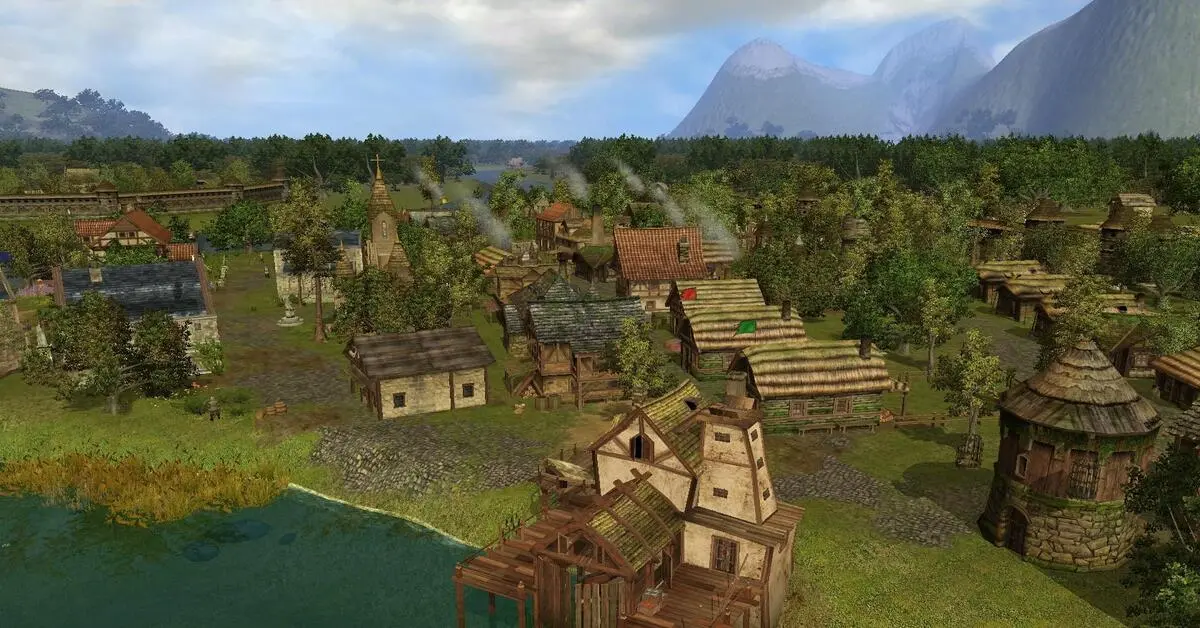
The Guild 2: Renaissance ultimately became one of the most comprehensive versions of The Guild 2. This is again a standalone game that does not require the base game. The creation of this title is closely tied to the modding and fan community. There were many community projects aiming to bring The Guild 2 closer to the first installment, and eventually, the developers created such a game.
With Renaissance came 8 new professions: mercenary, gravedigger, stonemason, juggler, innkeeper, banker, miller, and orchardist. This particularly expanded economic and production chains. For example, the miller produces flour from grain, which can subsequently be processed in other businesses. This was accompanied by new maps, scenarios, buildings, goods, and an overhauled AI. The nobility system was also expanded. Additionally, new difficulty options were introduced.
The Guild 3 – A Successor with an Extremely Difficult Start
After The Guild 2, it took many years until the next numbered installment. The Guild 3 launched on September 26, 2017, in Early Access. The original developer of the game was GolemLabs, and it was published by THQ Nordic. The core concept was once again the familiar combination of economy, family, social advancement, politics, and intrigue. Similar to the first installment, you start again in the year 1400 as a common citizen, attempting to build a powerful dynasty over several generations.
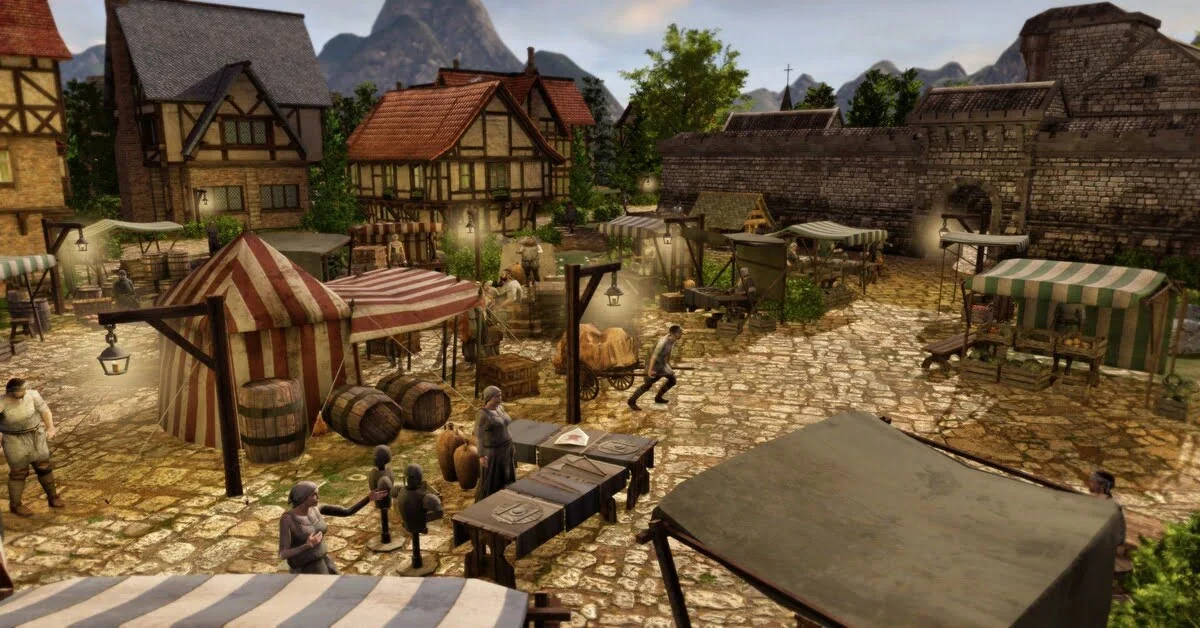
The game world is significantly larger, featuring more complex systems. Consequently, the final version included 13 historical scenario maps and an additional tutorial scenario. The locations are based on Central and Northern Europe. For instance, you can find yourself in Cologne, London, Paris, Prague, Vienna, Warsaw, Augsburg, or the Hanseatic region. Additionally, there are seasons, a day-night cycle, various professions, a skill tree, as well as unlockable actions and bonuses. The seasons and times of day can actively influence events and routines.
You can once again acquire your own business, hire workers, procure raw materials, produce goods, and subsequently sell or trade the wares yourself. The final version features a total of 29 job titles that can be divided into four professional branches. These professions could often be interconnected, resulting in numerous production chains:
- Food Production – 8: Farmer, Master Farmer, Baker, Miller, Innkeeper, Fisherman, Orchardist, and Butcher.
- Craftsmanship – 7: Rough Craftsman, Blacksmith, Carpenter, Tailor, Stonemason, Potter, and Tinker/Inventor.
- Scholars – 8: Herbalist, Apothecary, Alchemist, Barber-Surgeon, Preacher, City Preacher, Medic, and Scholar.
- Roguery – 6: Robber, Thief, Smuggler, Mercenary, Juggler/Minstrel, and Gravedigger.
In The Guild 3, politics become even more direct. You can again acquire social titles, join guilds, and assume political offices. A political position then allows for concrete interventions. You can deploy guards, influence prison sentences, make decisions regarding laws, and even take direct action against competing families. As a result, politics remains not just a victory condition but actually grants tangible power over the city.
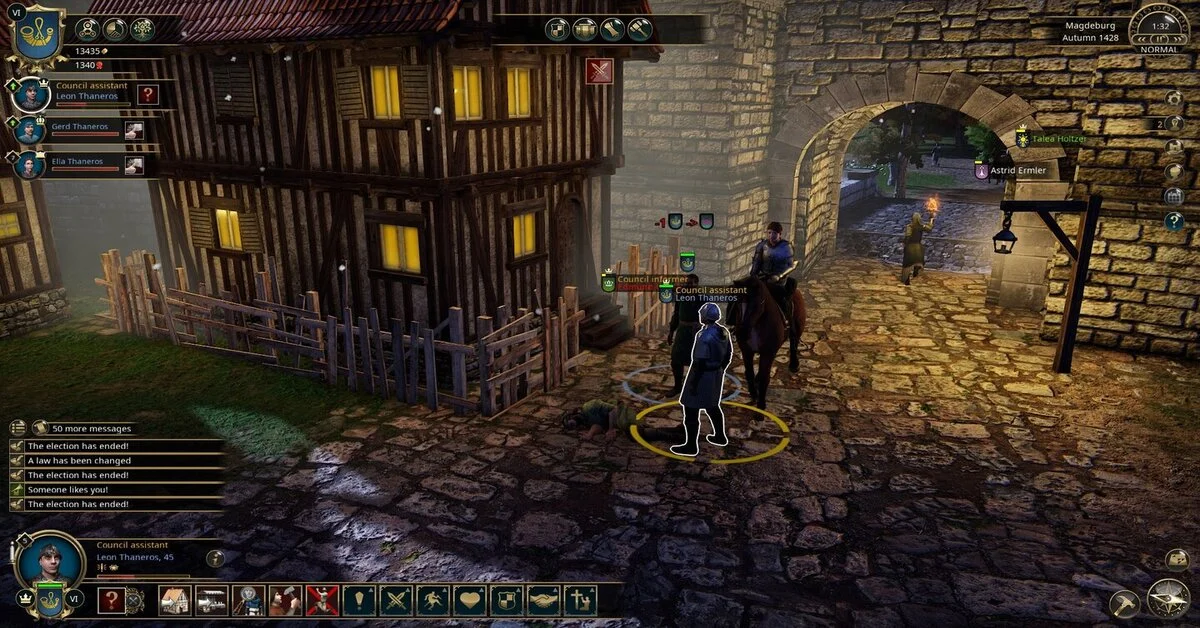
The Early Access launch of The Guild 3 was quite problematic. Therefore, THQ Nordic changed the development structure in 2018. Purple Lamp Studios was commissioned with further development, and GolemLabs withdrew from the completion process. This meant Purple Lamp first had to familiarize itself with the existing codebase, leading to a prolonged period without updates.
Subsequently, the studio addressed bugs, performance, user interface, economy, action systems, and politics. The upper section always referred to the finished version of the game as delivered by Purple Lamp. Version 1.0 of The Guild 3 was then released on June 14, 2022, nearly five years after the Early Access launch. Naturally, a multiplayer mode was once again included in the game.
The Guild 1 Remake: Europa 1410 Deliberately Returns to Its Roots
The latest game in the series is The Guild 1 Remake: Europa 1410. The game’s Early Access launched on September 17, 2026, and is developed by Ashborne Games. The publisher is once again THQ Nordic. Initially, the game was just called The Guild – Europa 1410, but the title was deliberately changed to The Guild 1 Remake: Europa 1410 shortly before release. With this, the developers wanted to make it clear that the game is not primarily based on The Guild 2 or 3, but on the original Europa 1400.
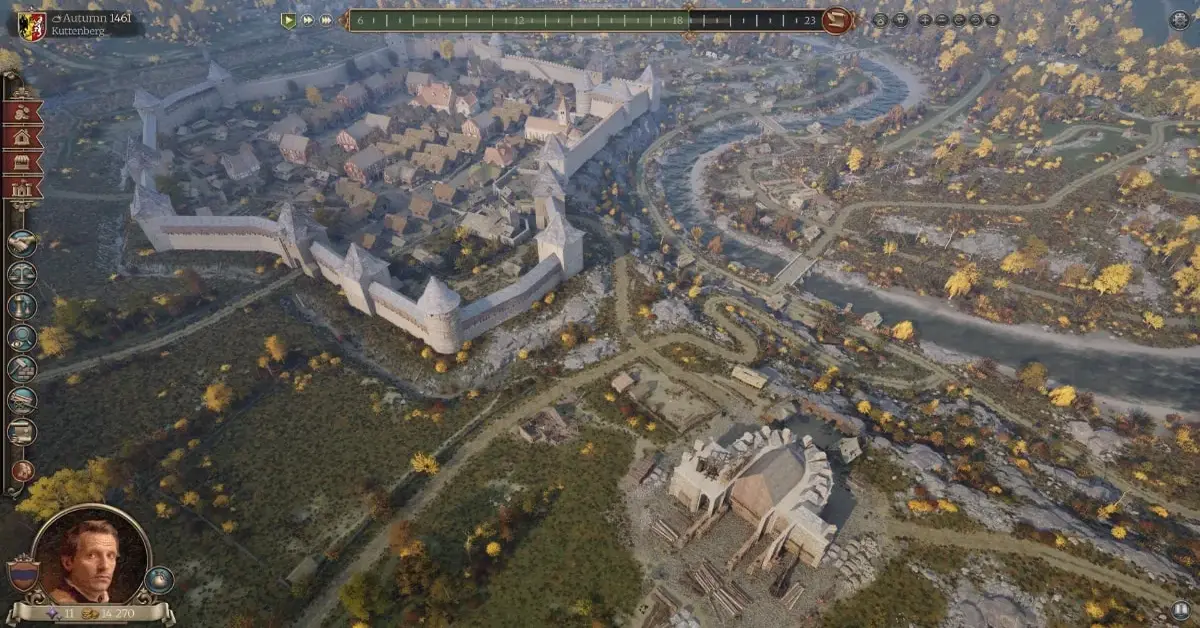
The new game differs significantly from parts 2 and 3. You once again adopt a stronger strategic perspective. Characters are steered less directly through the city like figures in a classic life simulation. Instead, the focus is back on businesses, the economy, dynasty, and politics. Thus, it intentionally returns to the mechanics of the first installment, as that was exactly what the fans had been missing.
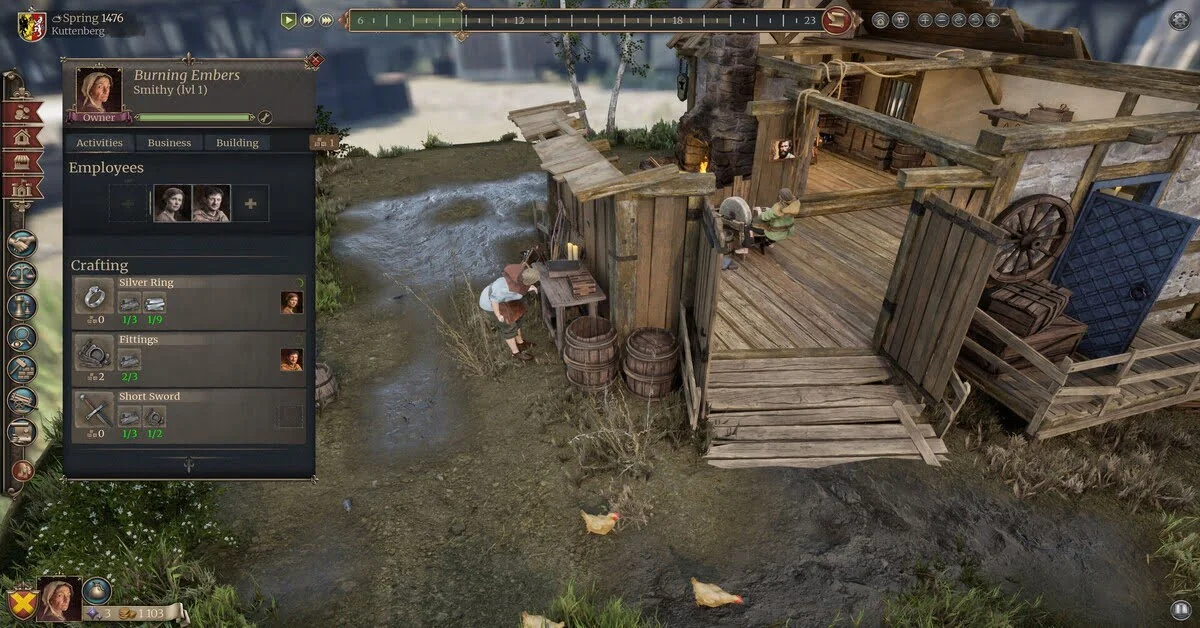
In Early Access so far, there are six available cities: Graz, Kutná Hora, Nuremberg, Freiburg, Wrocław, and the tutorial city of Landsfort Herle. Until now, there are also only the following eight professions: Blacksmith, Tailor, Carpenter, Stonemason, Priest, Innkeeper, Alchemist, and Perfumer. Just like in the first installment, you must hire workers, process raw materials, produce goods, and then sell the products on the market. Furthermore, you can expand your businesses over time and appoint family members as masters of a business, entrusting them with administrative tasks.
The economy has become much more detailed. For instance, prices now depend on supply, demand, season, personal skills, and buildings, among other factors. Furthermore, the city is divided into districts and neighborhoods, which possess various characteristics such as crime, neglect, or religiosity. Consequently, the needs of the population vary. For example, high-priced goods sell poorly in impoverished areas. This means it is not always worthwhile to simply manufacture the most expensive product, as there are far fewer potential buyers in those zones.
Workers have also become significantly more important. Your employees differ by age, skills, and experience. Highly skilled young workers cost more, but you can also train cheaper, inexperienced employees yourself. Apprentices can later advance to journeymen. Thus, not only do your own characters develop, but so does the workforce of your enterprises.
Family planning and the continuation of the dynasty are once again a crucial part of the game. You can court partners, marry, and have children. Within a campaign, you progress through multiple generations. In society, you can rise through friendships, bribery, and extortion, assuming political offices. If you climb high enough, you can even influence the city’s development and, for example, build new city walls, improve infrastructure, or enact laws.
Naturally, the game still lacks much content that is intended to follow during Early Access or for Version 1.0. The next major update will be the Stabby Update. This will introduce thieves, robbers, guards, a revamped combat system, duels, burglaries, and the raiding of goods carts. The second planned update is the Backstabby Update. This is expected to feature multiplayer for up to 12 people, alliances and rivalries between dynasties, new victory conditions, an overhauled economy, and an additional city.
With Version 1.0, moneylenders, merchants, import and export, foreign currency, loans, further maps, and an expanded guild system are expected to follow. In addition, there will be monthly updates in between that introduce new items, gameplay interactions, automation, cannon towers, and much more.
Conclusion: Why The Guild Remains Unique Even After 20 Years
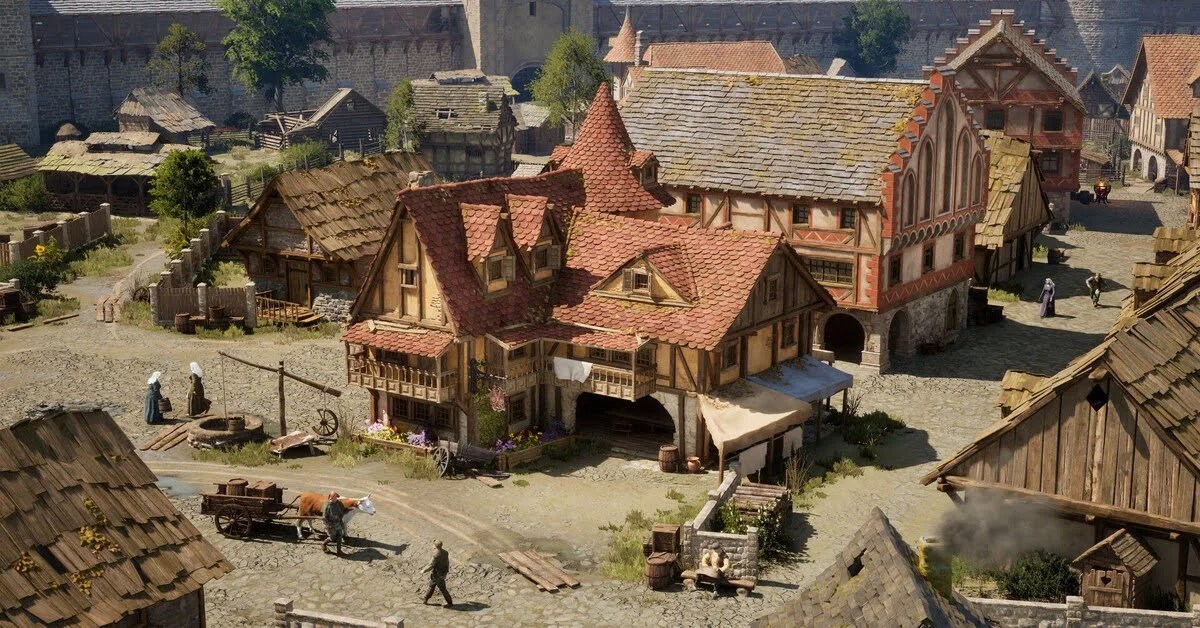
Even after more than 20 years, The Guild is a fairly unique game series. There are many economic simulations, role-playing games, and life simulations, but very few games intertwine all these areas so strongly. You do not merely run a business; you simultaneously build a family, develop your dynasty over several generations, rise in society, and interfere in the city’s politics. Economy, family, and power are directly connected to one another.
What is also special is that you don’t just aim to win by amassing as much wealth as possible. A successful business can be the foundation for advancement, but eventually, it is just as much about relationships, political offices, intrigue, or positioning one’s own family for the future. As a result, two campaigns can develop entirely differently depending on the path you choose to take with your dynasty.
This is exactly why the fundamental principle of the series still works today. Although the individual installments have repeatedly shifted their focus, this mixture of economy, family, and politics has remained. With The Guild 1 Remake: Europa 1410, the series is now consciously returning to this original idea. Whether the remake will match the most popular parts of the series in the long run will only become apparent after Early Access concludes. However, the concept behind The Guild remains something that you can hardly find in any other strategy game, even more than two decades later.
Hey, I’m Kilian, but online you’ll probably know me as “Tux1243.” I've been part of the team for almost two years now, always trying to keep you in the loop with the latest and coolest gaming news. I also have a huge passion for doing deep dives and detailed analyses of entire game series and franchises. I love getting to the bottom of things and exploring the little details and backstories that make game worlds so fascinating.
Download the Allkeyshop Browser Extension Free
For all the latest video game news, trailers, and best deals, make sure to bookmark us.
You can find all the best and cheapest online deals on CD keys, game codes, gift cards, and antivirus software from the verified CD key sellers on our store pages.
To not miss any news on Allkeyshop, subscribe on
Google News
.
MORE RELEVANT ARTICLES




Comments (0)