





Pixel Sundays: Undertale & Deltarune – Two RPGs That Work Differently

At first glance, both Undertale and Deltarune appear small and simple. However, these games are far from basic. Toby Fox, the developer behind both titles, masterfully blends retro RPG mechanics, bullet-hell combat, distinct humor, iconic music, and an abundance of personality. Rest assured, this article remains spoiler-free, as the narrative is the core of these experiences. While we will delve into the mechanics and themes, the story itself will remain untouched.
Summary
- Undertale: The Small RPG That Became a Phenomenon
- Music, Humor, and Emotion as the True Protagonists
- Deltarune: Familiar, But Not Merely Undertale 2
- Why the Community Surrounding Undertale and Deltarune Remains Strong
- Why Undertale and Deltarune Still Resonate Today
- Conclusion: Two RPGs Best Experienced Firsthand
The focus of this article is on the impact of these games, their community, the soundtrack, and their unique artistic direction. Undertale was released in 2015 but remains highly relevant today. Deltarune’s development spans into 2025, and Chapters 1 through 5 are already available. Chapter 5 was released on June 24, 2026, and the next chapter is scheduled for 2027.
Undertale: The Small RPG That Became a Phenomenon
Upon the release of Undertale in 2015, the game initially appeared unassuming. It was neither a massive AAA RPG, nor did it feature polished, realistic graphics. Instead, the game felt like a relic from another era. Undertale was intentionally minimalist and traditional. Its retro aesthetic heavily echoed classic pixel-art RPGs, yet it carved its own path. This visual style gave the game its distinct charm, making it seem very modest at first glance. However, this straightforward look became highly recognizable and serves as one of the primary reasons for its immense success.

The combat system initially seemed straightforward: an encounter menu followed by bullet-hell segments where players must maneuver a heart to dodge projectiles. This system is easy to grasp but highly unconventional in execution. There is no traditional attack cycle; avoiding damage is significantly more crucial than dealing it. Players are limited to one action per turn—attacking, conversing, or healing—before the enemy launches a counter-offensive.
Furthermore, the game boasts a distinct brand of humor that appeals to a wide audience. It features eccentric dialogues and characters with highly unconventional personalities. Each character feels independent and contributes to the game’s overall identity. Additionally, the music stands as one of the game’s greatest strengths. Many tracks quickly become unforgettable, such as the widely covered “Megalovania,” which has amassed hundreds of millions of views across remixes, covers, and original uploads.
The atmosphere shifts seamlessly between comedic, tranquil, and deeply emotional. These transitions often depend on the choices players make throughout their journey. Undertale frequently breaks the fourth wall, addressing the player directly. This makes the experience feel much more intimate than many larger RPGs. The true appeal of the game lies in its element of surprise, consistently introducing new and unexpected elements.

The game did not achieve instantaneous massive sales, but through word of mouth, it suddenly proliferated across Steam, YouTube, and various fan communities. Its widespread success was largely driven by its style, humor, and music. Undertale clearly demonstrated that an RPG can be small and unconventional while still achieving monumental success, selling over 10 million copies over the years. This is especially remarkable given that the game was primarily developed by a single individual, Toby Fox. He was responsible for the core concept, writing, music, and execution. Artworks, animations, and visual elements were provided by Temmie Chang. While other contributors assisted with specific designs and assets, the vast majority of the work was handled by Toby and Temmie.
Music, Humor, and Emotion as the True Protagonists
Toby Fox is the mastermind behind the legendary soundtracks of both Undertale and Deltarune. The music does not merely play in the background; it is an integral part of the gameplay experience. It dictates the atmosphere, and many melodies are instantly memorable. Every boss features a unique theme, and each location has its own track, ensuring that players associate specific songs with distinct emotions. The boss themes perfectly match their respective personalities—some are playful, while others are somber or deeply emotional. Many motifs are simple, which is precisely why they are so memorable.

Beyond the music, humor is a foundational pillar of the game’s identity. It is often dry and direct, yet occasionally descends into complete absurdity or silliness. Many jokes act as minor surprises within the dialogue, rapidly fleshing out character personalities. Often, there is profound emotion concealed behind these jokes. Because of the pervasive humor, the serious moments hit unexpectedly hard, and this exact contrast is what makes the game extraordinary. Nonsense and emotional depth exist in close proximity, making the narrative feel deeply human. The games do not always take themselves seriously, but they treat emotions with the utmost respect.
Deltarune: Familiar, But Not Merely Undertale 2
Deltarune immediately feels familiar due to its art style, prompting comparisons to an “Undertale 2.” It shares the same creative origins, a similar comedic tone, and a comparable blend of RPG mechanics, dialogue, and eccentric moments. However, it is not a direct sequel. Deltarune offers a narrative parallel to Undertale, operating as a distinct project with its own structure. While it intentionally incorporates familiar elements, it utilizes them in a fundamentally different manner.
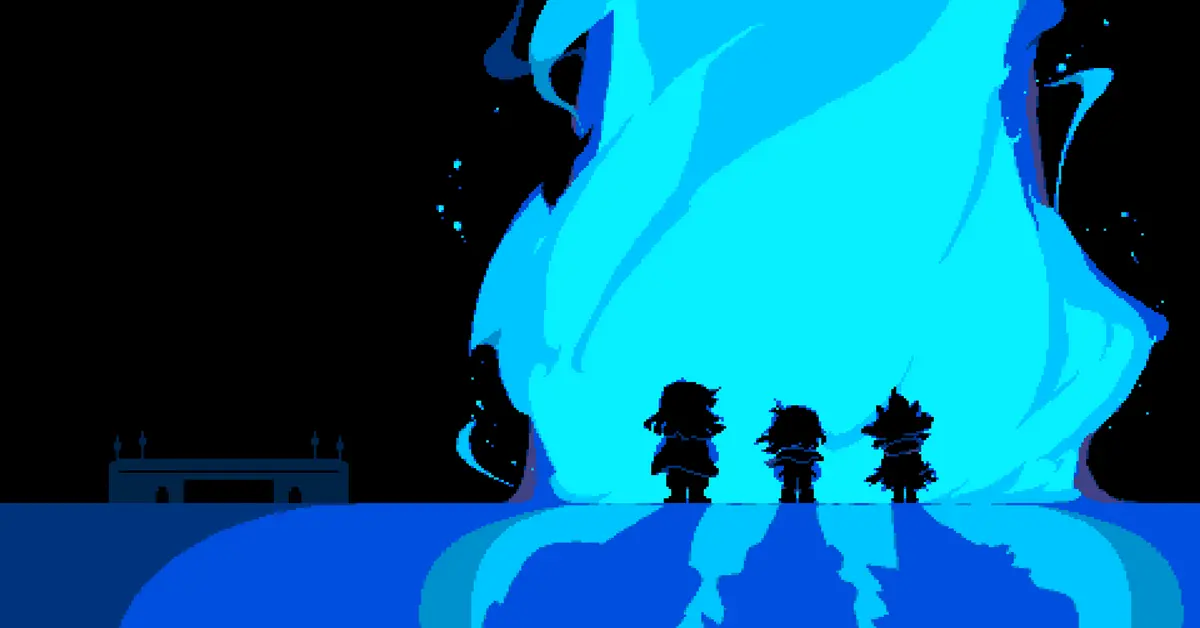
Deltarune is structured into episodic chapters. Each new chapter serves as a distinct segment, yet they all contribute to a larger overarching narrative. This creates a vastly different pacing compared to Undertale, as players experience the story in installments. This release model—especially since all chapters are not yet available—fosters extensive player discussion and theorizing between launches. As of June 27, 2026, five chapters are available, with the sixth chapter scheduled for release in 2027.
Unlike Undertale, where the focus remains on a single protagonist, Deltarune tasks you with controlling a party of three characters. Their constant interaction injects significant energy into the dialogue. This group dynamic is frequently the source of the game’s humor. Naturally, this also alters the combat mechanics, introducing a far wider array of tactical options. The system remains familiar but feels substantially expanded.
Players continually encounter familiar elements throughout the game, spotting recognizable faces or concepts that provide strong nostalgic value. However, a multitude of new characters and locations are introduced, granting Deltarune its own unique identity. The newly released chapters frequently transport players to entirely new environments. These chapters continue to be added for free, with the next installment anticipated in 2027.
Why the Undertale and Deltarune Community Remains So Strong
The community surrounding both games is massive. For many players, Undertale and Deltarune do not end once the credits roll. Discussions often follow, or players delve deeper into the web to uncover more about the games. Particularly with Deltarune’s current chapter system, players constantly speculate about upcoming releases and dissect what might have been missed in the existing ones. Players scrutinize dialogue for hidden clues, and even seemingly insignificant moments are thoroughly analyzed.

Fans pay close attention to nearly every change, whether it is a musical motif or simply recurring sound effects. Naturally, the connections between Undertale and Deltarune fuel further speculation. Because Deltarune takes place in a parallel setting to Undertale, it prompts extensive theorizing and the discovery of new details across both titles. Players encounter familiar elements that never feel purely coincidental. Many aspects remain open to discussion throughout the chapters, and this is precisely what keeps the game vibrant.
Across platforms like Twitter, YouTube, Twitch, and beyond, new clips and theories about the games continue to surface. Fan art and song covers are also produced in massive quantities. The games’ humor aligns perfectly with internet culture and is positively received by almost everyone. Simultaneously, the game possesses enough emotional depth to avoid being dismissed as a mere joke. The various endings and the new discoveries they bring remain a constant topic of conversation. Right now, following the release of Chapter 5, Deltarune and Undertale are highly relevant once again. With Chapter 5, Deltarune reached a new record of nearly 300,000 concurrent players.
Why Undertale and Deltarune Still Work Today
In both Undertale and Deltarune, you experience more than just a fleeting element of surprise. Instead, there are constant moments of genuine astonishment. You can make various choices throughout the games, leading to multiple distinct endings. But that is not all. Undertale remains highly effective today, even without relying on nostalgia. The humor, music, and mechanics interlock seamlessly and function exceptionally well. The pixel aesthetic does not make the game look cheap; rather, it exudes its own unique charm.
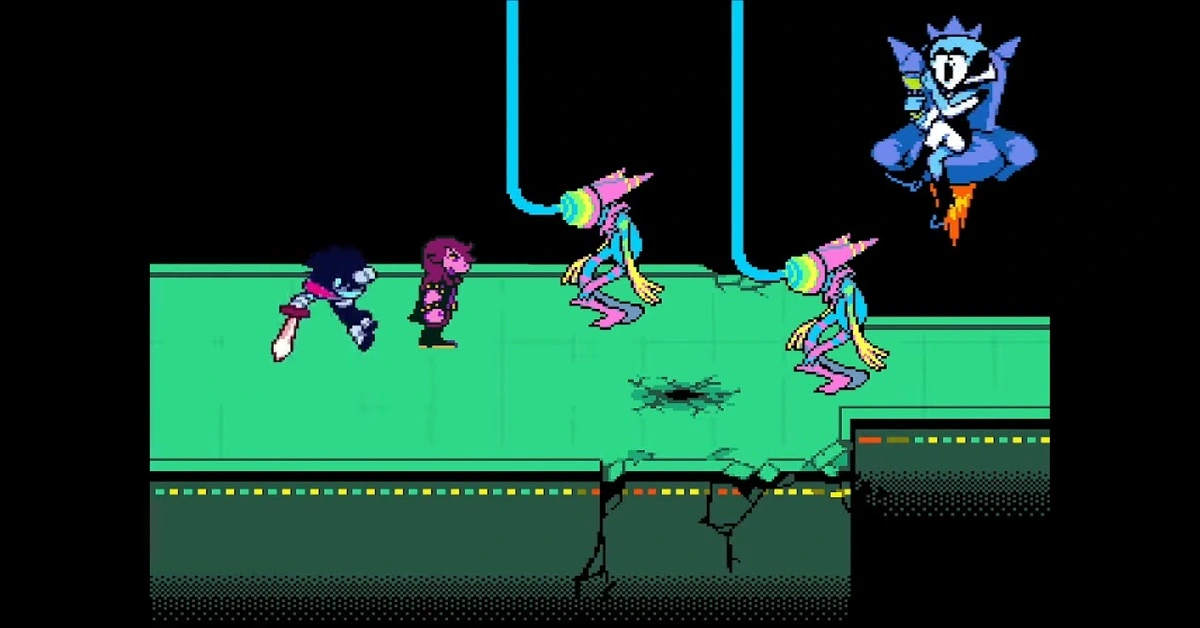
The games utilize classic RPG elements and twist them in their own unique manner. Familiar menus and combat systems feel distinctly different and unique in both Undertale and Deltarune. The humor provides accessibility, while the music elevates everything to an epic scale. Deltarune feels somewhat larger and more structured. The party dynamic, in particular, introduces a different narrative pacing and gameplay experience. The episodic chapters provide talking points and sustain the hype long after their release. That is why both games continue to be recommended, played, analyzed, and discussed years later.
Conclusion: Two RPGs Best Experienced Firsthand
Undertale and Deltarune are two games that are difficult to fully explain without detracting from their impact. This is exactly why they succeed so brilliantly. They thrive on small surprises, eccentric characters, sharp humor, emotional moments, and music that often lingers in the mind far longer than many grand cutscenes in other games.

Undertale demonstrated that a small RPG with simple visuals can still leave a massive impression—not through graphics, budget, or scale, but through ideas, personality, and a highly distinctive feel. Deltarune continues this stylistic approach while appearing larger, more structured, and, due to the chapter system, even more deliberately designed to spark discussion. Each new chapter reunites the community, ensuring that theories, fan art, music covers, and conversations do not fade away.
For those who have not yet played either game, it is highly recommended to learn as little as possible beforehand and simply experience them. The greatest appeal lies not in knowing all the details in advance, but in the moments when the games suddenly react in entirely unexpected ways. This is exactly why Undertale and Deltarune remain so extraordinary today. They may look small, but they feel immense.
Hey, I’m Kilian, but online you’ll probably know me as “Tux1243.” I've been part of the team for almost two years now, always trying to keep you in the loop with the latest and coolest gaming news. I also have a huge passion for doing deep dives and detailed analyses of entire game series and franchises. I love getting to the bottom of things and exploring the little details and backstories that make game worlds so fascinating.
Download the Allkeyshop Browser Extension Free
For all the latest video game news, trailers, and best deals, make sure to bookmark us.
You can find all the best and cheapest online deals on CD keys, game codes, gift cards, and antivirus software from the verified CD key sellers on our store pages.
To not miss any news on Allkeyshop, subscribe on
Google News
.
MORE RELEVANT ARTICLES




Comments (0)