












How the Canceled Fallout 3 Project Van Buren Shaped Fallout: New Vegas

The cancellation of Fallout: Van Buren remains one of the PC gaming industry’s most scrutinized historical footnotes, but recent revelations from director Josh Sawyer expose a much harsher reality behind the original Fallout 3’s demise.
Key Takeaways
- Former director Josh Sawyer revealed that Fallout: Van Buren was canceled primarily because Interplay executive leadership systematically ignored invitations to review the playable build.
- Management only looked at the progress after deciding to shut down Black Isle Studios, admitting they might not have canceled it had they seen the work earlier.
- While the isometric version died, its core narrative concepts, factions, and characters were preserved and integrated into Obsidian’s Fallout: New Vegas.
The cancellation of Black Isle Studios’ (previously known as Interplay Productions) original Fallout 3 project, otherwise known as Fallout: Van Buren, before Bethesda acquired the game in 2004 and later the Fallout IP in 2007, remains a defining moment in PC gaming history.
Decades later, developer insights confirm that internal corporate isolation, rather than technical failure, doomed the highly anticipated RPG.
According to Josh Sawyer’s recent disclosures during an interview via Insider Gaming, regarding the event, the original Fallout 3 was terminated largely because executive leadership systematically ignored invitations to review the playable build existing just one floor below their offices.
Why Was the Original Fallout 3 Canceled?
The original Fallout 3, codenamed Van Buren, was canceled in 2003 because Interplay management consistently ignored opportunities to review the project’s progress.
Despite development occurring just one floor away from executive offices, this severe disconnect led to the closure of Black Isle Studios during Interplay’s financial crisis.
The tragedy of the cancellation is rooted in corporate negligence. According to director Josh Sawyer, when producer Tom French finally showed the Van Buren demo to Interplay staff, they admitted: “Well, if we had known you had made this, maybe we wouldn’t have canceled it.”
How Did Van Buren Compare to Bethesda’s Vision?
Fallout: Van Buren was designed as an isometric, turn-based RPG running on a proprietary 3D engine, strictly honoring the series’ roots.
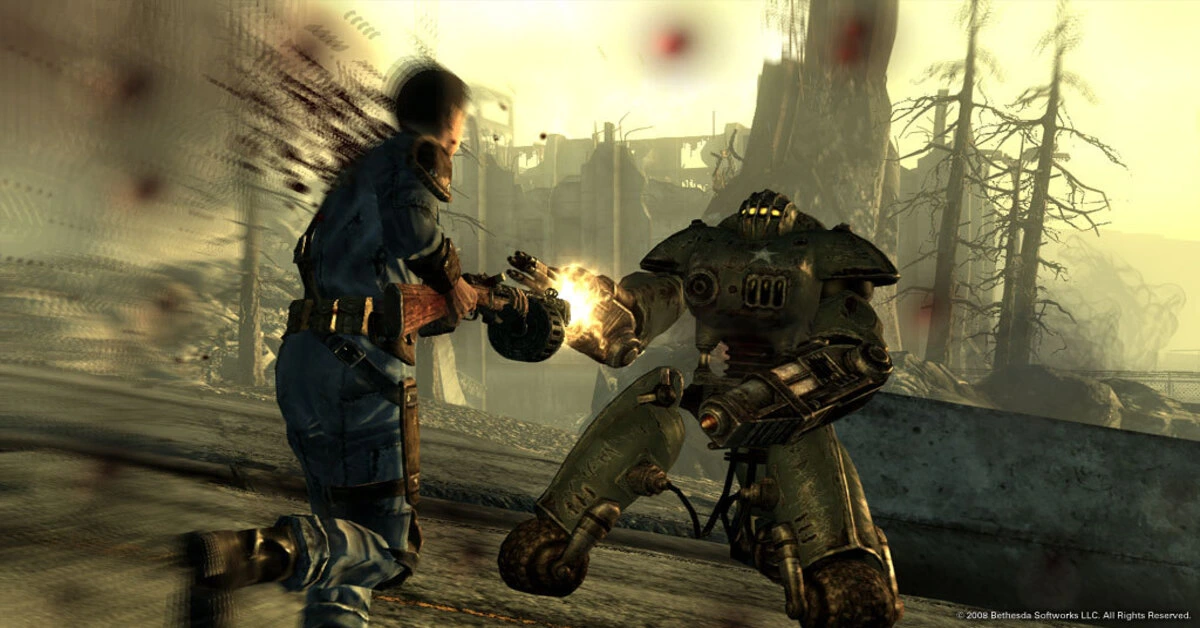
Conversely, Bethesda’s 2008 release transformed Fallout 3 into a first-person action RPG utilizing the Gamebryo engine, shifting the franchise toward a fundamentally different design philosophy.
To understand the massive shift in intellectual property, it helps to examine the core pillars of both projects. The transition meant abandoning a purely tactical PC experience for a more accessible, real-time approach.
The Enduring Legacy of Black Isle’s Fallout
While Van Buren never reached store shelves, its creative foundation did not entirely disappear. The narrative concepts, characters, and faction designs meticulously crafted by Black Isle Studios were quietly preserved by the original developers.
When Bethesda later contracted Obsidian Entertainment to create a spin-off, Josh Sawyer stepped into the directorial role. This partnership allowed the surviving DNA of Van Buren to be directly woven into Fallout: New Vegas, a title still celebrated for its complex writing and player agency.
Meanwhile, the story of Van Buren serves as a stark reminder of how publisher disconnect can alter a franchise forever, while also proving that strong game design can outlive the studios that initially create it.
Fueled by a passion for gaming and the ever-evolving world of gaming news, Daniel loves connecting with seasoned and new players to bring games to life on the page, exploring their narratives and gaming trends. A self-published fiction and fantasy author, Daniel has nearly 20 years of experience writing gaming news and a love for storytelling that drives his enthusiasm to deliver breaking news, in-depth analysis, and industry innovations. You will find him in-game as "Windfell."
Download the Allkeyshop Browser Extension Free
For all the latest video game news, trailers, and best deals, make sure to bookmark us.
You can find all the best and cheapest online deals on CD keys, game codes, gift cards, and antivirus software from the verified CD key sellers on our store pages.
To not miss any news on Allkeyshop, subscribe on
Google News
.
MORE RELEVANT ARTICLES




Comments (0)