






Pixel Sundays: DOOM – From Pixel Horror to Power Fantasy in the Evolution of a Shooter Icon

The DOOM franchise has been a part of the gaming world for over 30 years and is impossible to imagine the industry without it. That’s why this franchise is a perfect fit for our Pixel Sundays article this week. We’ll explore the origins and evolution of the entire franchise.
Summary
- The Birth of a Genre – Classic DOOM (1993–1997)
- A Shift in Perspective – Horror, Darkness, and Story in DOOM 3
- The Redefinition – Brutal, Fast, Relentless (DOOM 2016 & Eternal)
- The Future Begins in the Past – DOOM: The Dark Ages (2025)
- Technology & Legacy – What Sets DOOM Apart (and Above)
- Conclusion – DOOM is Eternal
The DOOM franchise stands for raw violence, iconic enemy design, and arguably the most aggressive gameplay in the shooter genre. Whether on Mars, in hellish portals, or recently in the dark Middle Ages – DOOM has been everywhere and has constantly evolved. Yet, it has stayed true to its roots.
The Birth of a Genre – Classic DOOM (1993–1997)
Development for the first DOOM began in 1993 at id Software. id Software was founded by John Carmack, John Romero, Tom Hall, and Adrian Carmack. Carmack handled the game engine while Romero worked on level design and interactive gameplay features. The game was developed on NeXT computers using a custom level editor named DoomEd.

DOOM was released on December 10, 1993 and is considered a milestone in video game history. Powered by the id Tech 1 engine, the game featured fluid 2.5D gameplay, fast-paced action, and a dark splatter aesthetic. One of its standout features was the moddable engine, which allowed players to create custom content. Assets like levels, graphics, and sounds were stored in separate WAD files, making modding significantly easier.
A year later, in 1994, DOOM II: Hell on Earth was released. It continued the story from the first game and introduced new enemies like the Mancubus, Revenant, and Arch-Vile. It also added a new weapon, the Super Shotgun. Levels were no longer episodic but featured a continuous structure with more complex designs and larger battles.
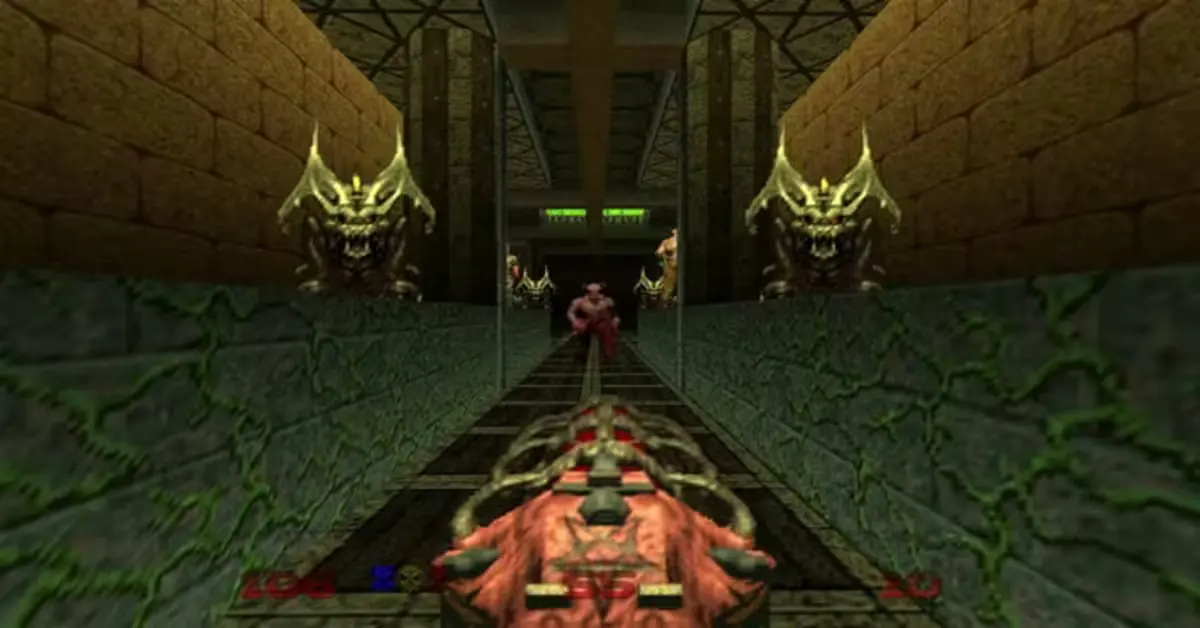
DOOM 64 was the next entry in the series. As the name suggests, this title was released exclusively for the Nintendo 64. It was a standalone continuation of the series with new graphics and music. The game used a modified DOOM engine and had an especially dark atmosphere. With its remaster in 2020 and references in DOOM Eternal, DOOM 64 has been firmly established as part of the main series.
The original DOOM also played a major role in shaping the first-person shooter genre. It introduced the term “Deathmatch” for multiplayer combat. The initial version supported local multiplayer only, either via null modem cable, modem, or LAN. The game also laid the foundation for modding culture in gaming. Thanks to the engine’s open structure, the community could create their own levels and mods. This sustained the game’s popularity and left a lasting impact on the industry.
A Shift in Perspective – Horror, Darkness, and Story in DOOM 3
With DOOM 3, id Software made a radical new start in 2004. Instead of pure fast-paced action, the game focused on a deep horror experience. You play as a nameless marine fighting demonic creatures on a Mars research facility. The dark atmosphere, combined with jump scares and a haunting soundscape, gave the game a unique identity.
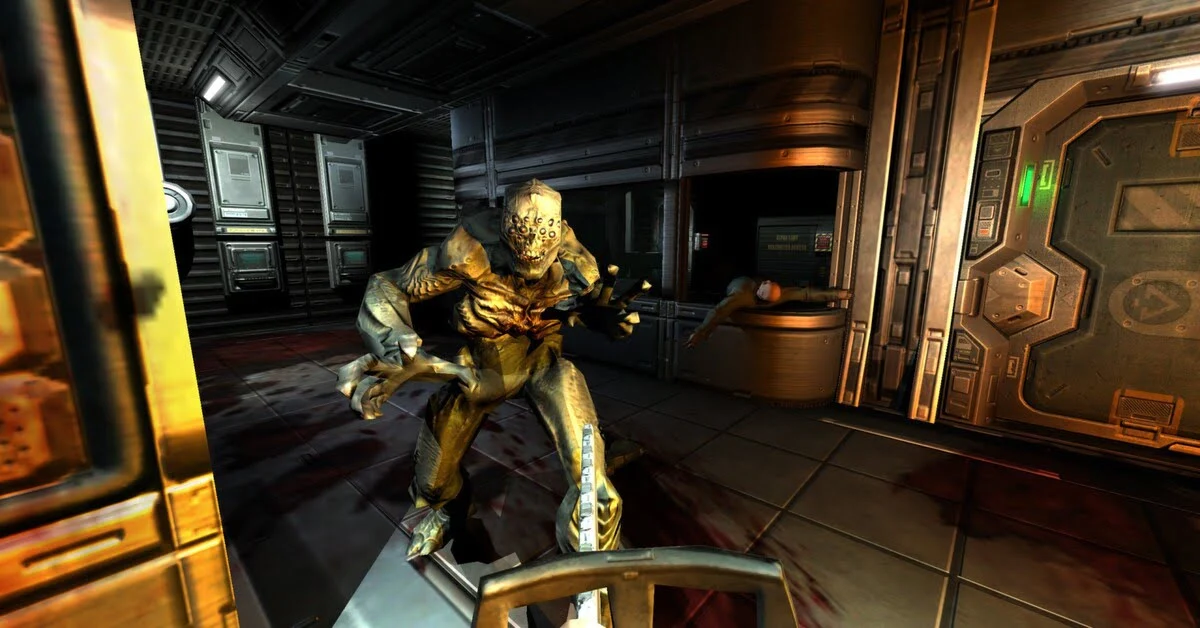
Thanks to the proprietary id Tech 4 engine, the game featured full real-time dynamic lighting and shadows for the first time. This created an eerie mood throughout the game. Cinematic cutscenes were integrated into the game world for enhanced immersion. The story took on a greater role compared to its predecessors – you could collect PDA entries and audio logs to learn more about the station’s background and its crew. The gameplay was also a bit slower, emphasizing survival in a hostile environment.
In 2012, the DOOM 3: BFG Edition was released. This is an enhanced version of the original. It features improved graphics, a new soundtrack, and additional content such as the Resurrection of Evil expansion and The Lost Mission. There was also a shoulder-mounted flashlight, allowing players to illuminate and shoot at the same time.

Many praised the game for its technical brilliance and atmosphere. However, others were disappointed by the lack of fast-paced and action-heavy gameplay. The slower pace and focus on horror elements led to mixed reactions within the community.
The Redefinition – Brutal, Fast, Relentless (DOOM 2016 & Eternal)
In 2016, id Software returned to its roots with DOOM (2016). It brought back fast-paced, action-heavy gameplay, encouraging players to go aggressive and blast through enemies. The so-called “Push-Forward Combat” system rewards offensive playstyles with features like “Glory Kills” – finishers that restore health. The chainsaw provided ammo. Thanks to the id Tech 6 engine, the game delivered smooth 60 FPS gameplay and stunning visuals. The soundtrack was composed by Mick Gordon, blending elements of metal and industrial.

Then in 2020, DOOM Eternal was released. Building on its predecessor’s success, it introduced new movement options like double jumps, air dashes, and the “Meat Hook” – a grappling hook attached to the super shotgun that lets you pull yourself toward enemies. Level design became more vertical and complex, allowing for greater movement freedom and strategic choices. New weapons such as the flamethrower and “Blood Punch” were added, along with new enemy types with specific weak points, adding more tactical depth.
DOOM Eternal also featured several expansions: The Ancient Gods – Part One and Part Two. These DLCs continued DOOM Eternal’s story and introduced challenging new levels with enemies like the “Cursed Prowler” and the “Screecher”. However, many players criticized the increased use of platforming elements and the forced use of the “Meat Hook” in certain sections, seeing it as a deviation from traditional DOOM gameplay.

DOOM Eternal also had a multiplayer mode. Known as “Battlemode”, it received mixed reviews. Some players praised the 2 vs 1 format, while others missed classic modes like “Deathmatch”. Unfortunately, there were also technical issues such as lag and balancing problems.
The Future Begins in the Past – DOOM: The Dark Ages (2025)
DOOM: The Dark Ages is a prequel to DOOM (2016) and DOOM Eternal. The game explores the origins of the Doom Slayer in a dark, medieval-inspired setting. The story takes place in the Middle Ages, long before the events of the previous titles. It centers on the war between the Sentinels and the forces of Hell. The Doom Slayer is portrayed as an “iron-clad tank” with supernatural powers used to save humanity.

The focus in this game has shifted slightly. Instead of acrobatic, fast-paced combat, it emphasizes slower but more powerful melee combat. New weapons include the “Shield Saw”, a combination of shield and saw, and the “Skull Crusher”, which fires bone shards. The game also introduces a parry mechanic that enables strategic blocking and countering.
For the first time in the series, players can control vehicles. Although “vehicles” may be a stretch – you’ll ride a fire-breathing dragon and the 30-story mech ‘Atlan’. These segments offer gameplay variety, but the main focus remains on intense combat. The level design combines linear and open areas with a range of environments like forests, dungeons, and ancient battlefields.
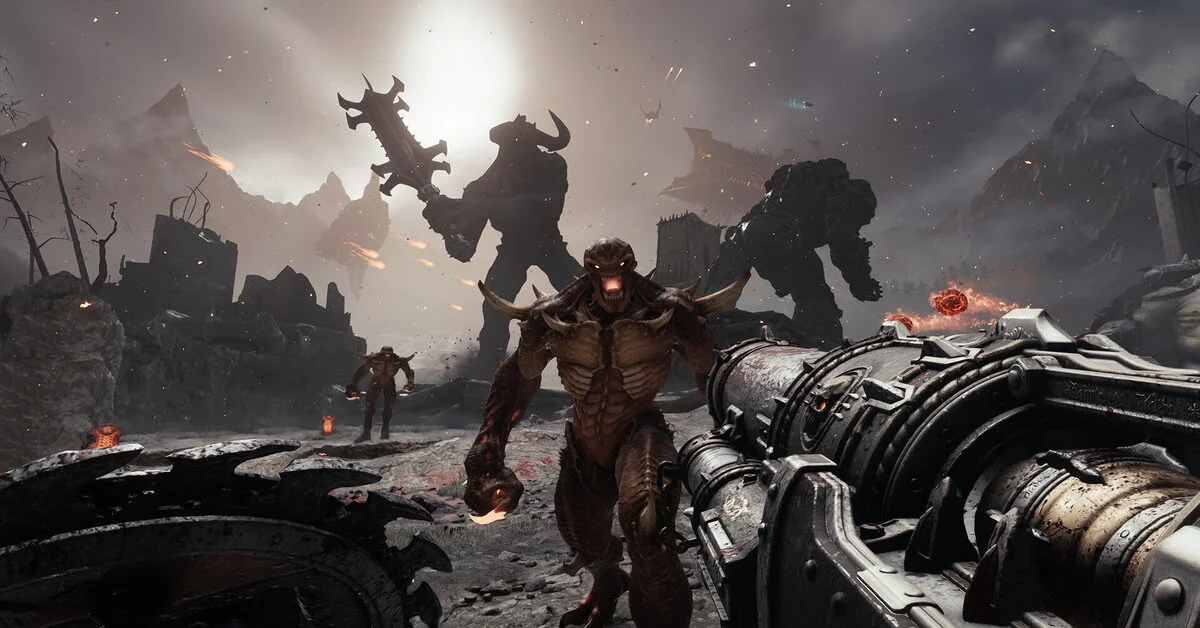
The game was developed using the new id Tech 8 engine. This engine enables advanced physics, destructible environments, and impressive animations. It also supports ray tracing, realistic lighting effects, and detailed textures. For PC players, a ray tracing-capable GPU is required to fully experience the game.
Critics praise DOOM: The Dark Ages for its atmospheric presentation and the bold change in style that still honors the roots of the series. The combination of a medieval setting, intense combat, and a more profound story offers an engaging experience for both long-time fans and newcomers alike.
Technology & Legacy – What Makes DOOM Different (and Better)
The DOOM series has always been a technological pioneer. We’ve often discussed the id Tech engine, which has evolved with each DOOM game, but let’s summarize the most important improvements.
- id Tech 1 (1993): Revolutionized the first-person shooter genre with 2.5D graphics, smooth gameplay, and the introduction of WAD files that enabled modding.
- id Tech 4 (2004): Introduced in DOOM 3, it featured dynamic lighting and shadows, enhancing the horror atmosphere.
- id Tech 6 (2016): Enabled smooth 60-FPS gameplay in DOOM (2016) with stunning graphics and short loading times.
- id Tech 8 (2025): Used in DOOM: The Dark Ages, offering advanced physics, destructible environments, and impressive animations.
There has also been a strong modding community around DOOM since the first game. It’s one of the most active and creative in the gaming world. There are gameplay-changing mods, and some modders have taken it even further. They’ve made the original DOOM playable in PDF format, on a calculator, refrigerator, and more.

One very popular mod is Brutal DOOM: This mod features more intense gameplay with realistic effects and new mechanics. There are also mods that completely transform the game – these are called Total Conversion Mods. Examples include Blade of Agony or Project Brutality. They turn DOOM into entirely new gaming experiences.
The music in DOOM has also evolved over the years. The earlier games used classic MIDI tracks, which were often reimagined by the community. The modern soundtracks from DOOM (2016) onward were composed by artists like Mick Gordon. They set new standards and combined metal and industrial elements.
DOOM also has a permanent place in pop culture. There are many memes. Phrases like “Rip and Tear” and the “DOOMguy” are integral parts of internet culture. There have also been many memes featuring the DOOM Slayer alongside other characters like Isabelle from Animal Crossing.

DOOM has had a huge influence on the shooter genre. For example, Quake continued DOOM’s path of innovation, introducing full 3D graphics. Many gameplay elements from Halo were also inspired by DOOM. Additionally, DOOM helped popularize first-person shooters on consoles. Ultrakill is a modern “boomer shooter” that captures DOOM’s fast action and retro aesthetic.
Conclusion – DOOM Is Eternal
DOOM is more than just a game – it’s a cultural asset in the gaming world. Since 1993, this franchise hasn’t just co-founded the shooter genre, it has continually redefined it. From the pixelated violence of the early ’90s to the atmospheric horror in DOOM 3, to the stylized brutal action of DOOM (2016) and Eternal – each era has left its own mark.

With DOOM: The Dark Ages, id Software takes another bold step that not only expands the franchise but also honors its roots. The medieval approach, combined with new gameplay mechanics and cutting-edge technology, shows: DOOM remains innovative – without losing its identity.
Technologically, DOOM has always been a pioneer – from id Tech 1 to the id Tech 8 engine. Equally important is its influence on the community: mods like Brutal DOOM or Total Conversions keep the legacy alive and continually expand it.

Whether it’s demon-slaying, meme culture, or metal soundtracks – DOOM isn’t a game that adapts to others. It’s the game others measure themselves against. And that’s exactly why DOOM is not just eternal – it stays relevant.
Hey, I’m Kilian, but online you’ll probably know me as “Tux1243.” I've been part of the team for almost two years now, always trying to keep you in the loop with the latest and coolest gaming news. I also have a huge passion for doing deep dives and detailed analyses of entire game series and franchises. I love getting to the bottom of things and exploring the little details and backstories that make game worlds so fascinating.
Download the Allkeyshop Browser Extension Free
For all the latest video game news, trailers, and best deals, make sure to bookmark us.
You can find all the best and cheapest online deals on CD keys, game codes, gift cards, and antivirus software from the verified CD key sellers on our store pages.
To not miss any news on Allkeyshop, subscribe on
Google News
.
MORE RELEVANT ARTICLES